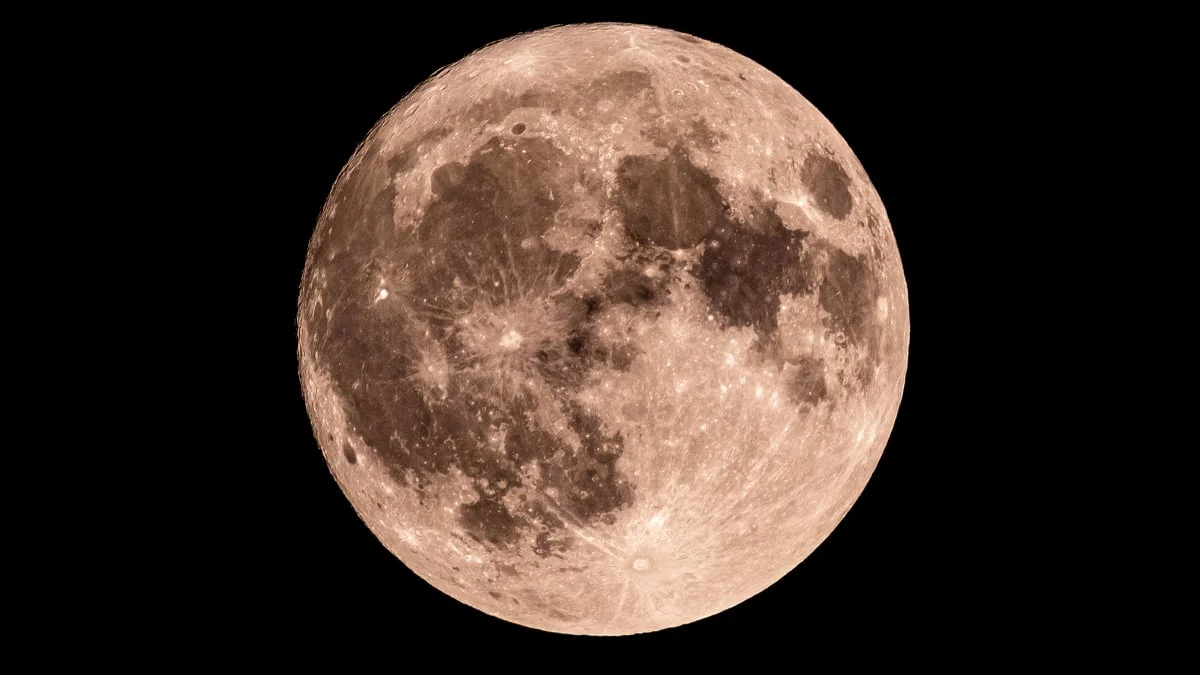
On Sunday, March 15, 2026, the Moon phase today is a Waning Crescent, a period in the lunar cycle characterized by decreasing illumination as the celestial body approaches its New Moon phase. According to data provided by NASA’s Daily Moon Guide, approximately 16% of the lunar surface will be visible to observers on Earth during this time. This specific phase marks the final stretch of the 29.5-day synodic month, leaving the night sky significantly darker than during the preceding weeks.
The current positioning of the Moon means that for the average stargazer, visual opportunities are severely limited. Without the assistance of optical equipment, the thin sliver of light may be difficult to discern against the backdrop of the early morning or late evening sky. However, for those utilizing binoculars or specialized telescopes, the low-angle sunlight hitting the lunar surface provides a unique opportunity to observe specific geological features, most notably the Grimaldi Basin.
Understanding the Waning Crescent on March 15
The Moon phase today represents the transition from the Third Quarter toward the New Moon. During a Waning Crescent, the Moon appears to be shrinking from the perspective of an observer in the Northern Hemisphere, with the remaining sliver of light situated on the left side of the lunar disk. This illumination will continue to diminish daily until the Moon becomes entirely invisible to the naked eye, a phenomenon caused by the Moon moving into a direct line between the Earth and the Sun.
Astronomers note that the 16% illumination reported for March 15, 2026, creates a specific lighting condition known as "earthshine" or the "Da Vinci Glow." This occurs when sunlight reflects off the Earth’s surface and dimly illuminates the dark portion of the Moon. While the primary crescent is the only part directly lit by the Sun, this secondary reflection often allows observers to see the faint outline of the entire lunar sphere, provided the sky is sufficiently clear of light pollution.
The timing of the Waning Crescent is also significant for its impact on nocturnal visibility. Because the Moon rises late in the night or in the early hours of the morning during this phase, the evening hours remain dark. This lack of moonlight is often considered ideal for deep-sky photography and the observation of distant galaxies and nebulae, which are otherwise washed out by the glare of a fuller Moon.
The Science Behind the Moon Phase Today and the Lunar Cycle
To understand the Moon phase today, one must look at the broader mechanics of the Earth-Moon-Sun system. The Moon takes approximately 27.3 days to complete one orbit around the Earth, a period known as a sidereal month. However, because the Earth is also moving in its orbit around the Sun, it takes slightly longer—roughly 29.5 days—for the Moon to return to the same phase as seen from Earth. This 29.5-day period is called the synodic month.
During this cycle, the Moon passes through eight distinct stages. These stages are dictated by the Moon’s orbital position, which changes the angle at which sunlight strikes the side of the Moon facing Earth. While one-half of the Moon is always illuminated by the Sun, Earth-based observers only see varying portions of that illumination depending on where the Moon is in its journey.
The sequence begins with the New Moon, followed by the Waxing Crescent, First Quarter, and Waxing Gibbous. The cycle reaches its peak at the Full Moon, when the Earth is positioned between the Sun and the Moon. Following the Full Moon, the cycle reverses through the Waning Gibbous, Third Quarter, and finally the Waning Crescent seen today, before returning to the New Moon phase to begin the process again.
Viewing the Grimaldi Basin and Other Lunar Features
Despite the low illumination of the Moon phase today, March 15, 2026, offers a specific window for lunar enthusiasts to study the Grimaldi Basin. Located near the western limb of the Moon, the Grimaldi Basin is a large, ancient impact crater known for its exceptionally dark floor. Because it is situated near the edge of the visible disk, its appearance is often affected by libration—the slight "wobble" of the Moon that allows observers to see just over 50% of its surface over time.
The Grimaldi Basin is roughly 140 miles (230 kilometers) in diameter. Its floor is composed of basaltic lava, which gives it a much lower albedo (reflectivity) than the surrounding lunar highlands. During a Waning Crescent, the shadows cast by the crater’s rim are elongated, highlighting the rugged topography of the basin’s edge. Amateur astronomers are encouraged to use a telescope with at least a 4-inch aperture to fully appreciate the contrast between the dark basin floor and the brightly lit crescent edge.
In addition to Grimaldi, the thin sliver of light may reveal portions of the Oceanus Procellarum, the largest of the lunar maria. This "Ocean of Storms" covers a vast area of the Moon’s western side. Under the 16% illumination of the Moon phase today, the transition zone between day and night on the Moon—known as the terminator—crosses this region, creating high-contrast views of smaller craters and ridges that are invisible during a Full Moon.
Preparation for the April 1 Full Moon
Following the current Waning Crescent and the subsequent New Moon, the lunar cycle will progress toward the next major celestial event. In North America, the next Full Moon is predicted to take place on April 1, 2026. This upcoming event is often referred to in various almanacs as the "Pink Moon," a name derived from the early springtime bloom of wild ground phlox, a flower native to North America.
The transition from the 16% illumination seen on March 15 to a 100% illuminated Full Moon on April 1 involves a rapid increase in visibility over a two-week period. By March 22, the Moon will have reached its First Quarter phase, appearing as a half-Moon in the evening sky. By the end of the month, the Waxing Gibbous phase will dominate the night, leading up to the peak illumination on the first day of April.
The April 1 Full Moon will be of particular interest to those tracking the Paschal Moon, which is used to determine the date of Easter. In 2026, the timing of the Full Moon on April 1 will set the stage for religious observations and seasonal festivals across the globe. Monitoring the Moon phase today is the first step for many in planning these spring events.
The Importance of Lunar Tracking in the Artemis Era
The precision with which NASA and other space agencies track the Moon phase today has become increasingly vital as humanity enters a new era of lunar exploration. As of 2026, the Artemis program and various international lunar initiatives have heightened the need for detailed lunar environmental data. Knowing the exact illumination and position of the Moon is critical for mission planning, including landing site selection and solar power management for lunar rovers.
For missions targeting the lunar south pole, the angle of sunlight is a primary concern. The Waning Crescent phase provides specific lighting conditions that allow researchers to study "permanently shadowed regions" (PSRs). These areas, located inside deep craters near the poles, never receive direct sunlight and are believed to contain water ice. Observations made during low-illumination phases like the one on March 15 can help refine the maps used by robotic and human explorers.
Furthermore, the Moon phase today influences the operational schedules of deep-space communications. The position of the Moon relative to Earth-based receiving stations can affect signal strength and interference levels for missions traveling beyond lunar orbit. As such, the 16% illumination and the specific orbital coordinates for March 15 are integrated into the broader logistical framework of modern aerospace operations.
How Lunar Phases Influence Terrestrial Phenomena
Beyond the realm of astronomy and space exploration, the Moon phase today exerts a tangible influence on Earth’s natural systems. The most prominent of these is the tidal cycle. During the Waning Crescent and New Moon phases, the Sun and Moon are nearly aligned, which results in "spring tides." These are tides with the greatest difference between high and low water, as the gravitational pulls of the two celestial bodies reinforce one another.
Coastal communities and maritime industries monitor the lunar phase closely to predict these tidal surges. For March 15, 2026, the transition toward the New Moon suggests that tidal ranges will begin to increase, potentially affecting navigation in shallow harbors and impacting coastal erosion patterns during any concurrent storm events.
Wildlife behavior is also frequently linked to the lunar cycle. Many species of birds, insects, and marine life use moonlight for navigation or as a cue for breeding cycles. The relative darkness of a 16% illuminated Moon provides a different set of environmental pressures than a Full Moon, often leading to increased activity among nocturnal predators who rely on the cover of darkness to hunt.
The Cultural and Educational Impact of Lunar Observation
The shift in the Moon phase today serves as a recurring educational tool for schools and planetariums across the United States. Educators use the visibility of the Waning Crescent to teach students about geometry, light reflection, and the history of human timekeeping. Before the advent of modern calendars, many civilizations relied exclusively on the lunar cycle to track months and seasons, a practice that survives today in various religious and cultural calendars.
Public interest in lunar events has seen a resurgence in recent years, driven by high-definition imagery from lunar orbiters and the accessibility of mobile applications that track the Moon’s position in real-time. On March 15, 2026, social media platforms and astronomical forums are expected to see a surge in user-generated content, as photographers attempt to capture the "old Moon in the new Moon’s arms"—another name for the earthshine effect visible during the crescent phases.
This widespread engagement underscores the Moon’s enduring role as a bridge between scientific inquiry and public wonder. Whether viewed through a multi-million dollar telescope or a simple pair of binoculars, the Waning Crescent of March 15 offers a moment of reflection on Earth’s place in the solar system and the clockwork precision of the heavens.