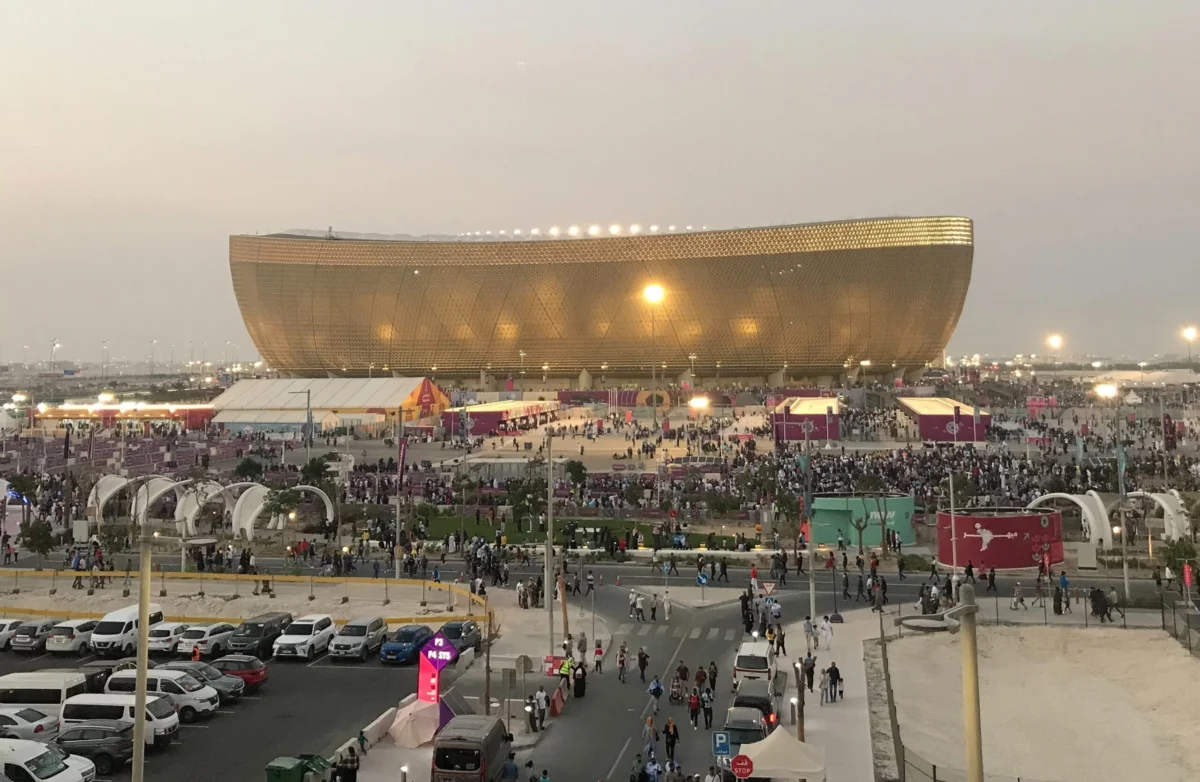
The highly anticipated ‘Finalissima’ showdown between European champions Spain and Copa America winners Argentina, originally slated for Qatar this month, has been officially cancelled, with UEFA citing the escalating conflict in the Middle East as the primary reason for the abrupt decision. The match, a marquee event of the Qatar Football Festival, was set to take place on March 27 at Doha’s iconic Lusail Stadium, a venue that previously hosted the 2022 FIFA World Cup final.
The cancellation stems from a complex web of geopolitical events that have destabilized the region, leading to significant travel disruptions and safety concerns. UEFA, in a statement released Sunday, expressed profound disappointment that "circumstances and timing have denied the teams of the chance to compete for this prestigious prize in Qatar." The governing body confirmed that extensive discussions with Qatari organizers failed to yield an agreement on alternative dates or venues that would satisfy all parties involved, ultimately forcing the cancellation.
Escalating Regional Conflict Disrupts Sporting Calendar
The decision to call off the Spain vs. Argentina ‘Finalissima’ is a direct consequence of heightened tensions and military actions across the Middle East. Recent US-Israeli strikes on Iran, coupled with Iran’s retaliatory actions against neighboring nations, have sent ripples throughout the Gulf region. These developments have severely impacted air travel and logistics, affecting some of the world’s busiest transit hubs. Consequently, several international sporting events have already been postponed or cancelled due to mounting safety concerns and the unpredictable nature of the conflict.
The geopolitical climate has created an environment deemed unsuitable for hosting major international sporting fixtures, particularly those requiring extensive travel and logistical coordination. The uncertainty surrounding regional stability made it impossible for UEFA and the Qatari organizers to guarantee the safety and smooth execution of the ‘Finalissima’ match. This situation underscores the growing interconnectedness of global politics and international sports, where even distant conflicts can have tangible and immediate impacts on the sporting world.
‘Finalissima’ Match Details and Potential Star Power
The ‘Finalissima’ match was envisioned as a thrilling contest between two of international football’s most celebrated nations. Spain, as the reigning European champions, and Argentina, the conquerors of South America, were poised to battle for bragging rights in a high-profile friendly. The fixture was particularly anticipated for the potential on-field duel between emerging Spanish talent Lamine Yamal and Argentinian superstar Lionel Messi, a matchup that would have captivated football fans worldwide.
Originally scheduled for March 27 at the Lusail Stadium, the game was a centerpiece of the broader Qatar Football Festival. This five-day event was designed to showcase international football talent in Qatar, a nation that has rapidly ascended the global sporting stage, most notably by hosting the 2022 FIFA World Cup. The festival also included other scheduled matches, such as Egypt vs. Saudi Arabia and Qatar vs. Serbia on March 26, and further contests on March 30 and 31 involving Egypt, Spain, Saudi Arabia, Serbia, and Argentina.
Failed Attempts to Salvage the ‘Finalissima’ Match
Following the initial assessment that the match could not proceed in Qatar under the prevailing political circumstances, UEFA initiated a series of discussions to find alternative arrangements. These efforts, however, proved to be largely unsuccessful, leading to the eventual cancellation. The Argentinian Football Association (AFA) reportedly rejected several proposals put forth by UEFA, indicating a significant divergence in proposed solutions.
One of the initial options explored by UEFA was to host the ‘Finalissima’ at the Santiago Bernabéu stadium in Madrid, with a proposed 50-50 split of supporters for both teams. This proposal aimed to maintain the neutral venue aspect while bringing the match closer to European fans. However, this option was not accepted by the AFA, signaling the start of a protracted negotiation process.
A second proposal from UEFA involved a two-leg format. The first leg would have been played at the Bernabéu on March 27, with the return leg taking place in Buenos Aires during an international window preceding the next editions of the Euros and Copa America. This approach sought to accommodate the desires of both federations by offering home advantage in one fixture.
The AFA, however, did not find this two-leg arrangement suitable either. According to UEFA’s statement, Argentina put forward a counter-offer to play the game at a later date, specifically after the 2026 FIFA World Cup. This suggestion was met with a lack of availability from the Spanish national team, whose schedule was already tightly packed with qualifying matches and other commitments.
Ultimately, UEFA made a final attempt to salvage the match by seeking a commitment from Argentina to play on either March 27 or March 30 in a neutral European venue, should one be identified and agreed upon. This proposal was also rejected by the AFA, leaving UEFA with no viable alternative but to cancel the ‘Finalissima’ match entirely. The breakdown in negotiations highlights the considerable logistical and scheduling challenges that international football federations face, especially when attempting to coordinate high-profile fixtures amidst complex geopolitical realities.
Serbia Adjusts Schedule Amidst ‘Finalissima’ Cancellation
The cancellation of the Spain vs. Argentina ‘Finalissima’ has had a direct impact on the fixture list for the Serbian national team. Initially, Serbia was scheduled to participate in the Qatar Football Festival, with a match against Qatar planned. However, with the Spain-Argentina game off the table, adjustments have been made to Serbia’s upcoming schedule.
The Football Association of Serbia announced that their national team will now face the European champions, Spain, in an away fixture on March 27. This provides Serbia with a significant opportunity to test their mettle against a top-tier European opponent. Following this encounter, Serbia is slated to host the Saudi Arabian national team four days later, offering them another chance to engage with international competition. These changes underscore how the ripple effects of major event cancellations can cascade through the broader sporting landscape, necessitating swift rescheduling and adaptation.
Broader Implications for International Football and Qatar’s Sporting Ambitions
The cancellation of the Spain vs. Argentina ‘Finalissima’ match in Qatar raises questions about the country’s ability to host major international sporting events amidst regional instability. While Qatar has demonstrated its capacity to organize world-class tournaments, as evidenced by the successful 2022 FIFA World Cup, this incident highlights the vulnerability of such events to external geopolitical factors. The Middle East remains a region prone to unpredictable political developments, and these can directly influence the feasibility of hosting large-scale international gatherings.
For UEFA and CONMEBOL, the ‘Finalissima’ concept, which pits the champions of Europe against the champions of South America, has been a promising initiative to create marquee matchups outside of traditional tournament cycles. The 2022 edition saw Argentina defeat Italy 3-0 at Wembley Stadium in London, a successful event that generated considerable excitement. The inability to replicate this success in Qatar, due to the volatile regional climate, signifies a setback for the continuation and expansion of such intercontinental fixtures.
The incident also brings into focus the delicate balance that sports organizations must strike between commercial interests, fan engagement, and the realities of global politics. While the allure of a Spain vs. Argentina clash is undeniable, ensuring the safety and security of players, staff, and spectators must remain the paramount concern. The organizers’ decision reflects a pragmatic approach to a challenging situation, prioritizing well-being over the potential revenue and prestige associated with the match.
Public Reaction and Future of ‘Finalissima’
News of the cancellation has been met with disappointment among football enthusiasts who were eagerly anticipating the clash between two of the sport’s powerhouses. Social media platforms buzzed with reactions, with many fans expressing their frustration over the geopolitical issues overshadowing a highly anticipated sporting spectacle. The prospect of witnessing stars like Lamine Yamal and Lionel Messi go head-to-head was a significant draw, and its removal from the schedule leaves a void for many supporters.
The future of the ‘Finalissima’ itself may also be a subject of discussion. While UEFA has expressed its commitment to the concept, the challenges encountered in Qatar raise questions about potential future venues. The success of the inaugural match at Wembley suggests that established footballing nations with robust infrastructure and stable political environments may be more suitable hosts for such intercontinental encounters. The ability of organizers to navigate complex political landscapes will be crucial for the sustained success of these ambitious cross-continental football initiatives.
Moving forward, the incident serves as a stark reminder of the intricate relationship between international sports and global politics. The cancellation of the Spain vs. Argentina ‘Finalissima’ in Qatar underscores the fragility of sporting events when they intersect with geopolitical crises, forcing organizers and governing bodies to make difficult decisions that impact fans and athletes alike. The search for stable and secure environments for international competition remains an ongoing challenge in an increasingly interconnected and often turbulent world.