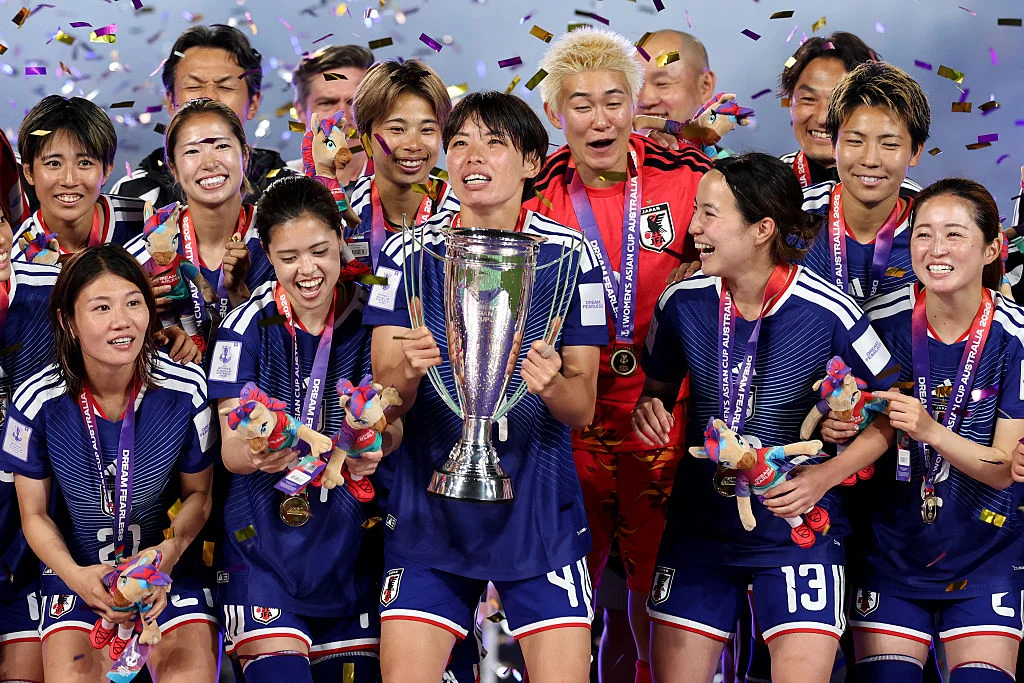
A spectacular long-range strike from Maika Hamano secured Japan’s third Women’s Asian Cup title in four tournaments, as they edged out hosts Australia 1-0 in a thrilling final watched by a record-breaking crowd of 74,357 fans at Stadium Australia in Sydney. The victory cemented Japan’s dominance in Asian women’s football and capped off a tournament that shattered attendance records, signaling a significant surge in the sport’s popularity across the continent.
Japan’s Dominance Reinforced in Asian Cup Triumph
The final showdown between Japan and Australia was a highly anticipated clash, pitting two of Asia’s perennial powerhouses against each other. Japan, often referred to as "Nadeshiko Japan," demonstrated their formidable prowess throughout the tournament, showcasing a blend of tactical discipline, fluid attacking play, and an impenetrable defense. Their journey to the final was nothing short of dominant, as they amassed an astonishing 29 goals while conceding only a single goal across their six matches. This impressive record underscored their status as Asia’s preeminent women’s footballing nation.
The Women’s Asian Cup also served as a crucial qualifying tournament for the upcoming FIFA Women’s World Cup in Brazil. The top six nations from the tournament secured their berths, with Australia, Japan, South Korea, China, North Korea, and the Philippines all earning their tickets to the global stage. This added another layer of significance to the continental championship, highlighting its role in shaping the landscape of international women’s soccer.
Hamano’s Brilliant Strike Breaks Australian Hearts
The decisive moment of the match arrived in the 17th minute. Maika Hamano, a dynamic midfielder for Tottenham Hotspur, seized possession outside the penalty area and unleashed a breathtaking shot from approximately 25 yards. The ball rocketed into the top corner of the net, leaving Australian goalkeeper Lydia Williams with no chance. This moment of individual brilliance not only broke the deadlock but also inflicted a blow to the aspirations of the home team, who had been seeking their first Asian Cup title since 2010.
The goal was a testament to Hamano’s skill and composure on the big stage. Her audacious attempt from distance exemplified the attacking flair that Japan had displayed throughout the competition. The goal came at a critical juncture, shifting the momentum and placing Australia under immense pressure to find an equalizer.
A Tournament of Records and Rising Popularity
Beyond the final result, the 2022 AFC Women’s Asian Cup will be remembered for its groundbreaking success in terms of attendance. The tournament attracted over 350,000 fans across all matches, a staggering figure that dwarfs previous records. The final itself set a new benchmark for a single match in the tournament’s history, with the 74,357 spectators at Stadium Australia highlighting the growing appetite for women’s football in Australia and the wider region.
This surge in fan engagement is a clear indicator of the sport’s expanding popularity and its increasing cultural relevance. The investment in women’s football, both by federations and media, appears to be yielding significant returns, creating a virtuous cycle of increased visibility, fan support, and ultimately, player development. The success of this tournament is likely to inspire future generations of female footballers and further elevate the profile of the women’s game globally.
Pre-Match Preparations and Early Opportunities
Prior to the final, both teams made strategic decisions regarding their starting lineups. Japan opted for an unchanged squad from their commanding 4-1 semifinal victory over South Korea, reflecting their confidence in the established eleven. Conversely, Australia made one alteration to their team that had overcome defending champions China 2-1 in the last four. Wini Heatley was brought into central defense, replacing Clare Hunt, a move that suggested a focus on bolstering their backline against Japan’s potent attack.
The host nation began the match with composure, aiming to control possession and dictate the tempo of the game. In the 11th minute, Australia had a golden opportunity to take an early lead. Mary Fowler’s incisive pass threaded through the Japanese defense, finding Caitlin Foord unmarked inside the box. However, the Arsenal forward’s shot was directed straight at Japan’s goalkeeper, Ayaka Yamashita, missing a chance to put the Matildas ahead. This missed opportunity would soon prove to be a costly one.
Sustained Pressure and Defensive Resilience
Following Hamano’s stunning opener, Australia intensified their efforts to find an equalizer. Foord had another chance to atone for her earlier miss when she capitalized on a loose clearance from Yamashita. However, from a tight angle, she was unable to find the target. She later scuffed another shot wide just before the halftime whistle, underscoring Australia’s struggles to convert their opportunities against a resolute Japanese defense.
In the second half, Japan continued to pose a significant threat on the counter-attack. Riko Ueki, a player for West Ham United, came close to doubling Japan’s lead on two occasions within a matter of minutes shortly after the restart. The game remained on a knife’s edge, with the crowd noise reaching a fever pitch as Australia poured forward in search of a goal.
Late Drama and Japan’s Victory Seal
As the clock wound down, Australia threw everything they had into attack, creating a palpable sense of urgency. In the 88th minute, Alanna Kennedy came agonizingly close to snatching a late equalizer with a powerful header. However, despite sustained pressure and a relentless attacking barrage from the home side, Japan’s defense held firm. They absorbed the pressure with remarkable composure, demonstrating their tactical discipline and unwavering determination to secure the victory.
The final whistle confirmed Japan’s triumph, marking a significant achievement for the Nadeshiko Japan. Their third Asian Cup title in four editions solidifies their position as the dominant force in Asian women’s football and provides a strong platform as they look ahead to the World Cup. The tournament’s success, both on and off the field, signals a bright future for women’s soccer in Asia.
Implications for Women’s Football in Asia
The record-breaking attendance and the high level of competition witnessed throughout the Women’s Asian Cup have profound implications for the future of women’s football in Asia. The tournament’s success serves as a powerful testament to the growing fan base and the increasing commercial viability of the women’s game. This increased visibility is expected to attract further investment in infrastructure, player development programs, and professional leagues across the continent.
The qualification of six Asian teams for the World Cup also indicates the rising strength of the region on the global stage. Australia, with their hosting experience and passionate fanbase, will carry the hopes of many into the World Cup. Japan, as champions, will be a formidable contender, while South Korea, China, North Korea, and the Philippines will be eager to make their mark. The performances in this Asian Cup have undoubtedly set the stage for an exciting and competitive World Cup campaign for all participating nations.
A New Era for Women’s Soccer
The 2022 AFC Women’s Asian Cup has undoubtedly ushered in a new era for women’s soccer in Asia. The record-shattering attendance figures are not merely statistics; they represent a tangible shift in public perception and engagement with the sport. This growing support system is crucial for the sustained development of women’s football, providing young girls with role models and inspiring them to pursue their dreams on the pitch.
The tournament’s success also highlights the importance of hosting major international sporting events in promoting gender equality and challenging traditional societal norms. By showcasing the talent and athleticism of female footballers, the Women’s Asian Cup has contributed to a broader cultural conversation about the capabilities and potential of women in sports. The echoes of this success will likely resonate for years to come, fostering a more inclusive and dynamic sporting landscape.