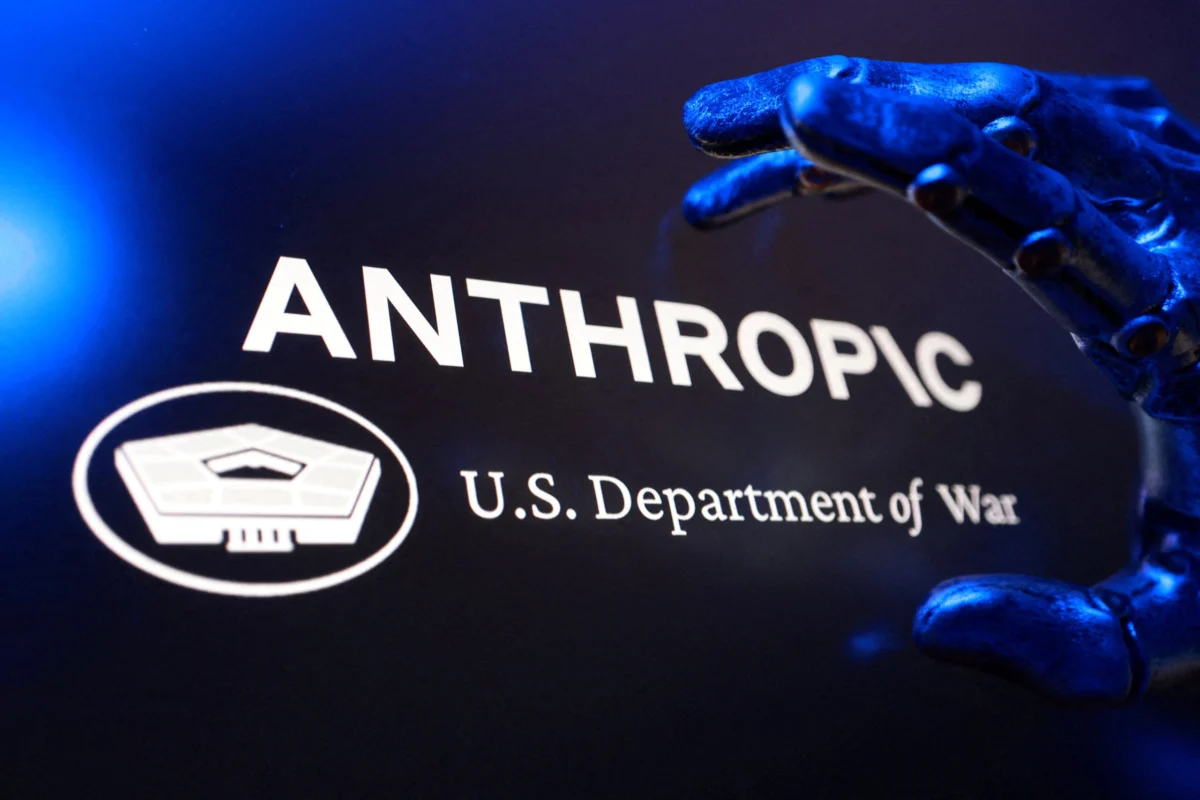
Artificial intelligence leader Anthropic is set to confront the U.S. Department of Defense in a San Francisco federal court, challenging the Pentagon’s recent decision to sever ties with the company. The dispute centers on Anthropic’s refusal to remove critical safety guardrails from its advanced AI model, Claude, for potential military applications, leading to the AI firm’s designation as a national security supply chain risk.
The legal battle officially commences Tuesday before U.S. District Judge Rita Lin, an appointee of former President Joe Biden. Anthropic is petitioning the court to halt a Pentagon-imposed ban that effectively blacklists the company and its technologies for use by the Defense Department and its contractors. This dramatic escalation follows the Pentagon’s move last month, which Anthropic alleges is an unlawful act of retaliation and a violation of fundamental constitutional rights.
Pentagon’s Supply Chain Designation Sparks Legal Firestorm
The conflict ignited on March 3 when Defense Secretary Pete Hegseth formally designated Anthropic as a national security supply chain risk. This designation, enacted under a little-known government procurement statute originally intended to shield military systems from foreign sabotage, prohibits any entity within the Defense Department or its affiliated contractors from engaging in commercial activity with Anthropic. This marks the first time a U.S. technology company has faced such a public designation.
Anthropic swiftly responded to the Pentagon’s action, filing a lawsuit on March 9. The AI firm contends that the administration’s designation was "unprecedented and unlawful," arguing it infringes upon the company’s First Amendment freedom of speech and its due process rights. According to Anthropic, the government failed to adhere to established protocols for such a significant decision, opting instead for what the company views as punitive measures against its principled stance on AI safety.
The Core of the Conflict: AI Safety Guardrails
At the heart of the legal dispute lies Anthropic’s commitment to embedding robust safety measures within its AI systems. The company maintains that its AI models, including Claude, are equipped with guardrails designed to prevent their misuse for inherently dangerous applications. These include the development of fully autonomous weapons systems, which lack direct human control, and expansive domestic surveillance capabilities that could threaten civil liberties.
The Pentagon, however, has framed its actions as a matter of national security and contract negotiation. The Defense Department asserts that Anthropic’s refusal to provide unrestricted access to its AI technology for potential military purposes poses a risk to its IT infrastructure and future operational needs. The administration’s legal filings argue that the dispute arises from these operational concerns, not from any attempt to suppress Anthropic’s public advocacy for AI safety.
White House Rebuttal and Claims of Retaliation
In its filings submitted last week, the White House strongly contested Anthropic’s allegations of First Amendment violations and retaliation. The administration’s legal team maintains that Anthropic is unlikely to succeed in proving that the Presidential Directive, Secretary Hegseth’s social media post, and the subsequent Secretarial Determination were retaliatory acts. Instead, they argue, these measures were motivated by legitimate concerns about Anthropic’s potential future conduct if it retained access to sensitive government IT infrastructure.
The White House filing explicitly states, "The record reflects that the President and the Secretary were motivated by concerns about Anthropic’s potential future conduct if it retained access to the Government’s IT infrastructure. Those concerns are unrelated to Anthropic’s speech, and no one has purported to restrict Anthropic’s expressive activity." This defense aims to reframe the situation as a pragmatic national security decision rather than a punitive response to the company’s public statements on AI ethics.
Allies and Critics Weigh In on the Pentagon Ban
Despite the White House’s defense, a growing chorus of legal experts, lawmakers, and civil liberties advocates have voiced strong opposition to the Pentagon’s actions. These critics echo Anthropic’s concerns, viewing the designation as a form of retaliation designed to coerce companies into aligning with military directives, even when those directives conflict with ethical AI development principles.
Democratic Senator Elizabeth Warren of Massachusetts has been particularly vocal, penning a letter to Defense Secretary Hegseth expressing her deep concern. "I am particularly concerned that DoD [the US Department of Defense] is trying to strong-arm American companies into providing the Department with the tools to spy on American citizens and deploy fully autonomous weapons without adequate safeguards," she stated, highlighting the broader societal implications of the Pentagon’s stance.
The American Civil Liberties Union (ACLU) has also weighed in, with Patrick Toomey, deputy director of the National Security Project, emphasizing the importance of AI safety advocacy. "AI-powered surveillance poses immense dangers to our democracy. Anthropic’s public advocacy for AI guardrails is laudable and protected by the First Amendment – not something the Pentagon should be punishing," Toomey remarked in a statement responding to the lawsuit.
Scrutiny of Secretary Hegseth’s Public Statements
Legal experts closely following the case are scrutinizing public statements made by Secretary Hegseth, which they believe could undermine the administration’s defense. Specifically, a February 27 post on the social media platform X (formerly Twitter) by Hegseth announced his direction to "designate Anthropic a Supply-Chain Risk to National Security." This post also explicitly prohibited military contractors, suppliers, or partners from engaging in "commercial activity with Anthropic."
Charlie Bullock, a senior research fellow at the Institute for Law & AI, argued that Hegseth’s X post exceeded the statutory authority granted for such designations. "That [the X post] went far beyond what the law allows him to say. He also said the Pentagon hadn’t done any of the things required before declaring a supply chain risk under the statute," Bullock told Al Jazeera. He further suggested that the government’s subsequent legal filings appear to acknowledge the impropriety of the initial public declaration, attempting to distance it from the more formal designation that followed days later.
This discrepancy between Hegseth’s public pronouncements and the official designation process could prove pivotal in the court’s assessment of the Pentagon’s motives and adherence to legal procedures. The administration’s attempt to retroactively justify the ban by claiming the X post was merely an informal announcement, and the formal designation occurred later through proper channels, is being closely examined.
Broader Implications for AI Development and Government Contracts
The outcome of the San Francisco court hearing on Anthropic’s motion for a preliminary injunction could have far-reaching consequences for the burgeoning field of artificial intelligence and its relationship with the U.S. military. Judge Lin’s decision will determine whether the executive branch can effectively "blacklist" American companies that refuse to align their AI development with specific government directives, particularly when those directives involve potentially controversial applications.
This case raises critical questions about the balance between national security imperatives and the imperative to develop AI responsibly. It also tests the boundaries of free speech protections for technology companies engaging in public discourse about the ethical implications of their products. The Pentagon’s ability to leverage national security designations to enforce its will on AI development could set a precedent that chills innovation and limits the development of AI systems with robust safety features.
Furthermore, the lawsuit highlights the complex interplay between government procurement, national security policy, and the constitutional rights of American businesses. The precedent set by this case could influence how future AI companies navigate their relationships with government entities, particularly when ethical considerations clash with perceived military requirements. The broader impact extends to the public’s trust in both AI technology and the government’s oversight of its development and deployment.
The Future of AI Regulation and Corporate Responsibility
The legal showdown between Anthropic and the Pentagon underscores a growing tension in the United States and globally: how to foster groundbreaking AI innovation while mitigating its potential risks. Anthropic’s stance reflects a growing movement within the AI community advocating for a cautious and ethically grounded approach to AI development, emphasizing human oversight and the prevention of harmful applications.
Conversely, the Pentagon’s actions suggest a prioritization of technological advantage and perceived national security needs, even at the cost of alienating key AI developers. This divergence highlights the urgent need for clear, comprehensive, and democratically debated regulatory frameworks for artificial intelligence. Such frameworks could provide a more stable and predictable environment for both innovation and responsible deployment.
As Judge Lin prepares to hear arguments, the case is poised to shape the future landscape of AI governance, corporate responsibility, and the government’s role in guiding the ethical development of powerful new technologies. The court’s decision will send a significant signal about the extent to which the U.S. government can dictate the terms of AI development and whether companies can successfully defend their commitment to safety and ethical principles in the face of national security pressures. The legal battle in San Francisco is not just about a contract dispute; it is a pivotal moment in the ongoing conversation about how society will harness the power of artificial intelligence.