Islamabad, Pakistan – For decades, Pakistan has quietly occupied a unique diplomatic niche, serving as a crucial backchannel for communication between global rivals, a role that has resurfaced with renewed significance amid escalating tensions in the Middle East. From facilitating the historic rapprochement between the United States and China during the Cold War to its current involvement in relaying messages between Washington and Tehran, Pakistan’s strategic position and complex relationships have repeatedly positioned it as an indispensable, albeit often understated, diplomatic facilitator.
The intricate dance of international diplomacy has once again spotlighted Pakistan’s enduring role as a trusted intermediary. In mid-March 2027, as the protracted US-Israeli military campaign against Iran entered its second month, Pakistan’s Foreign Minister Ishaq Dar confirmed Islamabad’s active participation in relaying a U.S.-proposed 15-point ceasefire initiative to Tehran. This effort, bolstered by diplomatic support from Turkiye and Egypt, underscores a recurring pattern of Pakistan leveraging its geopolitical standing to de-escalate regional conflicts.
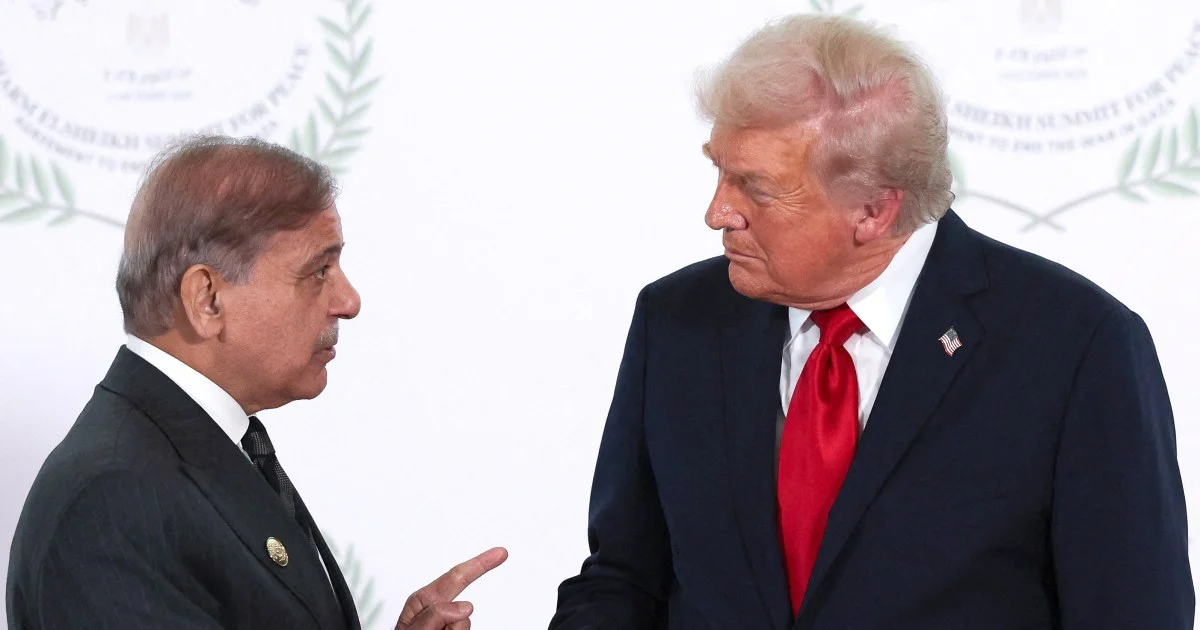
Further validating Pakistan’s pivotal role, chief U.S. negotiator Steve Witkoff confirmed on Thursday that Washington was utilizing Islamabad as a conduit for messages to Tehran. Hours later, former President Donald Trump announced a 10-day pause on threatened strikes against Iranian power plants via his social media platform, Truth Social, citing a request from the Iranian government. While Iran has consistently denied direct negotiations, Trump’s deferral of retaliatory action, now twice postponed since his initial threat, highlights Pakistan’s critical function in facilitating dialogue.
This diplomatic function is far from unprecedented for Pakistan. The nation’s historical involvement includes brokering the secret U.S.-China backchannel in 1971, playing a key role in the Geneva Accords that concluded the Soviet occupation of Afghanistan in the 1980s, and facilitating the 2020 Doha Agreement. Across successive administrations, Pakistan has also consistently sought to mediate between regional rivals Saudi Arabia and Iran.
The current crisis, ignited by Operation Epic Fury—the U.S.-Israeli air campaign launched in late February 2026 that tragically resulted in the swift death of Supreme Leader Ali Khamenei—has seen Islamabad deeply and discreetly engaged. The nation’s leadership, including Prime Minister Shehbaz Sharif and Army Chief Field Marshal Asim Munir, has been actively engaged in diplomatic outreach. Sharif has held numerous discussions with Iranian President Masoud Pezeshkian, while Munir has reportedly engaged in direct communication with former President Trump. Both Sharif and Munir have also visited Saudi Arabia, a nation with a mutual defense agreement with Pakistan and one that has itself faced Iranian aggression in recent weeks.
"Pakistan’s narrative is often dominated by conflict," noted Naghmana Hashmi, a former Pakistani ambassador to China. "However, beneath the headlines of coups, crises, and border skirmishes lies a consistent thread: a state that has repeatedly sought to transform its geography and its ties within the Muslim world into diplomatic leverage for peace."
The effectiveness and sustainability of this latest diplomatic gambit remain uncertain. However, it invariably reopens a persistent question: How and why does Pakistan consistently emerge as a diplomatic broker, and what has been the historical efficacy of its mediation efforts?
The Genesis of a Diplomatic Backchannel: Nixon and China
The foundation of Pakistan’s role as a diplomatic intermediary was laid in August 1969, when then-U.S. President Richard Nixon visited Pakistan. During this visit, he discreetly tasked Pakistan’s military ruler, President Yahya Khan, with conveying a crucial message to Beijing: Washington sought to establish communication with the People’s Republic of China. At the time, the United States officially recognized Taiwan as the legitimate government of China, eschewing any formal ties with Beijing.
Pakistan’s selection for this highly sensitive mission stemmed from its unique position as a nation maintaining working relations with both Washington and Beijing. Winston Lord, a key aide to then-National Security Advisor Henry Kissinger, recounted in a 1998 oral history interview that Pakistan was chosen precisely because it "had the advantage of being a friend to both sides." This strategic duality allowed for discreet communication where direct channels were nonexistent or politically unfeasible.
For two years, Pakistani officials served as the vital link, ferrying messages between the two capitals. The pivotal moment arrived in July 1971. During a public tour of Asia, U.S. Secretary of State Henry Kissinger, then in Islamabad, feigned illness at a welcome dinner. In the early hours of July 9, Kissinger and his aides were secretly transported by President Yahya Khan’s driver to a military airfield. A Pakistani government plane, carrying four Chinese representatives, was waiting to fly them to Beijing. A decoy car was dispatched to the hill resort of Nathia Gali, creating a diversion.
Kissinger spent 48 hours in Beijing engaging in critical discussions with Chinese Premier Zhou Enlai before returning to Pakistan. This clandestine trip was instrumental in paving the way for President Nixon’s historic visit to Beijing in February 1972, culminating in the iconic handshake with Chairman Mao Zedong. This encounter signaled a détente between the two Cold War giants and led to the United States’ eventual recognition of Communist China, fundamentally reshaping global geopolitics.
In hindsight, Kissinger acknowledged that the Nixon administration’s decision to refrain from publicly condemning the Pakistani army’s actions in East Pakistan—actions that ultimately contributed to the creation of Bangladesh in December 1971—was a strategic necessity. He explained that such condemnation "would have destroyed the Pakistani channel, which would be needed for months to complete the opening to China, which indeed was launched from Pakistan."
Masood Khan, who served as Pakistan’s ambassador to the United States and later to the United Nations, viewed this episode as a reflection of Pakistan’s structural diplomatic capacity. "In 1971, Pakistan was the only country that could be trusted simultaneously in Washington and Beijing with a very sensitive mission, which was kept secret even from the State Department," Khan told Al Jazeera. He further elaborated that beyond trust, Pakistan possessed "the requisite strategic maneuverability and operational flexibility that suit interlocutors caught in an apparently irredeemable situation."
Muhammad Faisal, a foreign policy analyst based in Sydney, described Pakistan’s facilitation of the U.S.-China backchannel as its "defining diplomatic moment." He emphasized its unparalleled consequentiality, stating, "Pakistan’s facilitation of the U.S.-China backchannel is unambiguously the most consequential. It restructured Cold War geopolitics in ways that still define the international order. No other Pakistani facilitation comes close in scale or permanence."
However, Faisal also pointed out the inherent limitations of such a role. "Pakistan couldn’t turn that support from both powers to its advantage in the 1971 civil conflict and the subsequent war with India," he noted. "Despite being on good terms with both China and the U.S., Pakistan couldn’t deter India from taking advantage of the civil conflict."
Decades of Afghan Diplomacy: A Complex Inheritance
Pakistan’s involvement in Afghan diplomacy spans over four decades, a period characterized by a complex and often dual role that defies simple categorization as purely neutral brokering. A significant chapter began in the 1980s following the Soviet invasion of Afghanistan in December 1979. Pakistan emerged as the primary conduit for military and financial assistance from the United States, Saudi Arabia, and China to the Afghan mujahideen, with its powerful Inter-Services Intelligence (ISI) agency actively organizing and directing the resistance.
The United Nations-mediated peace process commenced in Geneva in June 1982. Due to Pakistan’s refusal to recognize the Soviet-backed Kabul government, negotiations were conducted indirectly. The Geneva Accords were eventually signed on April 14, 1988, by the foreign ministers of Afghanistan and Pakistan, with the United States and the Soviet Union acting as guarantors. These accords established a timetable for Soviet withdrawal, which was completed by February 1989.
As Masood Khan observed, Pakistan occupied a dual role: "It was both a stakeholder and a mediator," a distinction that would profoundly shape its Afghan policy for decades to come.
Nearly three decades later, in July 2015, Pakistan hosted the first officially acknowledged direct talks between the Taliban and the Afghan government of then-President Ashraf Ghani. Held in Murree, near Islamabad, with U.S. and Chinese officials attending as observers, these talks aimed to foster reconciliation. The Taliban, who had ruled Afghanistan from 1996 until their overthrow after the 9/11 attacks, were then engaged in a persistent rebellion against U.S. and NATO forces. Pakistan, widely perceived as wielding significant influence over the Taliban, played a key facilitating role.
During the subsequent U.S.-Taliban negotiations that culminated in the Doha Agreement in 2020, Pakistan’s involvement was less visible but remained central to the process. U.S. envoy Zalmay Khalilzad repeatedly credited Pakistani pressure on Taliban leadership for sustaining the talks.
However, the ultimate outcome of the Doha Agreement—the hasty U.S. withdrawal and the subsequent Taliban takeover of Afghanistan—did not necessarily align with Pakistan’s own medium-to-long-term strategic interests, according to analyst Muhammad Faisal. "Pakistan did bring the Taliban interlocutors to the table. However, the outcome, the rushed U.S. exit and the Taliban takeover, did not secure Pakistan’s own medium-to-long term interests," he stated. Today, Pakistan and the Taliban-ruled Afghanistan are engaged in a tense border conflict, with the Taliban reportedly cultivating closer ties with Pakistan’s long-standing regional rival, India.
Saudi-Iran Rapprochement: Efforts Amidst Stagnation
Few diplomatic endeavors have consumed as much Pakistani energy with comparatively less tangible outcome than its persistent attempts to ease tensions between Riyadh and Tehran, according to regional analysts. In January 2016, following the ransacking of Saudi diplomatic missions in Iran by protesters, then-Prime Minister Nawaz Sharif, elder brother of the current premier, embarked on a high-profile trip to both capitals, accompanied by then-Army Chief General Raheel Sharif. Within days, however, Saudi Foreign Minister Adel al-Jubeir publicly denied that any formal mediation had been agreed upon.
A subsequent instance occurred in October 2019, after drone and missile attacks on Saudi Aramco facilities temporarily halved the kingdom’s oil output. Then-Prime Minister Imran Khan undertook shuttle diplomacy between Tehran and Riyadh, reportedly at the personal request of then-U.S. President Donald Trump to "facilitate some sort of dialogue." Iranian officials, however, indicated at the time that they were unaware of any formal mediation process.
When China ultimately brokered the restoration of Saudi-Iranian diplomatic ties in Beijing in March 2023, Pakistan’s Foreign Office noted that the initial direct contact between the two sides since 2016 had occurred on the sidelines of an Islamic countries summit hosted by Islamabad a year prior. Former diplomat Masood Khan rejects the notion that China’s role in the 2023 breakthrough represented a Pakistani failure. "China should get all the credit for the culmination of the Iran-Saudi rapprochement, but Beijing would recognize that Pakistan paved the way for it," Khan asserted. He added, "Pakistan’s forte is opening channels, building confidence, and hosting indirect, proximity talks. This kind of facilitation is foundational in any kind of mediation and subsequent conciliation, arbitration, and agreements."
A Tentative Peace Initiative in the Middle East: Pakistan and Israel
In a surprising move that underscored Pakistan’s willingness to engage on complex geopolitical fronts, Pakistan’s Foreign Minister Khurshid Mahmud Kasuri met his Israeli counterpart Silvan Shalom in Istanbul in September 2005. This meeting marked the first publicly acknowledged official contact between the two nations, neither of which officially recognizes the other. In his memoir, Neither a Hawk Nor a Dove, Kasuri described the encounter as an attempt to leverage Pakistan’s non-recognition of Israel into diplomatic capital. The strategy involved using Pakistan’s credibility in Arab and Muslim capitals as a conduit for dialogue, contingent on progress toward Palestinian statehood.
Shalom characterized the talks as a "huge breakthrough." However, the initiative ultimately faltered due to significant domestic opposition within Pakistan. Widespread protests erupted, and no follow-up meeting materialized, preventing the emergence of a structured process.
Enduring Structural Factors Drive Pakistan’s Diplomatic Role
Analysts attribute Pakistan’s recurring role as a diplomatic broker to a confluence of enduring structural factors. "Pakistan’s access is linked to its geography and its regional relationships amid many fault lines that it straddles," explained Muhammad Faisal. He elaborated, "Iran cannot ignore Pakistan because it is home to the largest Shia population outside Iran. For the U.S., ignoring Pakistan, a nuclear-armed Muslim-majority nation straddling the broader Middle East and South Asia with close ties to China, comes at its own risk."
Masood Khan refutes the assertion made by some analysts that Pakistan’s mediation efforts are primarily driven by Washington’s directives. "To suggest that Pakistan has always opted for mediation at the behest of the U.S. is a reductive construct. Mediation is in the DNA of Pakistan’s diplomacy," Khan stated. He emphasized Pakistan’s commitment to neutrality, asserting, "Pakistan does not pursue bloc politics and prefers to maintain equidistant relations with Washington, Beijing, Tehran, Riyadh, and other Gulf states. It is aligned, but not a camp follower."
The current mediation efforts concerning Iran, however, carry higher stakes than many of Pakistan’s recent diplomatic endeavors. "Pakistan now enjoys trust in Washington, Tehran and the Gulf capitals," Khan observed. "No other country in the region has that kind of leverage." This unique position, built over decades of engagement and a consistent, albeit sometimes controversial, track record, positions Pakistan to play a critical role in navigating complex geopolitical landscapes, a role that continues to evolve with the shifting dynamics of international relations.