Prime Minister Keir Starmer announced Monday that the United Kingdom will distance itself from a proposed U.S.-led blockade of the Strait of Hormuz, signaling a significant divergence in transatlantic foreign policy as the conflict with Iran intensifies. Speaking during a visit to Greater Manchester, the Prime Minister emphasized that while the UK remains a committed ally to Washington, it would not participate in the aggressive maritime enforcement measures recently suggested by the Trump administration. The decision highlights a growing rift between London and Washington over how to manage one of the world’s most critical oil transit corridors during a period of extreme geopolitical volatility.
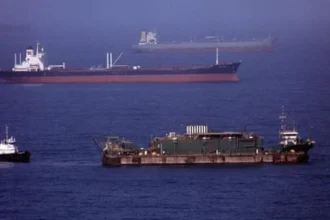
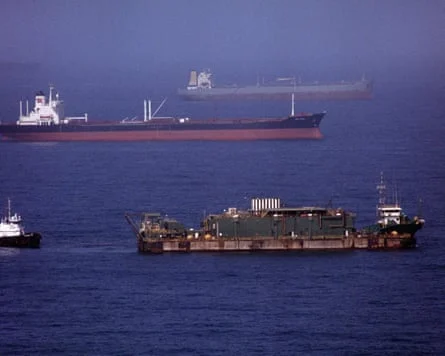
The Prime Minister’s refusal to back the blockade comes at a delicate time for global energy markets. The Strait of Hormuz, a narrow waterway between Oman and Iran, serves as the primary route for approximately one-fifth of the world’s total oil consumption. Any disruption or military blockade in the region threatens to send crude prices soaring, a consequence Starmer explicitly cited as a primary motivator for the UK’s cautious stance. The Prime Minister noted that the British government is prioritizing the stabilization of domestic energy bills, which have already been subjected to significant pressure following the outbreak of hostilities in the Middle East.
Starmer Confirms UK Will Not Support US Blockade of Strait of Hormuz Amid Rising Tensions
The announcement was made during a Radio 5 Live interview as Parliament returned from recess to address the ongoing "Iran war disaster." When asked directly if the UK would contribute naval assets or diplomatic support to the blockade proposed by President Donald Trump, Starmer was unequivocal, stating, "We’re not supporting the blockade." He clarified that while the UK possesses sophisticated minesweeping capabilities and has been in constant communication with international allies, its objective is to ensure the strait remains "fully open" for commercial navigation rather than restricted by military force.
Starmer argued that a blockade would be counterproductive to the goal of protecting the global economy. "The strait is shut or not free for navigation in the way it should be," Starmer said. "That means that oil and gas is not getting to market. That means the price is going up. That means everybody is facing higher energy bills. I don’t want that to happen." The Prime Minister’s comments suggest that the UK may instead focus on defensive maritime operations intended to deter Iranian interference without escalating to the level of a total blockade, which many international law experts argue could be viewed as an act of war.
The Strategic Significance of the Strait of Hormuz and Global Energy Markets
The Strait of Hormuz is widely regarded as the world’s most important oil transit chokepoint. Data from the U.S. Energy Information Administration indicates that more than 20 million barrels of oil pass through the waterway daily. For the United Kingdom, which has sought to diversify its energy sources since the invasion of Ukraine, the stability of Middle Eastern supply remains vital for preventing inflationary spikes. Analysts suggest that a sustained blockade could lead to a global recession, a risk that the Starmer government appears unwilling to take despite pressure from the White House.
The divergence in strategy between Starmer and Trump also reflects broader differences in how the two nations view the current conflict with Iran. While the U.S. administration has moved toward a policy of "maximum pressure" and physical containment, the UK government continues to advocate for a strategy that balances security with the maintenance of global trade flows. This "middle path" is intended to protect British consumers from the immediate economic shocks of war while fulfilling the UK’s traditional role as a guarantor of maritime security through its presence in the Gulf.
Strained Relations: Navigating the UK-US Partnership Under Trump
The refusal to support the blockade is one of the most significant foreign policy disagreements between the Starmer administration and the Trump White House to date. Since President Trump’s return to office, the "Special Relationship" has been tested by differing views on trade, climate change, and now, military intervention in the Middle East. Starmer’s decision to prioritize the "national interest" over reflexive alignment with Washington suggests a more independent British foreign policy, particularly when economic stability is at stake.
This tension is likely to be a major topic of discussion when Starmer addresses the House of Commons later this afternoon. MPs are expected to grill the Prime Minister on his recent tour of the Gulf and the specifics of the UK’s "minesweeping capability" in the region. Critics from the opposition benches may argue that by refusing to support the U.S. blockade, the UK is weakening the unified front necessary to deter Iranian aggression. Conversely, anti-war advocates are expected to praise the Prime Minister for avoiding entanglement in what many fear could become a protracted and costly regional conflict.

EU Integration by Stealth: The Controversy Over Single Market Alignment
Beyond the crisis in the Middle East, the Prime Minister is facing a domestic firestorm over the government’s plans to reshape the UK’s relationship with the European Union. Reports have surfaced suggesting that ministers are drafting legislation that would allow the UK to align with EU single market rules through secondary legislation. This move has been characterized by critics as "integration by stealth," as it could potentially bypass the traditional, rigorous parliamentary voting process for each specific regulation.
Starmer defended the proposal, arguing that a closer relationship with Europe is essential in a volatile world. "Ten years on from the Brexit referendum, we’ve got to look forward now, not backwards," Starmer said. He emphasized that the UK’s best interests lie in stronger ties regarding defense, security, energy, and the economy. However, he pushed back against the idea that this constituted a secret return to the EU, insisting that any overarching bill granting these powers would be "voted on in parliament."
Political Backlash: ‘The Worst of Both Worlds’
The government’s shift toward EU alignment has drawn sharp rebukes from both the Conservative and Reform UK parties. Kemi Badenoch, a leading figure in the Conservative Party, described the hybrid approach as "the worst of both worlds." During a campaign visit to south London, Badenoch argued that taking EU rules without having a vote on them is fundamentally wrong and fails to capitalize on the freedoms Brexit was intended to provide. "If you want to be in the EU, come out and say it," Badenoch challenged. "They’re picking this weird hybrid… it’s not in the EU, it’s not out."
Reform UK’s deputy leader, Richard Tice, went further, labeling the plan an "outrageous betrayal" and a "sell-out." As local elections approach in less than four weeks, the "Brexit betrayal" narrative is becoming a central pillar of the opposition’s strategy. They contend that the Labour government is attempting to undo the 2016 referendum results through administrative maneuvers. The political stakes are high, as these elections will serve as a referendum on Starmer’s leadership and his handling of both the economy and the UK’s post-Brexit identity.
Domestic Priorities: School Food Overhauls and the Hillsborough Law
While the international and constitutional debates rage, Starmer also spent time on Monday focusing on domestic social policies. In a visit to a primary school in Greater Manchester, accompanied by Angela Rayner and Andy Burnham, the Prime Minister promoted a new government initiative to overhaul school menus. The policy includes a ban on deep-fried foods and strict limits on sugary treats like steamed sponges and nuggets. The move is part of a broader public health strategy aimed at tackling childhood obesity and improving long-term health outcomes for the next generation.
In addition to health policy, the government signaled a major shift regarding the long-delayed "Hillsborough Law." Ministers have reportedly moved toward forcing intelligence services to provide evidence to public inquiries, a change that could revive the legislation. The law, named after the 1989 stadium disaster, aims to establish a "duty of candor" for public officials, ensuring transparency and accountability in the wake of national tragedies. This development is seen as a major victory for justice campaigners who have fought for decades to ensure that state institutions cannot withhold vital information during investigations.
Looking Ahead: The Southport Inquiry and Parliamentary Debate
The political calendar remains packed as the afternoon progresses. The Southport inquiry is set to publish its phase one report at noon, which is expected to provide critical insights into the tragic events that sparked nationwide unrest last year. Meanwhile, Health Secretary Wes Streeting is delivering a keynote speech on NHS funding, and Scottish Labour leader Anas Sarwar is launching the party’s manifesto for the Holyrood election.
As Keir Starmer prepares to deliver his statement to the House of Commons after 3:30 p.m., the focus will return to the precarious balance he must strike. He must convince a skeptical Parliament that his refusal to support the U.S. blockade is a calculated move for economic stability, not a sign of weakness. Simultaneously, he must navigate the treacherous waters of post-Brexit politics, where every move toward Europe is scrutinized for signs of retreat. The events of this day underscore a government attempting to manage multiple crises at once, from the shores of the Persian Gulf to the lunchrooms of English primary schools.