The protracted diplomatic push to secure a ceasefire between the United States and Iran has hit a significant snag, with crucial negotiations over Iran’s uranium enrichment program emerging as a critical stumbling block. High-level delegations from both nations met in Islamabad, Pakistan, over the weekend, but failed to reach a comprehensive agreement, largely due to fundamental disagreements on the permissible duration of any ban on Iran’s uranium enrichment activities. This impasse not only threatens to derail broader peace efforts but also underscores the deep-seated mistrust and differing strategic objectives that continue to define the complex relationship between Washington and Tehran.
At the heart of the dispute lies the United States’ demand for a lengthy suspension of Iran’s uranium enrichment program, reportedly seeking a 20-year moratorium. This demand is rooted in longstanding U.S. policy, articulated by the Trump administration, that Iran must not only commit to forgoing the development of nuclear weapons but also relinquish the capability to produce them. In exchange for such concessions, Washington has signaled a willingness to offer sanctions relief, a key objective for Iran’s struggling economy.
However, Iran has balked at the extended timeline, proposing instead a significantly shorter period of five years for any suspension. This divergence in proposed durations reflects Iran’s perspective on its sovereign rights and its perceived need for a nuclear program for energy purposes, while simultaneously navigating international pressure and sanctions. The failure to bridge this gap has led to a breakdown in talks, with Pakistan now attempting to facilitate a second round of discussions.
Understanding Uranium Enrichment: A Technical and Strategic Overview
Uranium enrichment is a complex industrial process that increases the concentration of the fissile isotope Uranium-235 (U-235) within a sample of uranium. Naturally occurring uranium consists primarily of two isotopes: Uranium-238 (U-238), which is not readily fissile, and Uranium-235 (U-235), which is. The natural abundance of U-235 is approximately 0.72 percent, a level insufficient for most nuclear applications.
The International Atomic Energy Agency (IAEA), the global nuclear watchdog, defines enrichment as the process of raising the proportion of U-235. Uranium enriched to less than 20 percent U-235 is considered low-enriched uranium (LEU) and is suitable for use as fuel in civilian nuclear power reactors. This LEU can power homes and industries, playing a vital role in global energy production.
However, the enrichment process can be taken much further. Uranium enriched to levels exceeding 20 percent U-235 is classified as highly enriched uranium (HEU). Critically, uranium enriched to approximately 90 percent U-235 is considered weapons-grade, meaning it possesses the fissile material necessary for the core of a nuclear weapon. The technical pathway from LEU to HEU involves a significant increase in enrichment levels, making the control of enrichment technology and stockpiles a paramount concern for international security.
The technical method most commonly employed for uranium enrichment, including by Iran, involves converting uranium into a gaseous compound, typically uranium hexafluoride (UF6). This gas is then fed into high-speed centrifuges. These centrifuges spin at extremely rapid rates, exploiting the slight mass difference between U-235 and U-238 to progressively separate the lighter U-235 from the heavier U-238. The enriched U-235 is then captured for its intended use, whether as nuclear fuel or, at higher concentrations, for weapons development.
Iran’s Current Enrichment Capabilities and Stockpile
Estimates indicate that Iran currently possesses approximately 440 kilograms (about 970 pounds) of uranium enriched to a concentration of 60 percent. This level is significant because it brings Iran considerably closer to the 90 percent threshold required for weapons-grade material. According to IAEA Director General Rafael Grossi, this quantity of 60-percent-enriched uranium is theoretically sufficient to produce more than 10 nuclear warheads.
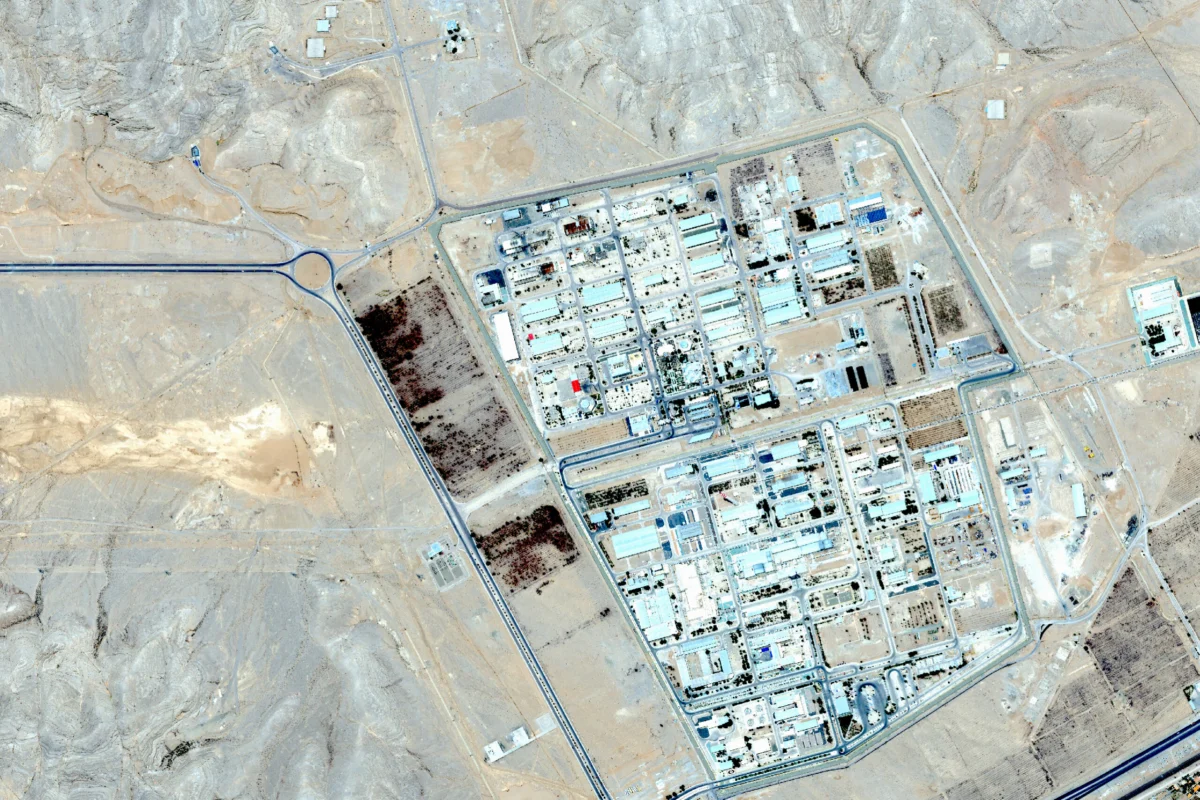
Grossi has further indicated that nearly half of this highly enriched uranium may be stored within an underground tunnel complex at Iran’s Isfahan nuclear facility. An additional, unspecified quantity is believed to be held at the Natanz facility. Both the Isfahan and Natanz sites, along with a third facility at Fordow, have been subjected to damage or destruction during recent conflicts, including U.S.-Israeli air strikes during a 12-day war in June 2025 and subsequent attacks during the current hostilities. The precise condition and accessibility of these enriched uranium stockpiles remain uncertain, potentially buried under rubble or compromised by military actions.
The Core of the Dispute: Iran’s Nuclear Program Ambitions
Iran has consistently asserted that its nuclear program is exclusively for peaceful, civilian energy purposes. This stance persists despite the nation’s capacity to enrich uranium to levels far exceeding those necessary for power generation. This has led to persistent accusations from the United States and its allies, particularly Israel and European nations, that Iran is pursuing nuclear weapons development under the guise of a civilian program. These accusations have been a primary driver for the imposition of multiple rounds of international sanctions against Iran.
A pivotal moment in the international effort to curb Iran’s nuclear ambitions was the signing of the Joint Comprehensive Plan of Action (JCPOA) in 2015. Negotiated under the Obama administration, this landmark agreement stipulated that Iran would scale back its nuclear program in exchange for the lifting of economic sanctions. At the time of its signing, Iran was reported to be fully compliant with its commitments, as verified by the IAEA and U.S. intelligence agencies.
However, the landscape shifted dramatically in 2018 when President Donald Trump unilaterally withdrew the United States from the JCPOA, characterizing it as a "one-sided" deal and reimposing stringent sanctions on Iran. Since then, Trump has consistently maintained that Iran should be denied the ability to develop nuclear weapons, a stance that has been a cornerstone of U.S. policy and a primary justification for military actions, including the bombing of Iranian nuclear facilities during the 2025 war. The U.S. also cited this objective as a reason for initiating the broader conflict with Iran in February of the current year, even while engaging in negotiations over uranium enrichment. Reports have surfaced of Trump considering the deployment of U.S. special forces to seize Iran’s stockpile of highly enriched uranium.
Iranian officials have, in past negotiations, expressed openness to discussing reductions in enrichment levels but have steadfastly refused to dismantle their nuclear program entirely. This positions Iran to maintain a degree of nuclear capability, a stance that creates inherent friction with U.S. demands for complete dismantlement or extended prohibitions.
The Duration of the Ban: A Bargaining Chip in Broader Negotiations
The significant divergence in the proposed duration of an enrichment ban—20 years sought by the U.S. versus five years proposed by Iran—is not merely a technical disagreement but a strategic negotiation over long-term security and regional influence. According to U.S. media reports, this very issue led to the collapse of the initial ceasefire talks in Islamabad.
Experts view this debate as a complex bargaining process, where both sides have invested considerable political capital. MV Ramana, a professor at the University of British Columbia specializing in disarmament and global security, suggests that the current positions represent a partial recalibration from previous maximalist demands. Previously, the U.S. insisted on a complete abandonment of Iran’s enrichment program, a demand Iran consistently rejected. Now, both nations appear to be exploring middle ground, though the gap remains substantial. Ramana notes that beyond the political maneuvering, there are no apparent technical justifications for either a 20-year or a five-year moratorium.
The specifics of the JCPOA provide important context for the current wrangling. Under the 2015 agreement, Iran agreed to cap its U-235 enrichment to 3.67 percent for 15 years, a level suitable for civilian reactors but far below weapons-grade. It also committed to not developing new centrifuges for 10 years and to reduce its existing centrifuge numbers over that decade. Enrichment was restricted to the Natanz facility, and its stockpile of enriched uranium was capped at 300 kilograms.
The perceived brevity of the JCPOA’s 10-year limits on certain activities has been a point of contention. Critics, including President Trump at the time, argued that this period was insufficient to guarantee against Iran’s eventual development of nuclear weapons. This historical perspective likely informs the current U.S. demand for a significantly longer prohibition, aiming to secure a more enduring constraint on Iran’s nuclear potential. Conversely, Iran’s proposal for a shorter duration reflects its desire to retain flexibility and avoid long-term restrictions that could hinder its future technological development or perceived energy needs.
U.S. Vice President JD Vance, who led the American delegation in Islamabad, stated that "the ball is in the Iranian court," emphasizing the need for Iran to provide concrete mechanisms to ensure it does not pursue nuclear weapons. He articulated the U.S. position: "It’s one thing for the Iranians to say that they’re not going to have a nuclear weapon. It’s another thing for us to put in place the mechanism to ensure that’s not going to happen."
Broader Implications and Geopolitical Ramifications
The stalemate over uranium enrichment duration has significant implications beyond the immediate diplomatic negotiations. For the United States, securing a lengthy ban is crucial for fulfilling its overarching foreign policy objective of preventing Iran from acquiring nuclear weapons. A prolonged moratorium makes it technically more challenging for Iran to rapidly restart and scale up its enrichment activities should it choose to do so in the future.
From Iran’s perspective, any agreement must balance international security concerns with its national interests, including its sovereign right to develop nuclear technology for peaceful purposes and its desire for economic relief from sanctions. Offering a shorter moratorium allows Iran to maintain a degree of nuclear infrastructure and expertise, which it may view as a strategic asset or a necessary component of its future energy strategy.
The prolonged conflict and the associated nuclear tensions have had a destabilizing effect on the Middle East. The U.S. justification for military actions, including bombings of Iranian nuclear facilities, has been directly linked to preventing a nuclear-armed Iran. A failure to reach a diplomatic resolution on enrichment could prolong the conflict, increase the risk of further military escalation, and fuel regional proxy conflicts.
Furthermore, the outcome of these negotiations will significantly impact the broader international non-proliferation regime. A perceived inability to broker a durable agreement with Iran could embolden other states to reconsider their own nuclear programs or reduce their adherence to international treaties.
Public and Political Impact
The protracted dispute over Iran’s nuclear program has had a profound impact on both domestic politics in the U.S. and Iran, as well as on regional stability. In the United States, the issue has been a recurring theme in political discourse, with differing approaches proposed by various administrations. For President Trump, achieving a verifiable and extended halt to Iran’s enrichment activities could be presented as a significant foreign policy victory, bolstering his claims of success in managing the ongoing conflict and asserting American power.
In Iran, the government faces the challenge of balancing international demands with domestic economic pressures exacerbated by sanctions. The ability to secure sanctions relief through a nuclear deal remains a critical objective for the Iranian leadership, aiming to improve the lives of its citizens and stabilize its economy. However, concessions on its nuclear program are often framed within Iran as a matter of national sovereignty and technological advancement, making any agreement politically sensitive.
The ongoing war and the related nuclear tensions have created widespread anxiety throughout the Middle East and globally. The specter of a nuclear-armed Iran raises concerns about regional arms races and the potential for catastrophic conflict. The public in many nations closely watches these developments, recognizing the far-reaching consequences of nuclear proliferation and the challenges of maintaining international peace and security.
The Path Forward: Continued Diplomacy and Uncertainty
The breakdown in Islamabad underscores the difficult road ahead in resolving the complex issues surrounding Iran’s nuclear program. While Pakistan continues its efforts to reconvene the parties, the fundamental disagreements over the duration of an enrichment ban suggest that significant diplomatic breakthroughs will require further concessions and a renewed commitment to de-escalation from both Washington and Tehran.
The U.S. insistence on a long-term moratorium reflects a desire for deep, verifiable assurances, while Iran’s push for a shorter period highlights its strategic considerations and desire for future autonomy. The extent to which either side is willing to compromise will ultimately determine whether a lasting agreement can be reached, or if the cycle of tension and conflict will continue to define the relationship between these two nations. The global community remains hopeful for a diplomatic resolution, recognizing that the stakes—in terms of regional stability and international security—could not be higher.