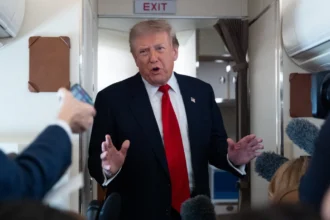
U.S. President Donald Trump announced Thursday that leaders from Israel and Lebanon are scheduled to speak for the first time in 34 years, igniting cautious optimism for a diplomatic resolution to the ongoing conflict that has raged for over six weeks. This unprecedented dialogue comes as Israeli military operations in Lebanon, including an intensified ground invasion of the country’s south, continue. The hostilities have resulted in a devastating humanitarian crisis, with over 2,000 reported fatalities and more than one million Lebanese citizens displaced from their homes.
The impending conversation, as revealed by Israeli Minister for Innovation, Science and Technology Gila Gamliel, is expected to involve Israeli Prime Minister Benjamin Netanyahu and Lebanese President Joseph Aoun. While Lebanon has yet to officially comment on the planned talks, Iran’s speaker of parliament, Mohammad Bagher Ghalibaf, emphasized the critical importance of a ceasefire in Lebanon during a phone call with his Lebanese counterpart, Nabih Berri. Ghalibaf stated that a cessation of hostilities in Lebanon is as vital as one in Iran, underscoring the interconnectedness of regional security dynamics.
These prospective high-level discussions follow a significant diplomatic development earlier in the week: a rare direct engagement between the U.S. ambassadors representing Israel and Lebanon in Washington D.C. This meeting, also the first of its kind in decades, concluded without a resolution but signaled a concerted effort by the Trump administration to de-escalate tensions in the volatile region. The administration’s push for dialogue is occurring amidst a fragile two-week ceasefire brokered by Pakistan between the U.S., Israel, and Iran-aligned Hezbollah. However, a significant point of contention remains: the extent to which this ceasefire encompasses the ongoing fighting between Israel and Hezbollah within Lebanon.
Diplomatic Push Amidst Escalating Conflict
The Trump administration’s fervent pursuit of a deal with Iran, as observed by Chris Doyle, director of the Council for Arab-British Understanding (CAABU), appears to be a driving force behind these diplomatic overtures. Doyle suggests that the administration is keen to extricate itself from the current geopolitical quagmire, particularly given the economic ramifications and the perceived inability to achieve swift military objectives in Iran. The administration’s apparent desire to avoid further complications, potentially including Israeli actions hindering broader diplomatic efforts, seems to be influencing its approach to the Israel-Lebanon conflict.
Despite these diplomatic maneuvers, the starkly divergent objectives of the involved parties, coupled with the intricate link between the Lebanon front and wider negotiations concerning Iran, cast a shadow of uncertainty over the potential success of the talks announced by President Trump. The path to a lasting ceasefire remains fraught with challenges and deeply intertwined with regional power plays.
Key Developments Toward a Potential Ceasefire
President Trump’s announcement on his Truth Social platform, stating his intent to facilitate a phone call between Israeli and Lebanese leaders, was framed as an effort to provide "breathing room" between the two nations. He noted the historical significance of such a conversation, remarking on the 34-year gap since leaders last spoke directly. However, the specific leaders involved in this potential dialogue were not identified.
Reporting from Lebanon, Al Jazeera’s Zeina Khodr described Trump’s statement as "very controversial." She noted that the phrase "breathing space" could be interpreted as a precursor to a ceasefire. However, a Lebanese official source conveyed a lack of any concrete information regarding such a phone conversation or a follow-up meeting between ambassadors, using the precise phrase "no information." This discrepancy highlights the fluid and often opaque nature of diplomatic communications during periods of intense conflict.
Roots of the Escalation: The Iran-Israel War and Hezbollah’s Involvement

The current surge in Israeli military actions against Lebanon intensified following the outbreak of the U.S.-Iran war on February 28. Hezbollah entered the conflict on March 2, launching rockets, missiles, and drones towards a missile defense site near Haifa in northern Israel. This action was reportedly in retaliation for the killing of Iran’s Supreme Leader, Ayatollah Ali Khamenei, during the initial strikes on Tehran. Prior to this, the Iran-backed Hezbollah had maintained a period of relative quiet regarding attacks on Israel since a November 2024 ceasefire, despite alleged near-daily breaches of that agreement by Israel.
Israel’s immediate response involved extensive air raids targeting areas in the southern suburbs of Beirut, which the Israeli military identified as Hezbollah strongholds. Since then, the Israeli offensive has broadened considerably, encompassing widespread air attacks across Lebanon and a significant ground invasion into the country’s southern territories. Israeli forces have advanced deeper into these southern regions with the stated objectives of targeting Hezbollah positions and establishing a buffer zone along the shared border.
In a significant policy declaration last month, Israeli Defense Minister Israel Katz articulated a plan to establish a "security zone" extending approximately 30 kilometers (20 miles) north of the Israeli border, reaching the Litani River. The destruction of multiple bridges across the Litani River has been a key component of this strategy, drawing widespread international condemnation. Human rights organizations have expressed grave concerns that Israel’s actions may be aimed at isolating southern Lebanon from the rest of the country, potentially facilitating prolonged military occupation.
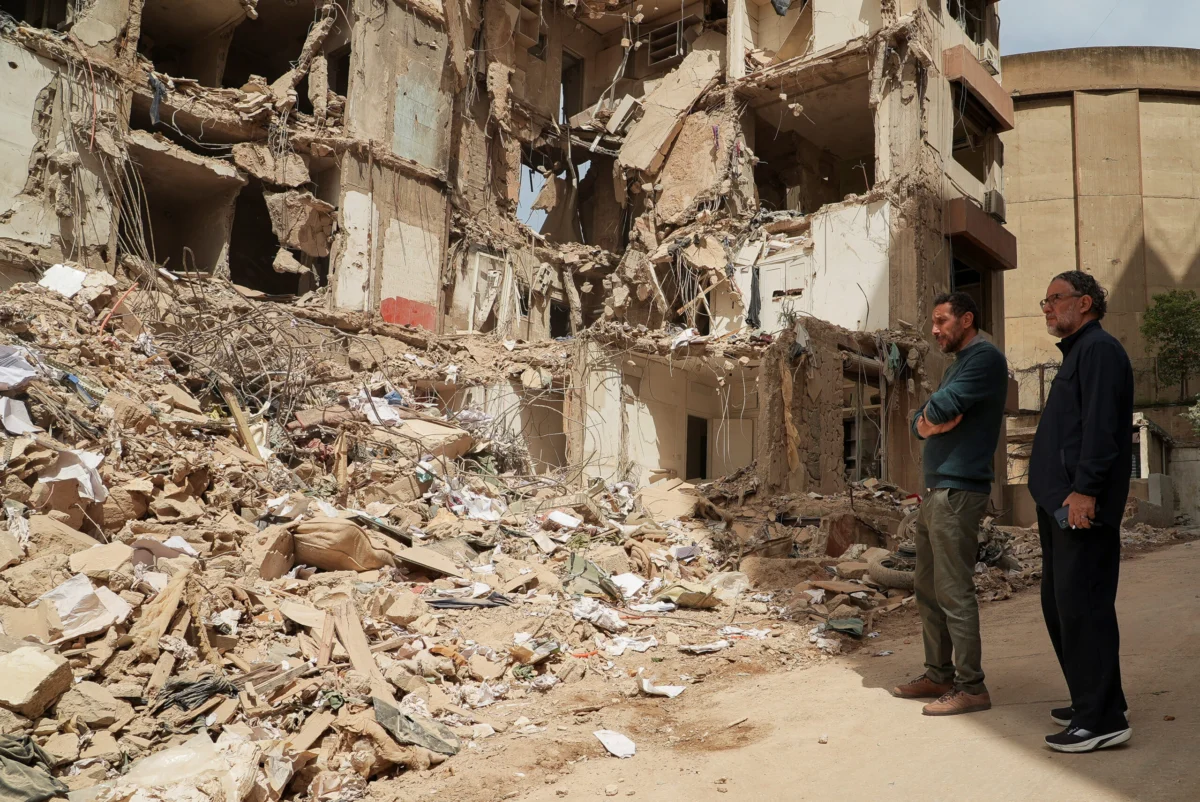
The scale of the Israeli offensive has resulted in a severe humanitarian catastrophe. Over 2,000 lives have been lost across Lebanon, with thousands more injured. Approximately 1.2 million people have been forced to flee their homes, seeking safety from the relentless aerial bombardments and ground operations. Israeli attacks have impacted numerous areas, including densely populated urban neighborhoods in the capital, Beirut.
Assessing the Prospects for a Ceasefire
Despite the diplomatic overtures, observers express skepticism regarding the immediate prospects for a genuine ceasefire. Analyst Nadim Houry suggests that even if a phone call between Prime Minister Netanyahu and President Aoun materializes, it would likely be more symbolic than substantive. Houry, executive director of the Arab Reform Initiative, stated that Lebanon’s primary demand is a ceasefire to facilitate negotiations aimed at liberating occupied territories.
In contrast, Houry observes that Israel’s focus remains on combating Hezbollah and establishing a buffer zone, which he characterizes as a potential new zone of occupation. He specifically noted Israel’s apparent keenness to secure the town of Bint Jbeil before any ceasefire announcement, suggesting this objective might be driven by domestic political considerations for Netanyahu. The town of Bint Jbeil has been a focal point of intense fighting, with Netanyahu recently claiming Israeli forces were on the verge of "overwhelming" the area.
The direct engagement between the Israeli and Lebanese ambassadors in Washington, while initially hailed by some as a breakthrough, failed to produce any concrete plan for a ceasefire. Yechiel Leiter, Israel’s ambassador to the U.S., characterized the meeting positively as a "wonderful exchange" among parties "united in liberating Lebanon" from Hezbollah. Conversely, Lebanon’s envoy, Nada Hamadeh Moawad, adopted a more reserved stance, describing the talks as "constructive" while emphasizing her efforts to advocate for a ceasefire.
Further complicating de-escalation efforts, Prime Minister Netanyahu announced on Wednesday a directive to the Israeli army to expand its offensive operations eastward in southern Lebanon. He maintained that Israel is pursuing diplomatic contacts with the Lebanese government in parallel with its military campaign against Hezbollah, framing both as integral to disarming the group and achieving "sustainable peace" with its northern neighbor.
The Critical Importance of a Lebanon Ceasefire

A central demand from Iran in its ongoing dialogue with the United States is an end to Israel’s offensive operations in Lebanon. Tehran insists that the ceasefire agreement reached last week should encompass the conflict in Lebanon, a stance rejected by both the U.S. and Israel. President Trump has publicly described Israel’s actions in Lebanon as a "separate skirmish," despite Hezbollah’s stated reason for entering the war being in defense of Iran.
The initial social media post by Pakistani Prime Minister Sharif announcing the ceasefire had included Lebanon. However, following this announcement, Israel launched some of its most extensive attacks since the conflict’s inception, striking over 100 targets across Lebanon in a single day last Wednesday. This response underscores the ongoing tensions and the difficulty in achieving a comprehensive de-escalation.
Hezbollah stands as Iran’s most formidable regional ally and a key component of Tehran’s "axis of resistance," a network of armed groups across the Middle East aligned against Israel. This network includes groups like Yemen’s Houthis and various armed factions in Iraq.
Political analyst Chris Doyle stresses the "absolutely crucial" nature of securing a ceasefire in Lebanon, encompassing the fighting between Israeli forces and Hezbollah. He believes this would create a more conducive environment for negotiations between the United States and Iran, particularly given Iran’s conditionality for further progress in these talks. Houry echoes this sentiment, describing the Lebanon front as "one of the main transmission belts of the broader regional war." He argues that its continued engagement fuels the conflict’s spread, while its closure offers one of the few genuine opportunities for wider de-escalation.
However, Doyle points to Israel’s underlying objective: the disarmament and definitive defeat of Hezbollah. He suggests Israel perceives the current situation as a significant opportunity, with Netanyahu enjoying considerable domestic support for these actions, in contrast to President Trump’s declining approval ratings for his war against Iran.
Humanitarian Crisis Deepens Amidst Conflict
Beyond the geopolitical complexities and diplomatic maneuvers, the human cost of the ongoing conflict is immense. Taghrid Abdallah, the International Rescue Committee (IRC) protection coordinator in Lebanon, highlighted the "severe and complex" impact on children, who are disproportionately affected by the violence. Many children are not only losing their homes but also their primary caregivers due to the sustained hostilities.
Abdallah described the IRC’s efforts to identify and assist children separated from or orphaned by the conflict, noting their frequent arrival at hospitals injured, traumatized, and alone. Following a significant Israeli attack on Beirut last week, which resulted in over 300 fatalities, the IRC identified at least 29 unaccompanied children, successfully reuniting eight with their families.
The broader psychological toll on children is profoundly evident. Abdallah reported widespread experiences of fear, anxiety, and disrupted sleep patterns. Parents have observed noticeable behavioral changes in their children, including increased withdrawal, aggression, and difficulties with concentration, underscoring the long-term trauma inflicted by the conflict. The ongoing violence continues to devastate communities, with the prospect of a lasting ceasefire remaining uncertain.