The lunar cycle reaches a distinct transition on Sunday, July 19, 2026, as the Moon enters a Waxing Crescent phase with approximately 29% of its Earth-facing surface illuminated by the sun. This specific level of illumination offers a unique opportunity for both amateur astronomers and casual skywatchers to observe high-contrast geological features along the lunar terminator, the moving line that separates the day and night sides of the Moon.
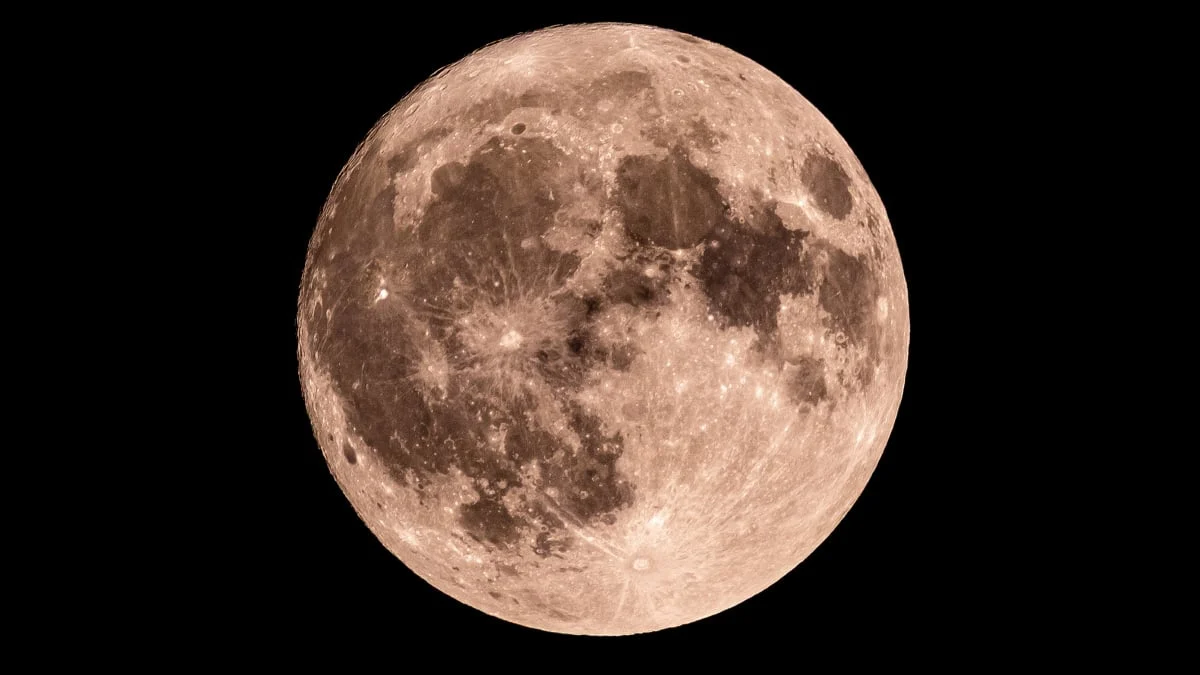
According to data provided by NASA’s lunar tracking systems, the Moon’s current position in its orbit allows for the clear visibility of major basaltic plains, commonly referred to as "maria." These dark, solidified lava flows are prominent even to the naked eye under clear atmospheric conditions. On July 19, the orientation of the sun relative to the Moon highlights the eastern limb, making specific landmarks like Mare Crisium and Mare Fecunditatis particularly easy to distinguish.
For those utilizing optical aids such as binoculars or small telescopes, the 29% illumination provides enough light to reveal intricate details without the overwhelming glare often associated with a Full Moon. Observation guides indicate that the Endymion Crater, located near the Moon’s northeastern limb, will be visible under these conditions, offering a glimpse into the Moon’s violent history of meteoric impacts.
Understanding the Waxing Crescent Moon Phase Today
The Waxing Crescent phase is the second stage of the eight-part lunar cycle, occurring immediately after the New Moon. During this period, the Moon moves away from the sun in its orbit around Earth, causing a thin sliver of light to appear on the right side for observers in the Northern Hemisphere. This "waxing" or growing process continues until the Moon reaches its First Quarter phase.
The physics behind the Moon phase today explained for July 19 involves the geometry of the Earth-Moon-Sun system. While the Moon is always half-illuminated by the sun, the portion of that illumination visible from Earth changes as the Moon progresses through its 29.5-day synodic month. At 29% illumination, the Moon is roughly four to five days past its "new" phase, placing it in an ideal position for evening viewing shortly after sunset.
Atmospheric conditions play a critical role in how the Waxing Crescent appears. On July 19, 2026, observers may also witness "Earthshine," a phenomenon where the dark portion of the Moon is faintly visible. This occurs when sunlight reflects off Earth’s clouds and oceans and hits the lunar surface, effectively illuminating the "dark side" of the Moon with a ghostly, indirect glow.
Visual Landmarks and Geological Features Visible on July 19, 2026
The specific 29% illumination on July 19, 2026, highlights the "Sea of Crises," or Mare Crisium. This 345-mile-wide lunar plain is unique because it is a circular basin isolated from the larger complexes of lunar maria. Its dark, flat floor is surrounded by a ring of rugged mountains, which cast long shadows during the Waxing Crescent phase, providing a sense of depth and topography that is lost during the Full Moon.
Adjacent to Mare Crisium is Mare Fecunditatis, the "Sea of Fertility." This expansive basin stretches over 520 miles and contains a complex system of ridges and small craters. On July 19, the terminator line will be positioned near the edge of this sea, creating the high-contrast lighting necessary to see the subtle "wrinkle ridges" caused by the cooling and contracting of ancient lava.
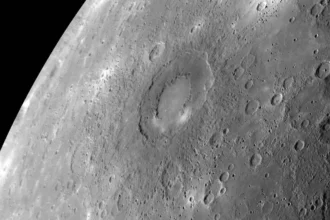
For telescope enthusiasts, the Endymion Crater serves as a primary target. Situated to the north of Mare Crisium, this ancient impact site features a dark, floor-filled interior and high walls that catch the sunlight. The crater’s floor is covered in lava, similar to the maria, which makes it appear darker than the surrounding highlands. Observing this crater during a 29% Waxing Crescent allows for a detailed study of its rim structure before it becomes fully washed out by direct sunlight later in the cycle.
The Significance of the Lunar Cycle and the 29.5-Day Month
The Moon phase today explained for July 19 is part of a larger, predictable rhythm known as the synodic month. While it takes the Moon 27.3 days to complete one orbit around Earth relative to the stars (a sidereal month), it takes approximately 29.5 days to return to the same phase as seen from Earth. This discrepancy is due to Earth’s own movement around the sun; the Moon must travel slightly further in its orbit to reach the same alignment with the sun.
This cycle is divided into eight primary phases: New Moon, Waxing Crescent, First Quarter, Waxing Gibbous, Full Moon, Waning Gibbous, Third Quarter, and Waning Crescent. Each phase represents a different angle of solar illumination. On July 19, 2026, the Moon is in the transition between the darkness of the New Moon and the half-light of the First Quarter.
Tracking these phases is not merely a hobby for stargazers; it is essential for maritime operations, agricultural planning in certain cultures, and scientific research. NASA and other space agencies monitor these cycles to plan missions, as the amount of light on the lunar surface affects the power generation of solar-equipped rovers and the thermal management of lunar landers.
Preparation for the Upcoming July 29 Full Moon
As the Moon continues its eastward journey in the sky, the percentage of illumination will increase daily. Following the July 19 Waxing Crescent, the Moon will reach its First Quarter on approximately July 22, followed by the Waxing Gibbous phase. The culmination of this cycle will occur on July 29, 2026, with the arrival of the Full Moon.
The July Full Moon, often referred to in North American folklore as the "Buck Moon" or "Thunder Moon," will see 100% of the Earth-facing side illuminated. While the Full Moon is the most brilliant phase, it is often considered the most difficult time for geological observation because the sun’s rays hit the surface directly, eliminating the shadows that define craters and mountains.
The transition from the 29% illumination of July 19 to the 100% illumination of July 29 represents the "waxing" half of the month. During these ten days, the Moon will rise later each day and remain visible longer into the night. For photographers and scientists, the days leading up to the Full Moon offer the best opportunities to capture the lunar "seas" in varying degrees of light.
The Role of NASA and Modern Technology in Lunar Observation
In 2026, lunar observation has reached a new peak of public interest, largely driven by the Artemis program and international efforts to establish a permanent human presence on the Moon. NASA’s Daily Moon Guide and other digital tracking tools provide real-time data on the Moon’s libration, phase, and position. This information is vital for the current generation of lunar explorers who are identifying potential landing sites near the lunar south pole.
The data for the Moon phase today explained for July 19, 2026, is derived from the Lunar Reconnaissance Orbiter (LRO), which has been mapping the lunar surface in unprecedented detail for years. This satellite technology allows scientists to predict exactly how shadows will fall across specific craters, such as Endymion, helping them understand the volatile compounds that might be trapped in permanently shadowed regions.
Furthermore, the rise of "citizen science" has enabled amateur observers to contribute to lunar mapping. High-resolution digital cameras attached to hobbyist telescopes can now capture images that rival professional observatories from decades ago. These images, shared across global networks, help track changes on the lunar surface, such as new impact craters from small meteoroids.
Cultural and Scientific Impact of Lunar Phases
Beyond the technical aspects, the Moon phase today explained for July 19 carries cultural weight. For millennia, the Waxing Crescent has been a symbol of growth and renewal in various civilizations. In the modern era, the visibility of the Moon serves as a bridge between the general public and the complexities of astrophysics.
Scientifically, the 29% illumination phase is a reminder of the Moon’s role in stabilizing Earth’s axial tilt, which in turn stabilizes our climate. The gravitational pull of the Moon, which varies slightly in its perceived intensity based on its distance from Earth (apogee vs. perigee), is responsible for the tides that drive oceanic ecosystems.
As July 19, 2026, progresses, the Moon will be a prominent fixture in the evening sky, hanging low in the west after sunset. Its presence serves as a constant laboratory for scientists studying the early history of the solar system. Because the Moon lacks an atmosphere and tectonic plates, its surface remains a pristine record of billions of years of cosmic history, preserved in the basalt of Mare Crisium and the ancient walls of the Endymion Crater.
Viewing Tips for the July 19 Waxing Crescent
To get the best view of the Moon phase today explained for July 19, observers are encouraged to find a location with a clear view of the western horizon. Because the Waxing Crescent follows the sun, it will set relatively early in the evening. The "Golden Hour"—the period just after sunset—is often the best time to see the Moon’s features as the sky darkens enough for the crescent to pop, but while there is still enough ambient light to see the surrounding landscape.
If using a telescope, a lunar filter is recommended to reduce the brightness and enhance the contrast of the terminator line. Focusing on the area where the light meets the dark will reveal the most dramatic mountain peaks and crater rims. On July 19, the orientation of the Moon will make the "Sea of Crises" appear as a dark oval near the illuminated edge, a landmark that has guided navigators and astronomers for centuries.
The lunar cycle remains one of the most accessible and reliable spectacles in the natural world. Whether viewed through a high-powered lens or the naked eye, the 29% Waxing Crescent of July 19, 2026, provides a moment of celestial clarity, marking another step toward the Full Moon on July 29 and the ongoing human journey to understand our nearest neighbor in space.