Representative Brad Sherman, a senior Democrat on the House Foreign Affairs Committee, formally called for oversight hearings Wednesday into the Trump administration’s nuclear deal with Saudi Arabia, warning that the agreement could repeat catastrophic foreign policy errors of the 20th century. During a high-profile committee session, Sherman argued that the transfer of sensitive nuclear technology to the kingdom represents a profound risk to global nonproliferation efforts and Middle East stability.
The push for congressional scrutiny follows an announcement from U.S. Energy Secretary Chris Wright, who confirmed the signing of a "peaceful nuclear cooperation agreement" and an accompanying bilateral safeguards framework with Saudi Prince Abdulaziz bin Salman. The deal, a 30-year pact often referred to as a "123 agreement" under the U.S. Atomic Energy Act, aims to facilitate a multi-billion dollar partnership involving American firms like Westinghouse to build a civilian nuclear energy infrastructure within the kingdom.
The central controversy surrounding the Trump administration’s nuclear deal with Saudi Arabia involves the kingdom’s reported refusal to forgo domestic uranium enrichment and plutonium reprocessing. Critics argue that by allowing the Saudis to enrich their own fuel, the U.S. is abandoning the "gold standard" of nonproliferation—a benchmark established during the 2009 nuclear agreement with the United Arab Emirates (UAE). Under that previous deal, the UAE voluntarily committed to purchasing nuclear fuel from the international market rather than producing it domestically, thereby eliminating the pathway to developing a nuclear weapon.

Historical Echoes: The Shah of Iran and Middle East Stability
During his questioning of Mike Waltz, the U.S. Ambassador to the UN and former National Security Adviser, Representative Sherman drew a sharp parallel between the current deal and the U.S. relationship with the Shah of Iran in the 1970s. Sherman reminded the committee that the U.S. once viewed the Iranian monarch as its most powerful and reliable ally in the region, providing him with advanced military technology that eventually fell into the hands of a hostile revolutionary regime.
"Everything the Shah had in 1978 was in the mullahs’ hands in 1979," Sherman said, referring to the Islamic Revolution that toppled the Iranian monarchy. He expressed deep concern that the U.S. cannot predict who will be leading Saudi Arabia in a decade, suggesting that exporting nuclear technology to an absolute monarchy could be a mistake of similar, if not greater, magnitude. "Thank God, the Shah never got anything nuclear," Sherman added.
The comparison underscores a broader anxiety among lawmakers regarding the long-term reliability of regional partners. While the Trump administration maintains that the agreement includes rigorous bilateral safeguards, the specific text has not yet been shared with Congress. This lack of transparency has fueled suspicions that the safeguards are weaker than the International Atomic Energy Agency’s (IAEA) "Additional Protocol," which allows for more intrusive inspections of nuclear sites.
The Nonproliferation "Gold Standard" vs. the Trump Administration’s Nuclear Deal with Saudi Arabia
The debate over the Trump administration’s nuclear deal with Saudi Arabia highlights a significant shift in U.S. nonproliferation policy. For years, the U.S. has pressured nations to adopt the "gold standard" to prevent the spread of enrichment capabilities. By reportedly allowing Saudi Arabia to bypass this requirement, the administration is accused of setting a precedent that other nations may seek to follow.
The Wall Street Journal’s editorial board echoed these concerns on Wednesday, labeling the deal a "mistake" and arguing that it weakens the global inspection regime. The board suggested that by allowing the Saudis to reject the standard IAEA protocol in favor of a bespoke bilateral arrangement, the U.S. is signaling that its allies can negotiate their own preferential monitoring terms. This, they argue, undermines the collective effort to prevent a nuclear arms race in the world’s most volatile region.
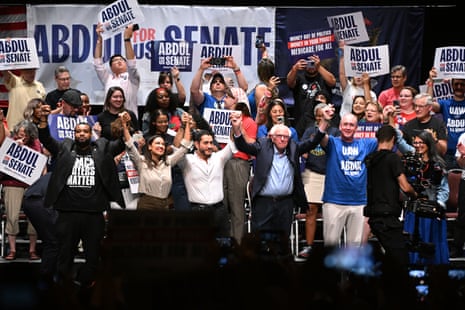
Senator Bernie Sanders, a Vermont Independent, also weighed in, calling the deal "absurd." Sanders pointed to the apparent hypocrisy of the administration’s foreign policy, noting that the U.S. is currently engaged in a military conflict with Iran specifically to prevent that nation from enriching nuclear fuel. "Now [Trump] is letting his best friends in Saudi Arabia—one of the most brutal dictatorships in the world—do exactly that," Sanders wrote on social media.
Regional Tensions: The War with Iran and the Khashoggi Legacy
The timing of the nuclear announcement is further complicated by the ongoing U.S.-Israeli war with Iran. Defense Secretary Pete Hegseth recently informed the Senate Appropriations Committee that the conflict has already cost the Pentagon $37.5 billion. The war, which intensified in February, is being fought largely to dismantle Iran’s nuclear capabilities and break its blockade of the Strait of Hormuz.
On the same day the nuclear deal was announced, Iran-backed Houthi rebels in Yemen claimed to have attacked two Saudi oil tankers near the Bab el-Mandeb Strait. The rebels alleged the tankers were violating a blockade in the Red Sea. Senator Chris Murphy (D-CT) criticized the administration’s handling of the region, stating that the current "chaos" was foreseeable and that the president chose to initiate the conflict regardless of the risks to global energy supplies.

Furthermore, the 2018 murder of journalist Jamal Khashoggi remains a significant hurdle for Saudi-U.S. relations. U.S. intelligence previously determined that Saudi Crown Prince Mohammed bin Salman approved the operation that led to Khashoggi’s death in Turkey. Representative Sherman noted that he and Senator Marco Rubio (R-FL) had introduced the "No Nuclear Weapons for Saudi Arabia Act" in 2018, which would have required an investigation into the murder and explicit congressional approval for any nuclear cooperation.
Congressional Resistance and the "No Nuclear Weapons for Saudi Arabia Act"
As the Trump administration’s nuclear deal with Saudi Arabia moves toward a formal review period, it faces a fractured and skeptical Congress. Under the Atomic Energy Act, the agreement will be submitted for a 90-day review. Lawmakers can introduce a resolution of disapproval to block the deal, though such a measure would likely face a presidential veto.
Representative Sherman predicted that a resolution of disapproval would be introduced shortly, inviting colleagues who have worked to prevent nuclear proliferation in the Middle East to join the effort. He pointed to the "great hypocrisy" of the U.S. providing a "green light" to Saudi Arabia while bombing Iran for similar activities. Sherman argued that the deal should only proceed if it includes the same stringent safeguards as the UAE agreement, including a total renunciation of domestic enrichment.
The administration, however, frames the deal as a strategic victory. Energy Secretary Wright insisted that the agreements uphold the "highest standards of nuclear safety" and will secure a decades-long partnership that benefits the American economy. The administration argues that if the U.S. does not provide this technology, Saudi Arabia will simply turn to rivals like Russia or China, leaving the U.S. with no oversight or influence over the kingdom’s program.
Domestic Policy Collisions: Defense Spending and the Midterm Horizon
The controversy over the Saudi deal is unfolding against a backdrop of intense domestic political maneuvering. On Wednesday, the House of Representatives passed a $1.15 trillion defense policy bill (NDAA) in a narrow 216-212 vote. The vote fell largely along party lines, as Democrats protested the high cost of the ongoing war with Iran and the president’s push for new national voting restrictions.
Speaker Mike Johnson is also currently struggling to pass a budget framework that includes $95 billion to guarantee funding for the war effort. He faces opposition from fiscal hawks concerned about the lack of spending offsets and from hardline conservatives who want even more defense spending. To sway votes, the administration has reportedly offered to include funding for the "Save America Act," a sweeping voter ID bill that is a top priority for the president.
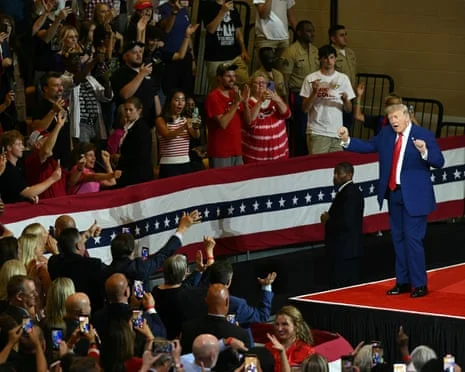
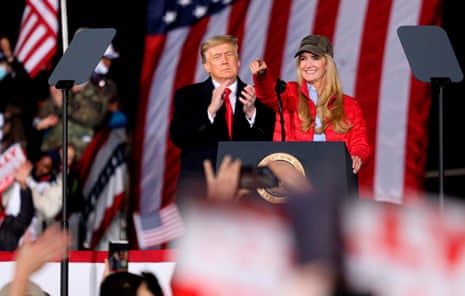
While the administration focuses on regional security and military spending, public sentiment remains divided. A recent Lloyd’s Register Foundation World Risk Poll found that Americans are ten times more likely than people in other countries to view politics as the greatest threat to their personal safety. This deep partisan division was on display during a Trump rally in Georgia on Wednesday, where the president attacked Democratic Senator Jon Ossoff with "low-energy" insults and characterized his opponents as "communists."
Next Steps for the Nuclear Agreement
The formal submission of the Trump administration’s nuclear deal with Saudi Arabia to Congress will trigger a high-stakes legislative battle. Oversight hearings, if granted, will likely focus on the specific language of the bilateral safeguards and whether the U.S. has truly secured a commitment against weaponization.

Members of the House Foreign Affairs Committee are expected to demand a full briefing on the "joint US-Saudi study" that would precede the construction of any enrichment facility. With the November midterm elections approaching, the debate over nuclear proliferation, regional war, and the "gold standard" of diplomacy will likely become a central theme in the national discourse.
As the 90-day review clock begins, the international community will be watching closely to see if the U.S. maintains its historical stance on nonproliferation or if the strategic and economic lure of the Saudi partnership leads to a fundamental reconfiguration of nuclear policy in the Middle East.