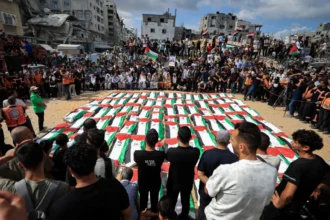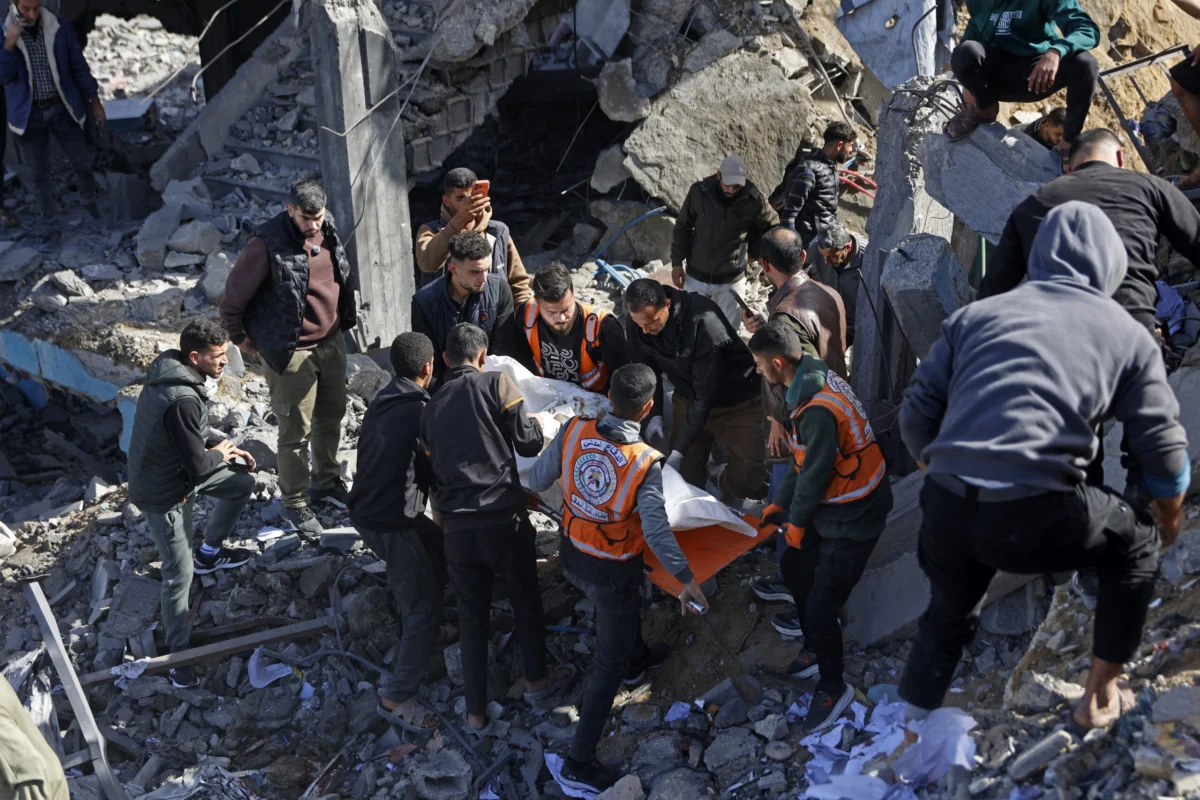
Brigadier-General Abdel-Nasser Al-Maqadma, the commander of the Hamas-led police force in northern Gaza and governor of the region, was killed in an Israeli airstrike on Saturday, according to officials from the Hamas-run interior ministry and medical sources. The strike, which occurred in the Sheikh Radwan neighborhood north of Gaza City, also resulted in the deaths of five other Palestinians, with the Israeli military stating Al-Maqadma was a member of Hamas’s military wing.
The incident marks a significant escalation in the ongoing conflict and comes amidst heightened tensions and a persistent cycle of violence in the Gaza Strip. Al-Maqadma’s death is seen by Hamas as a deliberate attempt by Israel to destabilize the territory and undermine its governance structures. The Israeli military, however, asserts that its operations are targeted at individuals posing an active threat, often citing alleged ties to militant factions.
Hamas has accused Israel of systematically targeting its police force in recent months, a claim that Israel counters by stating many officers are linked to Hamas’s armed wing and represent a direct security risk. This latest strike, and the subsequent deaths of other Palestinians, further fuels the ongoing narrative of conflict and reprisal between Israeli forces and Palestinian militant groups.
Further Israeli airstrikes on Saturday contributed to the mounting Palestinian casualties. In the Nuseirat refugee camp, a Palestinian medic was killed, while two individuals perished in a house in Khan Younis. The Israeli military indicated that the Khan Younis strike was aimed at a member of the Islamic Jihad group.
Tragically, another life was lost in Khan Younis later on Saturday when an airstrike killed high school student Khaled Al-Breim. Relatives reported that Al-Breim was on his way to distribute sweets to friends and family who had gathered at his home to celebrate his recent high school graduation, a moment of anticipated joy tragically cut short.
A sixth Palestinian death reported on Saturday was that of a policeman who had sustained injuries from an Israeli strike the previous week and succumbed to his wounds. These cumulative losses underscore the pervasive danger and human cost of the intensified military operations.
The ongoing Israeli military campaign in Gaza, which has been ongoing for several months, has resulted in a significant number of Palestinian fatalities. According to Gaza’s health ministry, over 1,180 Palestinians have been killed since the signing of a U.S.-brokered ceasefire in October, with the majority being civilians. This figure stands in stark contrast to the four Israeli soldiers killed in Gaza during the same period, highlighting a significant disparity in casualties.
Escalating Tensions and Targeted Strikes
The killing of Brigadier-General Abdel-Nasser Al-Maqadma, head of the Hamas-led police in northern Gaza, underscores a pattern of Israeli operations aimed at dismantling perceived threats within the Palestinian security apparatus. Al-Maqadma, who also held the position of governor for the northern Gaza region, was reportedly targeted in an area known for its Hamas presence. The Israeli military’s assertion that he was a member of Hamas’s military wing frames the strike within the broader context of its stated objective to neutralize militant capabilities.
Hamas, however, views these actions as a direct assault on its administrative and security infrastructure, designed to create chaos and undermine governance in the densely populated enclave. The group has consistently accused Israel of violating the spirit, if not the letter, of previous ceasefire agreements through such targeted assassinations and indiscriminate strikes. The alleged targeting of police personnel is seen as a deliberate effort to weaken the Hamas administration and sow instability.
Broader Impact of Israeli Operations in Gaza
The casualty figures reported in recent days, including Al-Maqadma and the five other Palestinians, paint a grim picture of the intensifying conflict. The deaths of a medic and civilians in Khan Younis, including the young student Khaled Al-Breim, highlight the indiscriminate nature of some strikes and the devastating impact on civilian life. Al-Breim’s tragic end, as he prepared to celebrate a personal milestone, serves as a poignant reminder of the human toll exacted by the conflict, extending beyond direct combatants.
The continued Israeli military operations are occurring against a backdrop of a ceasefire agreement brokered in October, which Hamas claims has been largely disregarded by Israel. The disparity in casualties – over 1,180 Palestinians killed compared to four Israeli soldiers since the truce – raises significant concerns about the proportionality of the military response and the protection of civilian populations in Gaza. International human rights organizations have repeatedly called for adherence to international law and the protection of non-combatants.
Hamas-led Police Force: A Target in the Conflict
The Hamas-led police force in Gaza has become a frequent target for Israeli military actions. Israel argues that many members of this force are integrated into or closely aligned with Hamas’s armed wing, the Izz ad-Din al-Qassam Brigades, thereby posing a legitimate security threat. This assertion forms the basis for many of the targeted strikes against police infrastructure and personnel.
Hamas, conversely, maintains that its police force is responsible for maintaining law and order within Gaza and that Israel’s actions are intended to cripple its ability to govern and provide security for its population. The group has framed these attacks as a deliberate attempt to provoke further escalation and undermine any prospects for a lasting peace. The continuous targeting of police officers is viewed as a tactic to weaken the fabric of the Gazan administration and create a security vacuum.
Civilian Casualties and Humanitarian Concerns
The conflict’s impact extends far beyond the direct casualties. The ongoing airstrikes and military operations have resulted in widespread destruction of infrastructure, displacement of populations, and severe humanitarian consequences for the residents of Gaza. Access to essential services such as healthcare, clean water, and electricity has been severely compromised, exacerbating an already dire humanitarian situation.
The death of the Palestinian medic in Nuseirat highlights the risks faced by essential service providers operating in conflict zones. The targeting of medical personnel and facilities is a serious violation of international humanitarian law, and concerns remain about the safety and accessibility of healthcare for the wounded and sick. The continuous cycle of violence has placed immense strain on the limited resources available to treat casualties and provide humanitarian aid.
International Law and Ceasefire Violations
The ongoing hostilities and the reported casualties have drawn international scrutiny, with accusations of ceasefire violations leveled against Israel by Hamas. The U.S.-brokered ceasefire, intended to de-escalate tensions, appears to have been largely ineffective in preventing continued military actions and loss of life. The disparity in casualty figures, with a significantly higher number of Palestinian deaths, has prompted calls for greater accountability and adherence to international humanitarian law.
Human rights advocates and international bodies have consistently urged all parties to the conflict to uphold their obligations under international law, including the protection of civilians and civilian infrastructure. The continued targeting of individuals, regardless of their alleged affiliations, raises questions about the legality and proportionality of such actions. The international community faces the challenge of finding effective mechanisms to ensure compliance with international norms and to foster a sustainable peace process.
The Human Cost of Escalation
The death of Brigadier-General Abdel-Nasser Al-Maqadma and the accompanying casualties represent more than just military losses; they are stark reminders of the profound human cost of the ongoing conflict. Each fatality, whether a military leader, a medic, a student, or a policeman, represents a life extinguished and a family shattered. The psychological impact of living under constant threat of airstrikes and violence takes a heavy toll on the population of Gaza, particularly on children and vulnerable communities.
The cycle of violence, characterized by retaliatory strikes and targeted killings, perpetuates a climate of fear and insecurity. For the residents of Gaza, the pursuit of daily life – attending school, providing medical care, or simply celebrating milestones – is constantly overshadowed by the specter of conflict. The future of the region remains uncertain, contingent on the ability of all parties to de-escalate tensions, engage in meaningful dialogue, and prioritize the protection of civilian lives and well-being. The ongoing bloodshed serves as a grim testament to the urgent need for a lasting resolution to the conflict.