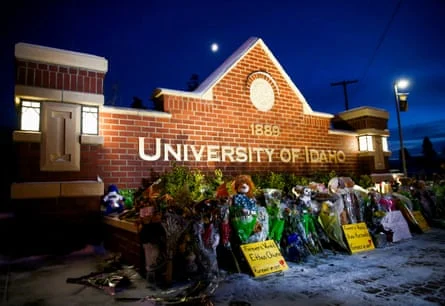
Bryan Kohberger, the former criminology doctoral student convicted of the 2022 stabbing deaths of four University of Idaho students, has launched a complex legal challenge that asks the Idaho judicial system a startling question: could Bryan Kohberger win a new trial? More than a year after pleading guilty to the murders to avoid the death penalty, Kohberger filed a handwritten petition last week alleging that his own defense team misled him, coerced his plea, and withheld evidence that might have proven his innocence.
The petition has reignited a legal firestorm in a case that many believed was settled. Kohberger, 31, is currently serving four consecutive life sentences without the possibility of parole at the Idaho Maximum Security Institution. By moving to withdraw his plea, he is effectively reopening the possibility of a capital trial—a scenario that could lead to his execution if a jury finds him guilty. Legal experts suggest the move is a high-risk gamble that reflects the defendant’s background in criminal justice and his reported desire to maintain control over the public narrative.
The legal avenue Kohberger is pursuing is known as a civil petition for post-conviction relief. Because he waived his right to a standard appeal as part of his original plea agreement, this civil filing is one of the few remaining paths to vacate his conviction. The move has stunned the families of the victims—Ethan Chapin, Kaylee Goncalves, Xana Kernodle, and Madison Mogen—who have spent the last two years seeking a sense of finality that now seems increasingly out of reach.
The Legal Strategy to Help Bryan Kohberger Win a New Trial
In his handwritten filing, Kohberger claims that his court-appointed attorneys provided "ineffective assistance of counsel," a legal standard that requires a petitioner to prove their lawyer’s performance was deficient and that this deficiency prejudiced the outcome of the case. He alleges that his legal team fabricated a story about a "horrific experience" they had while touring the state’s death row facilities to scare him into accepting a plea deal.
Furthermore, Kohberger asserts that he was "advised to lie" during his plea colloquy with Ada County District Judge Steven Hippler. During that hearing, Hippler asked Kohberger directly if he was pleading guilty because he was, in fact, guilty. Kohberger answered "Yes" at the time, but he now claims he was told a "false plea" was a necessary "legal victory" to escape the immediate threat of execution. He maintains that "actual guilt was not an important factor" in the discussions with his attorneys, whom he now accuses of prioritizing a deal over his constitutional rights.
The petition also points to what Kohberger calls "exculpatory discovery" that was allegedly kept from him. He specifically references a recently published book, Broken Plea, which claims there were significant chain-of-custody issues regarding the tan leather knife sheath found at the crime scene. That sheath, which bore a single source of male DNA, was a cornerstone of the prosecution’s case. Kohberger argues that had he known of these alleged forensic discrepancies, he would have taken the case to trial.
Seeking Post-Conviction Relief: Can Bryan Kohberger Win a New Trial Through Civil Litigation?
Under Idaho law, the burden of proof in a post-conviction relief case rests entirely on the petitioner. Kohberger must provide evidence that exceeds mere speculation, demonstrating that his constitutional rights were violated to such an extent that the conviction cannot stand. This process often involves calling former defense attorneys to the stand to testify about their strategy and communications with their client.
"It’s going to come down to credibility," noted Adam Ondo, a Boise-based defense attorney. "The court will have to weigh the testimony of experienced capital defense attorneys against a defendant convicted of a quadruple homicide. Historically, these petitions are very difficult to win, but the nature of the allegations—that he was coached to lie to the court—demands a thorough judicial review."
If a judge finds merit in the petition, the guilty plea would be vacated, and the case would return to the pre-trial phase. This would put the death penalty back on the table, as the original agreement to spare Kohberger’s life would be nullified. For the state of Idaho, this would mean preparing for one of the most expensive and high-profile trials in the state’s history, a process that has already cost taxpayers an estimated $8 million.
Psychological Profiling and the Quest for Control
Forensic psychologists following the case suggest that Kohberger’s latest legal maneuver may be less about the law and more about his psychological makeup. Rachel Toles, a clinical and forensic psychologist specializing in serial homicide, describes Kohberger’s actions as consistent with narcissistic personality traits often found in high-profile offenders.

"Attention is currency for someone like Kohberger," Toles explained. "By filing this petition, he is asserting agency in a situation where he previously had none. He is no longer letting the prosecution or his lawyers define the ending of his story. He wants to reclaim the narrative and prove that he is the smartest person in the room, even if the stakes include his own life."
Toles suggests that Kohberger may be trapped in an "obsessive loop," believing he can outmaneuver the legal system just as he allegedly believed he could commit a "perfect crime" while studying criminology. This need for control often manifests in serial offenders as a desire to prolong the suffering of the victims’ families, keeping them tethered to the court system and the trauma of the murders.
Financial and Emotional Toll on the Idaho Community
The financial implications of the petition are significant. The Idaho Statesman reports that the state has already spent millions on the prosecution and public defense. A new trial could easily add another $2 million to that tally, covering jury sequestration, expert witnesses, and the high cost of capital litigation. For a small community like Moscow, the prospect of the case returning to the headlines is an exhausting one.
The emotional toll is even higher for the families of the four students killed in the early hours of November 13, 2022. Shanon Gray, an attorney for the Goncalves family, described Kohberger as "the mosquito you just can’t seem to swat." In a public statement, Gray expressed frustration that the media continues to provide Kohberger with a platform to "torture" the survivors.
However, some family members have expressed a surprising willingness to see the case go to trial. Kristi Goncalves, Kaylee’s mother, recently told Newsweek that while she believes the petition will ultimately fail, she would welcome a trial if it meant the evidence was laid out in open court and the death penalty was reinstated. For some, the plea deal felt like an anti-climax that robbed them of the chance to see a jury deliver a final, definitive verdict.
The Path Forward for the State and the Defense
Idaho Attorney General Raúl Labrador has signaled that his office is prepared for the challenge. In a brief statement, Labrador affirmed his commitment to ensuring that justice is carried out and that the conviction remains intact. The state is expected to argue that Kohberger’s plea was entered knowingly and voluntarily, supported by the extensive record of the plea hearing where Judge Hippler meticulously questioned the defendant’s understanding of the proceedings.
The court has already granted Kohberger’s request for new counsel to represent him in this civil matter. This new legal team will be tasked with investigating the claims against his previous attorneys and searching for any procedural errors that could justify a new trial. The process is expected to take months, if not years, as both sides gather evidence and prepare for what will likely be an evidentiary hearing.
As the legal community watches the case unfold, the central question remains: could Bryan Kohberger win a new trial based on his claims of coercion? While the legal threshold is high, the gravity of the allegations ensures that the Idaho courts will have to navigate a minefield of constitutional questions before this chapter of the Moscow murders can truly be closed.
Finality in the Face of Uncertainty
The University of Idaho murders remain one of the most haunting cases in recent American history. The brutal nature of the attacks, the location in a quiet college town, and the background of the suspect as a PhD student in criminology created a narrative that captured the national imagination. Kohberger’s attempt to withdraw his plea ensures that the case will remain in the public consciousness for the foreseeable future.
Whether this petition is a legitimate search for justice or the desperate act of a man facing a lifetime behind bars, its impact is undeniable. It forces a re-examination of the evidence, the conduct of the defense, and the resilience of the legal system. For the families of Madison, Kaylee, Xana, and Ethan, it is another hurdle in a long and painful journey toward peace—a journey that now depends on whether a judge believes the "narcissist" in the cell or the attorneys who negotiated for his life.