The dominance of Apple’s MacBook lineup is facing its most significant challenge in years as a new generation of Windows and ChromeOS devices outpaces the industry leader in critical areas like battery longevity and multi-core processing power. While the MacBook Air and Pro remain benchmarks for build quality and ecosystem integration, recent rigorous testing of eight major rivals suggests that the gap between macOS and its competitors has not only closed but, in several hardware categories, shifted in favor of Windows-based machines.

The 2026 computing landscape has been defined by a pivot toward high-efficiency ARM-based processors and the refinement of OLED display technology. For nearly five years, Apple’s M-series silicon provided an untouchable combination of speed and stamina, yet the arrival of the Snapdragon X2 Elite and Intel’s latest Core Ultra architectures has rebalanced the scales. Industry analysts note that consumers are increasingly looking for features Apple has yet to adopt, such as integrated touchscreens, 2-in-1 convertible form factors, and ultra-high-refresh-rate OLED panels.
Benchmarking the Best MacBook Alternatives in 2026
In a series of head-to-head comparisons, several Windows-based ultraportables demonstrated superior performance in multi-threaded workloads, a crucial metric for video editing and complex data processing. While Apple’s M5 chip continues to lead in single-core "snappiness"—the metric most felt during web browsing and email—the Asus Zenbook A14 and A16 models showed a 20 to 38 percent advantage in multi-core tasks. This shift suggests that for professional creators, the "MacBook or nothing" era may be reaching its conclusion.

Testing also revealed a stunning advancement in battery life among MacBook alternatives. For years, the MacBook Pro was the undisputed king of endurance, often lasting 18 to 20 hours on a single charge. However, the HP OmniBook 3 16, equipped with the latest Snapdragon X silicon, has pushed the boundary to an unprecedented 40 hours. Even more compact rivals, like the Asus Zenbook A14, recorded over 27 hours of continuous video playback, surpassing Apple’s reigning battery champion by more than six hours.
The Rise of Snapdragon and the ARM Revolution
The primary driver behind these gains is the maturation of Windows on ARM. The Asus Zenbook series and the HP OmniBook Ultra 14 represent a new class of "Always Connected" PCs that utilize the Snapdragon X2 Elite series. These chips allow for thinner designs and passive or near-silent cooling without the thermal throttling that plagued earlier Windows thin-and-lights.

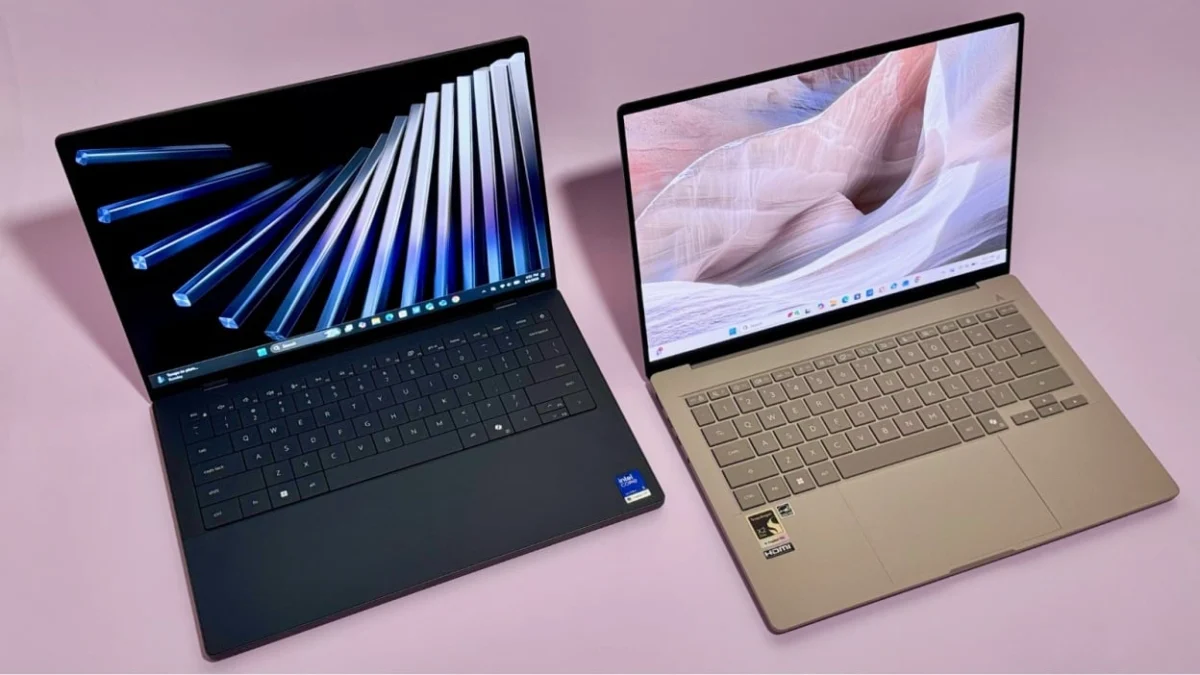
The Zenbook A14, in particular, has emerged as a formidable rival to the 13-inch MacBook Air. Weighing just 2.4 pounds—lighter than its Apple counterpart—it utilizes a proprietary "Ceraluminum" material that offers a matte, ceramic-like finish resistant to fingerprints. Beyond aesthetics, the device includes a 14-inch OLED display that provides more vibrant color reproduction than the Liquid Retina panels found on the MacBook Air, alongside a more versatile port selection including HDMI and USB-A.
Professional Grade MacBook Alternatives for Power Users
For users who traditionally gravitated toward the MacBook Pro for creative work, the 2026 Dell XPS 14 and Acer Swift X 14 offer compelling hardware packages that prioritize graphical power. The XPS 14 has undergone a significant redesign, moving toward a minimalist aesthetic with a seamless glass haptic touchpad and a lattice-style keyboard. While it trails Apple in pure battery efficiency, its tandem OLED touchscreen provides a tactile experience that remains absent from the Mac ecosystem.

The Acer Swift X 14 serves as a utilitarian powerhouse, aimed squarely at the desktop replacement market. By pairing the Intel Core Ultra 9 285H processor with Nvidia GeForce RTX 5070 graphics, it delivers raw performance in 3D rendering and AAA gaming that Apple’s integrated solutions struggle to match. Furthermore, the inclusion of a built-in drawing pad functionality via its haptic touchpad offers a niche but valuable tool for digital artists who want a single-device solution.
Innovations in Build Material and Display Technology
One of the most striking developments in the current market is the experimentation with new materials. While Apple has stuck with its iconic recycled aluminum chassis, competitors are pushing into advanced ceramics and magnesium alloys. The Asus ExpertBook Ultra, a luxury business-class machine, features a "Nano Ceramic" finish that is both scratch-resistant and exceptionally light.

Display technology has also become a major battleground for these MacBook alternatives. Most of the tested Windows rivals now feature OLED panels as standard or affordable upgrades, offering infinite contrast ratios and 120Hz refresh rates. Apple has reportedly delayed the transition of its MacBook Pro line to OLED until at least late 2026, leaving a window of opportunity for Dell, Asus, and HP to capture high-end buyers who prioritize visual fidelity.
The ChromeOS and iPad Hybrid Factor
The competition is not limited to high-end Windows machines; the budget and hybrid segments are also seeing significant shifts. The Acer Chromebook Plus Spin 514 has redefined expectations for the "MacBook Neo" (Apple’s entry-level tier) by offering a premium aluminum 2-in-1 design with over 18 hours of battery life. For casual users who operate primarily within browser-based environments, the cost-to-performance ratio of these high-end Chromebooks has become increasingly difficult to ignore.

Simultaneously, Apple’s own iPad Air (M4) has become a legitimate internal rival to the MacBook. With the release of iPadOS 26, which introduced advanced windowing and multi-tasking features, the 11-inch iPad Air offers a level of portability and touchscreen versatility that no laptop can match. However, when outfitted with the necessary keyboard and stylus accessories, the iPad Air often exceeds the price of a standard laptop, positioning it as a specialized tool rather than a value-driven alternative.
Impact on the Tech Industry and Consumer Choice
This surge in viable MacBook alternatives is forcing a reaction from the broader industry. Software developers are increasingly optimizing applications for ARM-based Windows environments, reducing the "app gap" that previously kept many professionals locked into the macOS ecosystem. Adobe, Microsoft, and various CAD software providers have released native versions of their suites for Snapdragon-powered devices, ensuring that performance gains on paper translate to real-world productivity.

However, the transition to ARM-based Windows laptops is not without its hurdles. Testing confirmed that while general productivity apps run flawlessly, legacy x86 software and certain high-end video games still face compatibility issues. For college students or specialized engineers, the "safe" choice often remains an x86-based Intel or AMD machine, such as the Dell XPS 14 or the Asus ExpertBook Ultra, which avoid these emulation layers entirely.
Future Outlook and Market Consequences
As the 2026 fiscal year progresses, the pressure on Apple to innovate beyond incremental chip updates is mounting. The success of these MacBook alternatives suggests that the market is no longer satisfied with battery life alone; consumers are demanding the integration of touch, the superior visuals of OLED, and the flexibility of hybrid designs.

The next steps for the industry will likely involve the further integration of Artificial Intelligence at the hardware level. Many of the Windows laptops tested include dedicated Neural Processing Units (NPUs) capable of handling local AI tasks that previously required cloud computing. As these features become standard, the definition of a "best-in-class" laptop will continue to evolve, moving away from pure raw speed toward a more holistic view of user interaction and device intelligence.
The current data is clear: for the first time in the silicon era, those looking for the most powerful, longest-lasting, or most vibrant ultraportable have a wealth of options that do not feature an Apple logo. The competition has arrived, and in many key metrics, it has already taken the lead.