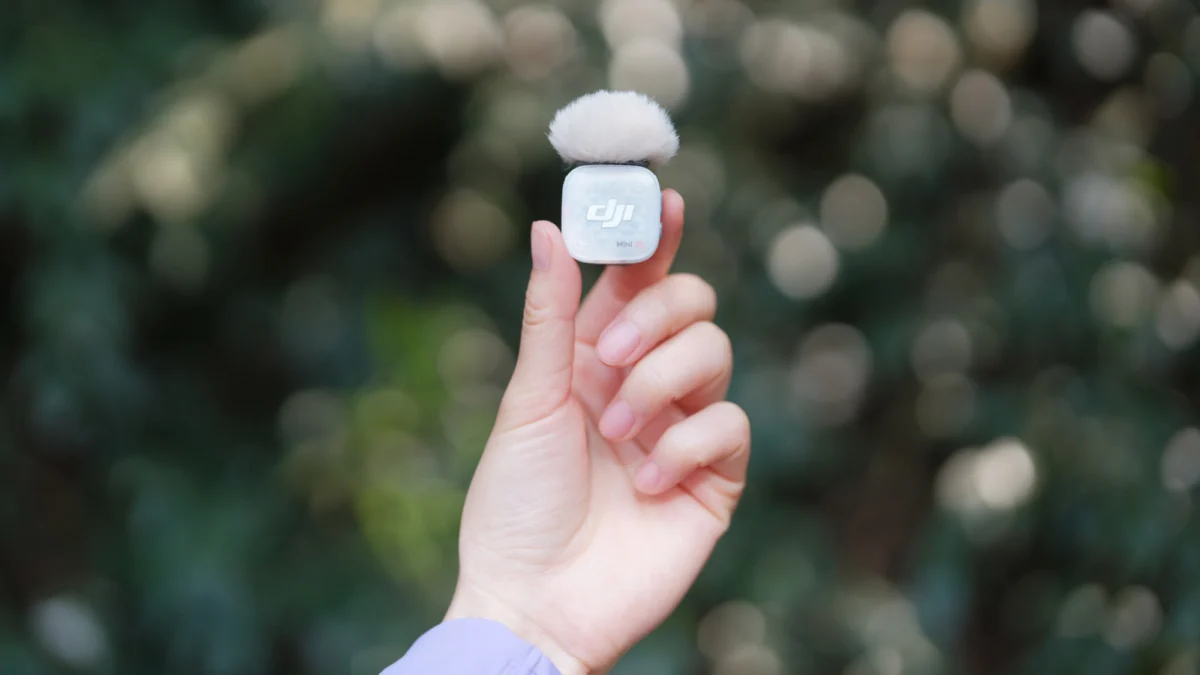
DJI has officially unveiled the Mic Mini 2S, a sophisticated successor to the Mic Mini 2 that introduces high-fidelity audio features previously reserved for the company’s flagship professional lines. The release marks a significant hardware iteration just months after the April debut of the previous model, yet the launch is clouded by the ongoing absence of the product from the United States market. While international creators gain access to advanced internal recording and expanded connectivity, American consumers remain sidelined due to escalating regulatory friction between the Chinese technology giant and Washington.
The Mic Mini 2S maintains the ultra-portable form factor that has defined the series while integrating 32-bit float internal recording, a feature widely regarded as a "safety net" for professional audio engineers. This technology allows the device to capture a massive dynamic range, ensuring that audio remains usable even if the source becomes unexpectedly loud or whisper-quiet. By recording in 32-bit float, the system effectively eliminates the risk of digital clipping, providing a level of flexibility in post-production that was once exclusive to high-end field recorders.
In addition to the upgraded recording bit-depth, the new system expands the capacity of its receiver to manage up to four transmitters simultaneously. This is a significant leap from the Mic Mini 2, which was limited to a dual-transmitter configuration. The ability to sync four individual microphones to a single receiver positions the Mic Mini 2S as a primary tool for multi-person interviews, panel discussions, and collaborative content creation, all while maintaining a footprint small enough to be clipped onto a lapel without distracting the viewer.
Advanced Audio Engineering in a Compact Form Factor
The technical architecture of the DJI Mic Mini 2S centers on its internal storage and intelligent gain management. Each individual transmitter is equipped with approximately 14.5GB of onboard memory, capable of storing roughly 22 hours of audio when utilizing the default settings. Although the device records in 24-bit by default to preserve space and battery, the 32-bit float option provides a robust backup for high-stakes environments where audio levels are unpredictable.
To further refine the user experience, DJI has implemented two distinct levels of adaptive gain control. This system works in real-time to monitor incoming signals and adjust sensitivity, preventing distortion before it reaches the digital recording stage. Complementing this is a dual-level AI-powered noise-canceling algorithm designed to isolate human voices from environmental distractions such as wind, traffic, or crowd chatter. These software-driven enhancements aim to reduce the time creators spend in the editing suite, delivering "broadcast-ready" audio directly from the device.
The hardware design also emphasizes versatility through its mounting options. The transmitters feature a clip-on design and magnetic attachments, allowing them to be secured to various clothing types or metal surfaces. This physical flexibility is a core component of the "Mini" brand identity, catering to the "run-and-gun" style of modern social media production where heavy, bulky equipment is often a hindrance to spontaneity and speed.
Connectivity and Backwards Compatibility Across the Ecosystem
One of the most notable strategic shifts with the DJI Mic Mini 2S is its approach to ecosystem integration. Unlike the flagship DJI Mic 3, which utilizes a proprietary receiver that is incompatible with the "Mini" line, the Mic Mini 2S receiver is designed with backwards compatibility in mind. It allows users to mix and match transmitters from the original Mic Mini and the Mic Mini 2, providing a clear upgrade path for existing owners who wish to expand their recording capabilities to four channels without discarding their older hardware.

However, this compatibility has limits. The Mic Mini 2S receiver does not support the transmitters from DJI’s non-miniature lines, such as the Mic 3 or the original DJI Mic. For users operating with a diverse fleet of DJI audio products, the company suggests the use of its mobile receiver. While this mobile solution facilitates cross-compatibility between different generations and tiers of microphones, it remains capped at two simultaneous transmitter connections, leaving the four-channel capability exclusive to the dedicated Mic Mini 2S receiver unit.
The decision to limit cross-compatibility between the "Mini" and "Pro" lines suggests a bifurcated product strategy. By keeping the ecosystems somewhat separate, DJI can optimize the Mini line for weight and portability while reserving the Mic 3 for high-end cinematic applications that require different transmission frequencies or specialized input/output options. This distinction, however, may create confusion for consumers looking for a "one-size-fits-all" audio solution.
Geopolitical Tensions and the U.S. Market Exclusion
The launch of the DJI Mic Mini 2S comes at a period of intense scrutiny for the company within the United States. Federal agencies and lawmakers have increasingly targeted DJI, citing concerns over data security and the company’s ties to the Chinese government. These tensions have manifested in a series of import restrictions and legislative efforts aimed at curtailing the company’s dominance in the American drone and camera accessory markets.
As a direct consequence of this hostile regulatory environment, DJI has not made the Mic Mini 2S available through its official U.S. storefront. This follows a pattern seen with other recent releases, including the Osmo Mobile 8 gimbal, the Avata 360 drone, and the Osmo Pocket 4. While these products are widely available in European and Asian markets, they remain conspicuously absent from authorized U.S. retailers. The U.S. Customs and Border Protection (CBP) has previously cited the Uyghur Forced Labor Prevention Act (UFLPA) as a basis for holding certain DJI shipments, though the company has vehemently denied any involvement in forced labor practices.
The absence of an official U.S. launch creates a "gray market" where American consumers often turn to third-party importers or international resellers to acquire the latest technology. This method of acquisition carries significant risks, including the lack of official warranty support, potential issues with firmware updates, and the possibility of the hardware being blocked by future federal software restrictions. For professional creators in the U.S., the inability to easily source the Mic Mini 2S represents a growing divide between the tools available to them and those available to their international counterparts.
The Technological Significance of 32-Bit Float Recording
The inclusion of 32-bit float recording in a device as small as the Mic Mini 2S transmitter represents a major milestone in consumer electronics. Traditionally, digital audio is recorded in 16-bit or 24-bit formats, which have a fixed "ceiling" and "floor." If a sound is too loud, the digital signal "clips," resulting in harsh, unrecoverable distortion. If a sound is too quiet, boosting it in post-production introduces significant electronic hiss or "noise floor."
32-bit float recording utilizes a mathematical approach that effectively removes these boundaries. It captures audio data in a way that allows the volume to be adjusted dramatically after the fact without any loss in quality. In the context of the DJI Mic Mini 2S, this means a creator can record a whisper and a shout in the same session, and later balance them perfectly in a video editor. For solo creators who cannot monitor audio levels while filming, this technology is transformative, acting as an insurance policy against ruined takes.
The 14.5GB of internal storage dedicated to this feature is also a critical specification. Because 32-bit float files are larger than standard 24-bit files, the increased storage capacity is necessary to ensure that users do not run out of space during long shoots. The 22-hour capacity at standard settings provides ample headroom for multi-day assignments, further cementing the device’s utility as a standalone field recorder in addition to its role as a wireless microphone.

The Growing Creator Economy and Audio Standards
The demand for high-quality, portable audio has skyrocketed alongside the growth of the global creator economy. As platforms like TikTok, Instagram Reels, and YouTube Shorts prioritize high-production values, the "internal microphone" of a smartphone is no longer sufficient for professional-aspiring creators. The DJI Mic Mini 2S enters a crowded market where brands like Rode and Hollyland have traditionally held significant sway.
By offering a four-transmitter system, DJI is targeting a specific niche of the creator market: the small-scale production team. As podcasts move toward video formats and documentary-style vlogging becomes more prevalent, the need to mic up multiple subjects simultaneously has become a common requirement. Until now, this often required bulky multi-channel mixers or multiple independent wireless systems that were difficult to sync. The Mic Mini 2S simplifies this workflow into a single, pocket-sized receiver.
Furthermore, the aesthetic design of the Mic Mini 2S, featuring swappable covers and a discreet profile, reflects the visual nature of modern content. Creators often want their microphones to either disappear into their outfits or serve as a stylish accessory. DJI’s focus on the physical appearance of the transmitter, combined with its technical prowess, demonstrates an understanding of the dual requirements—technical and aesthetic—of the current digital media landscape.
International Availability and Pricing Structures
While the United States remains excluded, the DJI Mic Mini 2S has seen a robust rollout in other major markets. In the United Kingdom, the pricing reflects DJI’s strategy of offering tiered entry points for different user needs. A basic kit, which includes one transmitter and one receiver, or a transmitter with a mobile receiver and charging case, is priced at £79 (approximately $106). This aggressive pricing makes the entry-level 32-bit float recording accessible to hobbyists and students.
For more demanding setups, the "Bundle" package includes two Mic Mini 2S transmitters, a receiver, and a dual charging case for £169 (approximately $227). While the system supports up to four transmitters, these additional units must often be purchased separately or in specific expanded kits, depending on the region. The charging case serves a dual purpose, not only providing extra battery life in the field but also facilitating the rapid pairing of transmitters to the receiver.
As DJI continues to innovate despite its regulatory hurdles in North America, the global audio market is witnessing a shift. The Mic Mini 2S is no longer just a "budget" alternative to professional gear; it is a direct competitor that offers features that many traditional professional systems still lack. The long-term impact of the U.S. absence remains to be seen, but for the rest of the world, the Mic Mini 2S sets a new benchmark for what is possible in the realm of miniature wireless audio.