Russian Finance Minister Anton Siluanov’s unexpected presence at United States-hosted G20 finance talks in North Carolina has ignited a firestorm of frustration and dismay among European ministers and officials, signaling a significant shift in diplomatic engagement with Moscow by the current U.S. administration. Siluanov’s attendance in Asheville on Monday marks his first in-person participation in a G20 meeting since Russia’s full-scale invasion of Ukraine commenced in 2022, a development that has underscored a divergence in approach between Washington and its traditional European allies.
The summit, held in the picturesque setting of Asheville, North Carolina, became an immediate focal point for geopolitical tensions as Russian Finance Minister Anton Siluanov engaged in a bilateral meeting with U.S. Treasury Secretary Scott Bessent. According to a statement from Russia’s Ministry of Finance, the discussion centered on financial cooperation within the G20 framework. However, a U.S. official later clarified that the meeting’s agenda also included discussions pertaining to U.S. President Donald Trump’s proposed peace plan for Ukraine, an initiative that has already drawn criticism from Kyiv and several European nations.
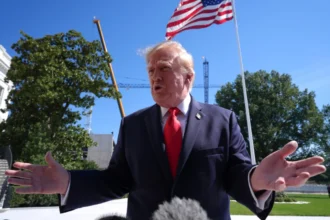
President Trump, when questioned by reporters about the decision to include Siluanov, reiterated his administration’s commitment to broad engagement, stating, "We like getting along with everybody. One of the reasons I’m so successful, I get along with everybody." This sentiment, however, did little to assuage the concerns of European counterparts, who viewed the U.S. invitation to the Russian minister as a deeply troubling signal.
European Disquiet Over Russian Participation
The inclusion of Russia’s top finance official at the G20 gathering immediately drew sharp criticism from European leaders, who have consistently advocated for a firm stance against Moscow’s aggression in Ukraine. Polish Finance Minister Andrzej Domanski voiced his profound displeasure, stating, "We do not trust Russia. They lie constantly, and you need to be really, really cautious while discussing with them." Domanski emphasized Russia’s role as the aggressor in the conflict, making any substantive dialogue exceedingly difficult.
German Finance Minister Lars Klingbeil echoed these sentiments, describing the U.S. decision as a "signal I find troubling." Klingbeil indicated that he had directly confronted Siluanov during a plenary session, stressing Moscow’s imperative to end the war and reaffirming Europe’s unwavering support for Ukraine. He also revealed that Europe is actively preparing a new package of sanctions against Russia and expressed a desire for close cooperation with Washington on these measures.
The unease extended beyond bilateral meetings. European ministers and central bankers collectively opposed appearing with Siluanov in the traditional G20 “family photo,” a symbolic gesture of unity. Consequently, the official group photograph was ultimately taken without the Russian minister’s presence. Klingbeil noted that European officials, including European Central Bank President Christine Lagarde, had discussed Russia’s involvement prior to the event and had agreed that maintaining an avenue for dialogue, while challenging, could offer an opportunity to deliver a direct and frank message to Moscow.
"However, the mere fact that the Russian finance minister is back – after, I believe, four G20 meetings without Russian participation – indicates an attempt at normalization, and that makes it all the more important for us to push back," Klingbeil asserted. This stance highlighted a stark contrast to the G20 meeting in Washington, D.C., in April 2022, where Siluanov’s virtual participation led to walkouts by officials from Canada, the United Kingdom, the U.S., and the European Central Bank.

White House Defends Engagement with Russia
The White House, in its defense of the decision to engage with Russia, asserted that the Trump administration’s primary objective is to broker a peace deal that would end the ongoing conflict in Ukraine. White House spokesman Kush Desai told AFP that the administration is committed to working with all necessary parties to achieve this goal. "The president and the administration will never shy away from talking with the folks we need to talk to, to further that," Desai stated. "That’s what we’re working on here at the G20."
Sources familiar with the discussions between Washington and Moscow indicated that U.S. Treasury Secretary Scott Bessent made it unequivocally clear to his Russian counterpart that the United States would not offer any economic relief to Russia until the war in Ukraine concluded. This firm stance aims to maintain pressure on Moscow while still exploring avenues for de-escalation.
President Trump’s peace initiative, while lauded by some as an attempt to de-escalate, has faced significant scrutiny. An initial 28-point plan, reportedly leaning heavily on Russian demands, was met with strong criticism from both Ukraine and several European governments, raising concerns about its potential to legitimize Russian territorial gains and undermine Ukrainian sovereignty.
G20 Summit Context and Controversies
The G20 finance ministers’ meeting in Asheville took place against a backdrop of escalating global economic challenges and geopolitical complexities. The United States, currently holding the rotating G20 presidency, has faced criticism for its selection of participating nations. Notably, South Africa, the previous year’s host, was not invited to this year’s gathering, while Poland, a non-permanent member, received an invitation.
Further controversy surrounded the summit with reports that several prominent journalists from major U.S. news organizations, including The New York Times and Bloomberg News, were denied credentials to cover the event. The National Press Club condemned this decision, labeling it an unacceptable attempt by an administration to control media access and scrutinize its own proceedings.
The two-day meeting also convened at a critical juncture for the global economy. International debt levels have surged to an unprecedented high of nearly $353 trillion. The global economic outlook is further clouded by an energy shock stemming from the ongoing conflict between the U.S. and Israel and Iran, alongside rising tensions surrounding China’s substantial trade surplus and uncertainties related to the impact of a significant surge in artificial intelligence investment. These multifaceted economic pressures underscore the urgency and complexity of the discussions among G20 finance leaders.
The presence of Russian Finance Minister Anton Siluanov at the G20 summit, facilitated by the U.S. presidency, has exposed a widening rift between Washington and its European allies regarding the appropriate diplomatic approach towards Russia amid its ongoing conflict in Ukraine. While the U.S. administration emphasizes its commitment to pursuing peace through dialogue, European nations perceive this engagement as a potentially dangerous normalization of Russian actions and a dilution of international pressure. The diplomatic fallout from this decision is likely to reverberate through future international forums, highlighting the challenges of maintaining a united front against Russian aggression in a complex global landscape. The differing strategies employed by the U.S. and its European partners on engaging with Russia at such a high-profile international economic forum underscore the intricate and often contentious nature of global diplomacy in the face of persistent geopolitical crises. The long-term implications for international cooperation and the efficacy of sanctions regimes remain a subject of intense observation and debate.