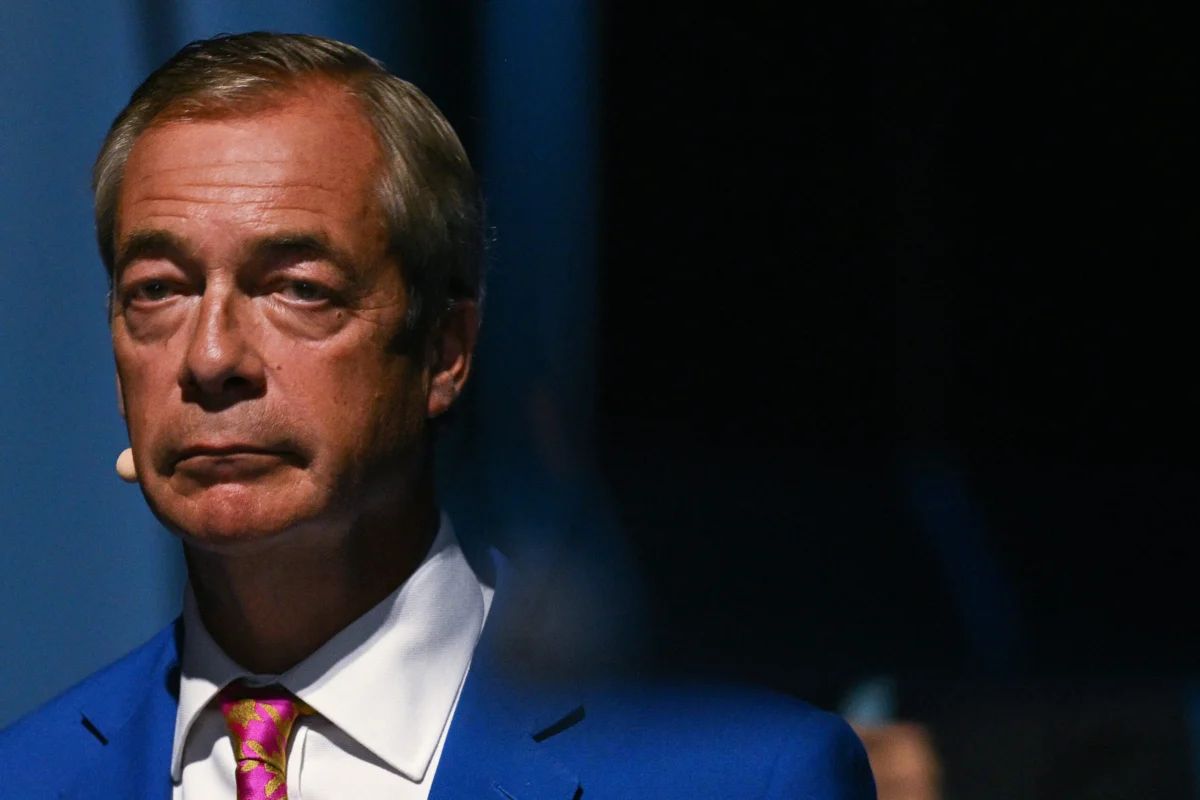
Reform UK, the anti-immigration political party led by Nigel Farage, finds itself embroiled in a significant controversy following allegations of attempting to circumvent British electoral laws concerning foreign donations. The scandal intensified with the resignation of two senior party officials after an undercover investigation by Channel 4 appeared to capture them discussing methods to channel overseas funds into the party’s coffers, a practice strictly prohibited under United Kingdom legislation. This development casts a shadow over the party’s surging popularity and adds to a growing list of funding-related questions that have dogged Reform UK and its leader.
The allegations, brought to light by an investigative unit known as Verbatim, a subsidiary of the Centre for Climate Reporting, center on clandestine meetings between undercover reporters posing as wealthy American donors and senior figures within Reform UK. The footage aired by Channel 4 suggests that party officials were aware of the legal barriers to accepting direct foreign contributions and were exploring indirect routes to inject substantial sums into the party’s operations. This has triggered an internal party probe and calls for official investigations by law enforcement and electoral authorities.
Channel 4 Investigation Uncovers Alleged Circumvention Schemes
The core of the controversy lies in the findings of a Channel 4 Dispatches investigation, which aired Thursday night. The program presented footage that allegedly showed Dan Jukes, a long-term aide to Nigel Farage, and James Orr, the party’s policy head, engaging in discussions with individuals posing as prospective backers from the United States. These conversations purportedly revolved around strategies to bypass the UK’s stringent rules on political donations.
In one particularly damning segment, Jukes is reportedly depicted discussing a proposal for Reform UK to receive a substantial donation of £500,000 (approximately $675,000 USD) from an American financier. The proposed mechanism involved channeling the funds through the financier’s son, who was claimed to be a UK resident. However, the "son" was, in fact, an undercover journalist from Verbatim, equipped to record the exchange.
Separately, the investigation allegedly captured Orr discussing an alternative strategy: using the American donor to fund opinion polls for Reform UK rather than making a direct monetary contribution. Orr is quoted as saying, "we just don’t have British-resident donors, British entities, that would support us," implying a reliance on external funding sources. Verbatim reported that this arrangement led to the US donor paying over £30,000 (approximately $40,500 USD) to fund three opinion polls, with the source of these funds reportedly not disclosed. Channel 4 stated it had independently verified these findings.
UK’s Strict Rules Against Foreign Political Funding
The United Kingdom has robust electoral laws designed to safeguard the integrity of its political process by preventing undue foreign influence. Under the Electoral Commission’s guidelines, political parties are permitted to accept donations only from individuals who are on the UK electoral register or from UK-registered companies. Donations originating from individuals or organizations based overseas are explicitly forbidden.
The Electoral Commission, the independent body overseeing elections and campaign finance in the UK, mandates that all permissible donations exceeding £11,180 (approximately $15,120 USD) must be reported. Furthermore, any impermissible donations, including those with potential foreign links, exceeding £500 (approximately $676 USD) must also be declared. A spokesperson for the Electoral Commission emphasized that political parties bear the responsibility for implementing effective internal processes and controls to prevent illegal donations. The spokesperson also noted that any information regarding potential attempts to evade these donation controls would fall under the purview of the police.
Reform UK’s Response and Internal Probe
In the immediate aftermath of the Channel 4 broadcast, Reform UK initially issued a statement denying any wrongdoing, characterizing the allegations as a "hoax." However, as the gravity of the revelations became apparent and the investigative footage circulated, the party’s stance shifted. Reform UK announced it was launching an internal investigation into the matter.

As a consequence of this internal probe, both James Orr and Dan Jukes stepped down from their senior positions within the party, pending the outcome of the investigation. Orr, who heads the party’s policy development, stated he had agreed to a temporary withdrawal and pledged his full cooperation with the inquiry. Jukes, a figure with a long-standing association with Nigel Farage, denied any personal misconduct but indicated he had "stepped back from politics in order to clear my name."
Nigel Farage himself has been vocal in his defense of the party and its operatives, accusing the undercover journalists of engaging in "entrapment." He suggested that "contractors" for the party had been manipulated into saying things they should not have, leading to their temporary removal. Farage has consistently maintained that Reform UK has broken no laws and has not accepted any "dodgy money." He further characterized the investigation as a "wilful attempt" by the establishment to portray everyone associated with Reform UK as a "crook," framing it as a coordinated effort by opposing forces to undermine his party.
Potential Legal Ramifications and Police Involvement
The allegations have prompted a swift reaction from political opponents, with the ruling Labour Party formally writing to the police to request an investigation into potential criminal offenses. The Metropolitan Police confirmed they are aware of the broadcast and will assess any information provided to them. However, this does not constitute the formal commencement of a criminal investigation at this stage. The legal consequences for Reform UK and its officials remain uncertain and will depend heavily on the findings of both the internal inquiry and any subsequent official investigations.
The UK’s Political Parties, Elections and Referendums Act 2000 (PPERA) governs campaign finance and donations, with severe penalties for violations, including fines and potential disqualification from holding public office. The specifics of the alleged circumvention, the intent behind the discussions, and the actual flow of funds, if any, will be crucial in determining any legal liabilities.
Broader Implications for Reform UK and British Politics
This latest funding scandal arrives at a critical juncture for Reform UK. The party, which has seen a significant surge in its popularity over the past two years, has recently experienced a dip in opinion polls. Once leading in some surveys and appearing poised for substantial gains in a general election, recent polling suggests Reform UK is now neck-and-neck with the Labour Party, with both parties polling around 23 percent support, and the Conservative Party close behind at 20 percent.
This controversy is not an isolated incident for Reform UK or Nigel Farage. The party has been grappling with a series of funding-related questions that have drawn scrutiny from media, electoral bodies, and political opponents. In July, Farage resigned as a Member of Parliament for Clacton amidst allegations that a convicted fraudster, George Cottrell, had been involved in recruiting and paying staff for Farage’s social media operations. Additionally, questions persist regarding a £5 million (approximately $6.7 million USD) donation from Thailand-based billionaire Christopher Harborne, which allegedly covered Farage’s personal security costs prior to the 2024 general election, a donation that may not have been fully declared. Farage has denied all wrongdoing in these prior instances as well, labeling them as unfair attacks by the establishment.
The cumulative effect of these recurring funding questions could significantly impact Reform UK’s standing. Professor Justin Fisher, a political science expert at Brunel University London, suggests that such scandals, especially when they appear to be part of a pattern, can erode public trust and deter potential voters. He noted that while an isolated incident might be manageable, a series of serious questions about donations, particularly those with alleged overseas links, contribute to a narrative that Reform UK is struggling to escape. This narrative, he posits, could ultimately cost the party votes in future electoral contests.
The ongoing saga underscores the critical importance of transparency and adherence to electoral finance laws in maintaining public confidence in democratic institutions. As the internal investigation proceeds and the possibility of official inquiries looms, the Reform UK party and its leader, Nigel Farage, face a significant challenge in rebuilding trust and dispelling concerns about the integrity of their funding practices. The outcome of these investigations will undoubtedly shape the party’s trajectory and its ability to challenge the established political order in the United Kingdom.