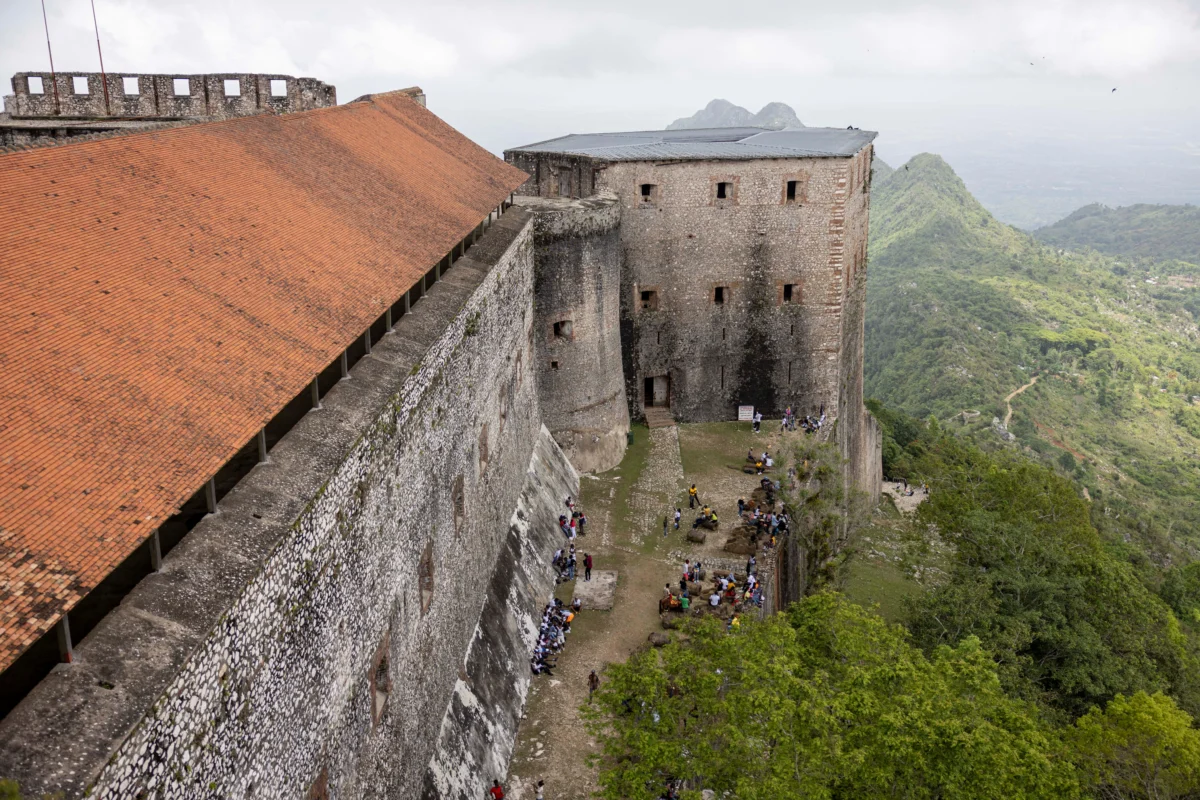
A tragic stampede at Haiti’s iconic Citadelle Laferriere on Saturday claimed the lives of at least 30 people, with authorities warning the death toll could climb. The incident occurred during an annual celebration at the UNESCO World Heritage Site, a historical fortress packed with students and visitors when the disaster struck. Jean Henri Petit, head of Civil Protection for Haiti’s Nord Department, confirmed the grim numbers and indicated that rescue and recovery operations were ongoing.
The Citadelle Laferriere, an imposing early-19th-century fortress perched atop a mountain in northern Haiti, is one of the nation’s most significant historical landmarks. Constructed shortly after Haiti achieved independence from France in 1804, it stands as a potent symbol of the country’s struggle for freedom and sovereignty. Its designation as a UNESCO World Heritage Site in 1982 recognized its outstanding universal value and historical significance, attracting tourists and scholars alike.
The annual celebration at the fortress is a significant event, drawing large crowds eager to commemorate its history and enjoy its breathtaking views. This year, however, the festive atmosphere was shattered by the devastating stampede, the exact cause of which is still under investigation. Initial reports suggest the crush of people occurred at the entrance to the site, a notoriously narrow passage that can become congested, especially during large gatherings.
Haitian Prime Minister Alix Didier Fils-Aime expressed profound sorrow over the loss of life, extending his "sincere condolences to the bereaved families and assures them of his profound solidarity during this time of mourning and great suffering." He acknowledged that "many young people" were among those present for the celebrations, underscoring the tragedy’s impact on the nation’s youth. However, the Prime Minister’s statement did not provide an initial estimate of the fatalities.
Rescue operations immediately commenced following the incident, with emergency services working to assist the injured and account for any missing individuals. The Minister of Culture and Communication, Emmanuel Menard, confirmed to AFP that 30 people had died, a figure that could still be revised. He assured that "the injured are currently receiving the necessary medical care, and a rescue team is searching for any missing persons." The extent of injuries remains unclear, adding another layer of concern to the unfolding crisis.
Adding to the catastrophic conditions, reports indicate that rainfall may have exacerbated the situation, potentially contributing to panic or making the terrain more treacherous for those caught in the crush. The combination of a large, enthusiastic crowd, the challenging topography of the Citadelle, and adverse weather conditions created a perilous environment.
The disaster at the Citadelle Laferriere casts a somber shadow over Haiti, a nation already reeling from a multitude of crises. The country has been grappling with escalating gang violence that has led to widespread insecurity and numerous civilian massacres. Simultaneously, security forces have engaged in an increasingly deadly crackdown, further destabilizing the fragile nation.
This tragedy also adds to a grim recent history of disasters that have struck Haiti. In 2024, a devastating fuel tank explosion in the capital claimed the lives of approximately two dozen people. This incident followed a similar, larger-scale fuel tank blast in 2021 that resulted in around 90 fatalities. Furthermore, the devastating earthquake in 2021 left an estimated 2,000 people dead and caused widespread destruction across the island.
The high death toll at the Citadelle Laferriere underscores the persistent challenges Haiti faces in managing public safety during large gatherings, particularly at historically significant sites that may not have modern crowd control infrastructure. The fortress, while a marvel of architecture and a testament to Haitian history, presents unique logistical hurdles for managing the flow of thousands of visitors.
The Significance of the Citadelle Laferriere
The Citadelle Laferriere, also known as La Citadelle Henri, is more than just a historical monument; it is a potent symbol of Haitian resilience and a cornerstone of its national identity. Built by Henri Christophe, the first king of unified Haiti, the fortress was intended to be an impregnable defense against potential French re-invasion following the country’s successful slave revolt and independence. Its strategic location, perched nearly 3,000 feet above sea level, offers commanding views of the surrounding landscape and the Caribbean Sea.
Its construction was an immense undertaking, involving thousands of laborers and requiring the transport of vast quantities of stone and materials up the steep mountain. The fortress, with its massive walls, cannons, and complex layout, represents a monumental feat of engineering and a powerful statement of defiance. Its designation as a UNESCO World Heritage Site in 1982 solidified its global importance and highlighted the need for its preservation.
Factors Contributing to the Stampede
While a full investigation is pending, preliminary information points to several factors that likely contributed to the deadly stampede. The annual celebration at the Citadelle draws a significant number of people, often including many young students participating in educational excursions or community events. The inherent nature of the site, with its steep inclines and narrow pathways, can quickly become a bottleneck when large crowds converge.
The presence of rain, as reported, could have further complicated matters. Wet surfaces can increase the risk of slips and falls, potentially triggering panic in a densely packed area. The psychological dynamics of a crowd, where fear and disorientation can spread rapidly, are also critical elements to consider in understanding how a situation can escalate from a crowded gathering to a fatal stampede.
Broader Implications for Haiti
The tragic incident at the Citadelle Laferriere has significant broader implications for Haiti. It highlights the ongoing challenges in public safety and disaster management in a country that has been battling persistent instability and lacks robust infrastructure in many areas. The loss of life, particularly if many young people were among the victims, represents a profound blow to the nation’s future.
The disaster also raises questions about the security protocols in place at popular tourist and historical sites. While the Citadelle is a UNESCO World Heritage Site, its remote location and historical nature may limit the implementation of modern crowd control measures typically found at stadiums or concert venues. Ensuring the safety of visitors at such iconic locations requires careful planning, adequate staffing, and clear emergency response procedures.
International Response and Aid
News of the stampede has prompted international expressions of concern and offers of assistance. Global humanitarian organizations and neighboring countries are likely to monitor the situation closely and may provide support for rescue efforts, medical care for the injured, and long-term recovery initiatives. Haiti’s capacity to respond to such crises is often stretched thin due to its ongoing economic and political challenges, making international solidarity crucial.
The focus now shifts to the immediate aftermath: accounting for all victims, providing care for the injured, and supporting the grieving families. In the longer term, there will be a need to conduct a thorough investigation into the causes of the stampede to prevent future tragedies. This will likely involve examining crowd management strategies, site accessibility, and emergency response protocols at the Citadelle Laferriere and other significant Haitian landmarks. The resilience of the Haitian people will undoubtedly be tested once again as they navigate this profound loss.