
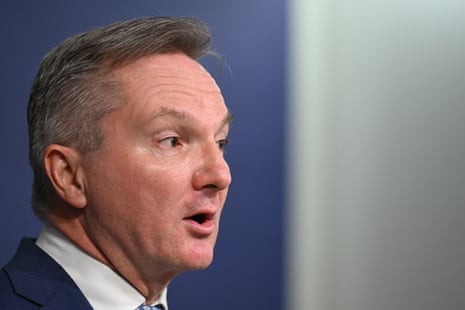
Energy Minister Chris Bowen confirmed on Monday that 57 tankers en route to Australia are currently transporting a diverse range of fuel supplies, a figure he characterized as consistent with seasonal norms despite escalating global tensions. During a press conference in Canberra, the minister detailed that these shipments include crude oil, jet fuel, diesel, and gasoline, collectively representing approximately 4.1 billion liters of fuel. This volume has been legally contracted and is scheduled to arrive at Australian ports over the next four weeks, providing a critical buffer for the nation’s transport and industrial sectors.
The announcement comes as the federal government seeks to project stability amidst a volatile international energy market. Bowen emphasized that Australia currently maintains 38 days’ worth of gasoline on hand, describing the inventory levels as a "very good outcome" for the country. He noted that these reserve figures have remained relatively stable over the past month, suggesting that the domestic supply chain has successfully insulated itself from the immediate shocks of overseas conflicts. "As you will have noticed, these figures haven’t moved around all that much over the last month or so," Bowen stated, adding that such consistency is a positive indicator for national energy security.
Strategic Reserves and the 57 Tankers En Route
The presence of 57 tankers en route to Australian shores is the result of long-term procurement strategies designed to mitigate the risks of geographical isolation. As a net importer of refined fuels, Australia is particularly sensitive to disruptions in maritime trade routes. The current fleet of incoming vessels is tasked with replenishing the nation’s commercial and strategic stocks, which have faced increased scrutiny as global energy prices fluctuate. The 4.1 billion liters currently in transit are essential for maintaining the 38-day gasoline reserve that the government views as a benchmark for short-term stability.

Industry analysts suggest that while 57 tankers en route may be standard for this period, the geopolitical context surrounding their journey is anything but typical. The reliability of these shipments is paramount for the Australian economy, which relies heavily on diesel for its mining and agricultural industries and jet fuel for its resurgent tourism sector. By confirming these figures publicly, the Albanese government is attempting to discourage panic buying and hoarding, behaviors that have previously exacerbated supply issues during periods of international uncertainty.
Geopolitical Volatility and the Strait of Hormuz Blockade
The backdrop to Australia’s fuel security concerns is the deteriorating situation in the Middle East, specifically the conflict involving the United States, Israel, and Iran. Energy markets reacted sharply on Monday following the breakdown of peace negotiations between Washington and Tehran. The collapse of these talks was followed by a significant announcement from U.S. President Donald Trump, who declared that the U.S. Navy would move to blockade the Strait of Hormuz. This narrow waterway is a global chokepoint through which approximately one-fifth of the world’s oil consumption passes.
The threat of a blockade sent immediate shockwaves through global energy benchmarks. Oil prices, which had briefly dipped to $96 a barrel on the West Texas Intermediate (WTI) index following rumors of a ceasefire, surged back above $104 a barrel in early Monday trading. Minister Bowen acknowledged this volatility, noting that domestic prices would likely remain erratic until a permanent resolution to the conflict is reached. The potential for U.S. naval action in the Strait of Hormuz raises the specter of a prolonged disruption to global supply, a scenario that would complicate the efforts of central banks to manage inflation.
Economic Fallout: ASX Declines and Inflationary Pressure
The domestic financial impact of the failed peace talks was felt immediately on the Australian Securities Exchange (ASX). The S&P/ASX 200 index dropped 0.8% within the opening minutes of Monday’s session, trading around the 8,890-point mark. This decline erased gains that had been anticipated based on futures pricing over the weekend. Market strategists noted that the increased geopolitical tension is weighing heavily on investor sentiment, as the prospect of higher energy costs fuels expectations of persistent inflation.
Greg Boland, a market strategy consultant at the trading platform Moomoo, observed that the risk of naval action around the Strait of Hormuz directly feeds into global inflation expectations. Higher oil prices act as a tax on both producers and consumers, elevating the cost of transporting goods and providing services. This "energy-driven inflation" complicates the outlook for the Reserve Bank of Australia (RBA), which must balance the need to curb rising prices with the risk of stifling economic growth. As fuel costs remain high, the threat of further interest rate hikes looms over the Australian housing market and broader consumer spending.
The Consumer Crisis: Fuel Surcharges and Cost of Living
For the average Australian, the global energy crisis is manifesting most clearly at the pump and through service surcharges. While gasoline prices in many capital cities have dipped slightly below 220 cents per liter, diesel remains stubbornly high, averaging near 315 cents per liter. These elevated costs have prompted ride-share giant Uber to announce a fuel surcharge of 5 cents per kilometer, effective from April 15 through June 8. The company stated that all revenue from this surcharge would go directly to drivers to help offset their rising operational costs, following a similar move by competitor DiDi.
The federal government has also faced criticism for a $20 million advertising campaign focused on fuel security. Prime Minister Anthony Albanese defended the expenditure, arguing that it is vital to inform the public about the government’s response to the crisis. He cited instances where demand for fuel in certain local markets spiked by as much as 1,000% due to misinformation and panic. Albanese compared the current situation to the early days of the COVID-19 pandemic, warning citizens against the dangerous and "unwise" practice of stockpiling fuel in residential garages.
Diplomatic Missions to Brunei and Malaysia
In a proactive bid to diversify supply chains, Prime Minister Albanese and Foreign Affairs Minister Penny Wong are scheduled to visit Brunei and Malaysia this week. The diplomatic mission is focused on securing long-term agreements for diesel, refined fuels, and fertilizer-grade urea—all of which have seen shortages linked to the ongoing conflict in the Middle East. Brunei currently supplies roughly 9% of Australia’s diesel imports, while Malaysia stands as the third-largest source of refined fuel for the Commonwealth.

The negotiations in Bandar Seri Begawan and Kuala Lumpur are expected to touch on "energy and food security," as Australia also serves as a major exporter of agricultural products and natural gas to these nations. Minister Wong will also travel to Singapore for high-level meetings with her counterparts. These visits represent a strategic pivot toward Southeast Asian partners as Australia seeks to reduce its reliance on more volatile trade routes and ensure that the "57 tankers en route" remain a consistent feature of the nation’s logistics.
Defense Leadership and the Future of Australian Democracy
Amidst these economic and energy challenges, the Australian government has announced historic changes to its military leadership. Lieutenant General Susan Coyle has been appointed as the next Chief of Army, marking the first time a woman has been chosen to lead a branch of the Australian Defence Force (ADF). Simultaneously, Vice Admiral Mark Hammond has been named the incoming Chief of the Defence Force. Hammond’s appointment is equally historic; he is the first individual to rise from the rank of enlisted sailor to the highest position in the ADF.
These appointments come at a time when the military’s readiness is under intense scrutiny. Incoming chief Hammond stated on Monday that the Royal Australian Navy is "ready as it has ever been," citing the advanced radar and missile defense systems equipped on the nation’s surface combatants. While no formal request has been made for Australia to join the U.S. blockade of the Strait of Hormuz, Hammond confirmed that the fleet is capable of performing such duties if directed by the government.
The broader health of the nation’s social fabric was also highlighted in a new report from the Grattan Institute, which found that economic inequality is placing significant strain on Australian democracy. The report noted a declining sense of belonging and a rise in the number of citizens who feel the current political system is not working in their interest. Most alarmingly, the study found that one in 10 Australians believe extreme measures, including violence, could be justified to advance a political cause. The institute recommended that Parliament become more representative and that the government increase engagement with civil society to restore public trust as the nation navigates a period of profound global and domestic upheaval.