President Donald Trump warned Friday that the Iranian government would be hit “very hard” in the coming days, characterizing the nation’s leadership as “deranged scumbags” while U.S. and Israeli forces intensified a massive aerial bombardment across the region. The president’s remarks coincided with reports from Tehran of relentless explosions as warplanes targeted the capital city and critical infrastructure, signaling a significant escalation in the ongoing Middle East conflict.
The President’s comments, issued via social media, framed the current military campaign as a historic reckoning for the Islamic Republic. Trump asserted that it was a “great honor” to oversee the targeting of the regime’s high-ranking officials, claiming his administration was responding to nearly five decades of Iranian-sponsored violence. The escalation has already resulted in widespread displacement in Lebanon and direct attacks on civilian centers in Gulf states, raising fears of a total regional war.
Trump calls Iran leaders ‘deranged scumbags’ amid Tehran bombardment
In a series of provocative statements, President Trump linked his role as the 47th President of the United States to a mission to dismantle the Iranian clerical establishment. “Watch what happens to these deranged scumbags today,” Trump wrote in a post that quickly circulated across global diplomatic channels. He argued that the regime had been responsible for global instability for 47 years and stated that his actions were a necessary response to protect international interests.
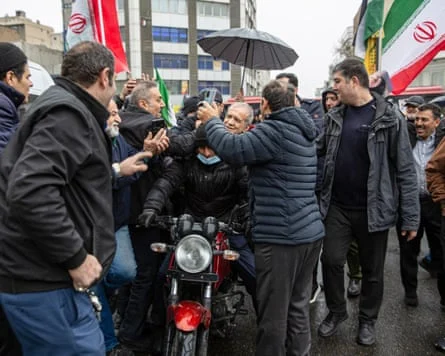
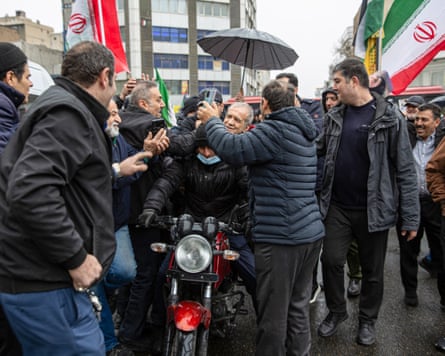
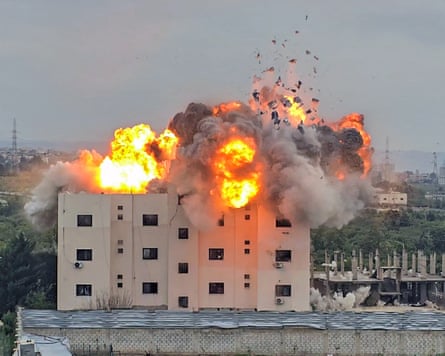
The rhetoric was matched by kinetic action on the ground as Israeli and U.S. aircraft conducted successive waves of strikes on Friday. One of the most significant hits occurred near a square adjacent to Tehran University, an area densely packed with government buildings and where crowds had recently gathered to demonstrate in support of the regime. Semi-official news agencies in Iran published footage showing thick plumes of smoke rising over the city center, accompanied by the sounds of demonstrators chanting anti-Western slogans.
The bombardment has left residents of the Iranian capital in a state of constant terror. Local accounts describe a city where the "buildings are shaking" and rubble litters the streets. A 66-year-old retired professor in Tehran told reporters that the city is effectively trapped, with limited fuel supplies preventing families from fleeing the violence. “Please stop this,” the resident pleaded, noting that even those with sick family members are unable to find a safe exit from the metropolitan area.

Military Operations on Kharg Island and the Strait of Hormuz
Late on Friday, the White House confirmed that U.S. Central Command (CENTCOM) had executed one of the most powerful bombing raids in the history of Middle Eastern warfare. The primary target was Kharg Island, often referred to as the "crown jewel" of Iran’s economy. Trump announced that U.S. forces had "obliterated" every military target on the island, which serves as the primary terminal for the country’s oil exports.
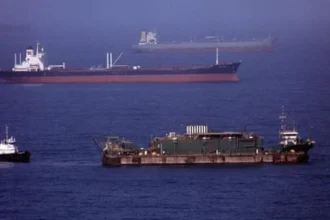
While the military facilities were destroyed, Trump noted that he had specifically chosen not to wipe out the island’s oil infrastructure—for now. However, he issued a stark ultimatum regarding the Strait of Hormuz, a narrow waterway through which approximately 20% of the world’s oil and gas supplies pass. The president warned that if Iran or any other entity interfered with the free passage of shipping, he would immediately reconsider the decision to spare the oil terminals.
The strategic importance of the Strait of Hormuz cannot be overstated. Iran has effectively blocked portions of the waterway by attacking commercial shipping, leading to a volatile global energy market. While oil prices saw a slight dip on Friday following a rally in the stock market, the threat of a full-scale blockade remains a primary concern for international economists. Reports have surfaced that some European nations, including France, have attempted to open independent negotiations with Tehran to secure safe passage for their vessels, though these reports have been met with denials from other EU members.
The Regional Toll: Lebanon, Israel, and the Gulf States
As Trump calls Iran leaders ‘deranged scumbags,’ the violence has metastasized far beyond the borders of Iran. In Lebanon, the humanitarian crisis has reached a breaking point, with over 800,000 people displaced by Israeli airstrikes. Lebanon’s health ministry reported that at least eight people were killed in a recent strike on the coastal city of Sidon, bringing the total death toll in Lebanon to over 600 since the latest round of hostilities began.
Israeli Defense Minister Israel Katz stated that the current operations are “just the beginning.” He warned the Lebanese government that it would pay an increasing price for the damage to national infrastructure used by Hezbollah militants. On Friday, the Israeli military destroyed the Zrarieh Bridge over the Litani River, claiming it was a vital transit point for Hezbollah fighters moving between the northern and southern sectors of the country.
Simultaneously, the Gulf region has seen an unprecedented wave of drone and missile attacks. Saudi Arabia reported downing nearly 50 drones launched from Iranian-aligned territories. In Oman, two people were killed when drones crashed into an industrial zone in Sohar. Even the United Arab Emirates felt the impact, as debris from an intercepted projectile damaged a building in the Dubai International Financial Center (DIFC), a global hub for banking and wealth management.
Leadership Transitions and the Fate of Mojtaba Khamenei
The stability of the Iranian regime itself is under scrutiny following reports that its new supreme leader, Mojtaba Khamenei, may have been incapacitated. U.S. Defense Secretary Pete Hegseth told a Washington press conference that the Iranian leadership has "gone underground." Hegseth suggested that Mojtaba Khamenei, who recently issued a written statement pledging to continue the fight, was likely "wounded and disfigured" in an earlier strike.
The absence of video or audio evidence accompanying the leader’s latest statement has fueled rumors of a power vacuum in Tehran. Hegseth dismissed the written message as "weak," noting that while the leader called for unity, his version of unity involved the suppression and killing of thousands of protesters. Despite these claims, other high-ranking officials, including Ali Larijani of the Supreme National Security Council and Foreign Minister Abbas Araghchi, have been spotted in the streets of Tehran in an apparent attempt to project a sense of order.
The internal situation in Iran is further complicated by the reported death toll, which Iranian authorities claim has surpassed 1,300 people. Israel has reported 12 deaths, while the United States has confirmed the loss of at least 13 service members. Six of those U.S. fatalities occurred in a tragic accident involving a tanker plane used for mid-air refueling, which crashed in Iraq. Additionally, a French soldier was killed in Iraq following a drone strike by a pro-Iranian militia.
Economic Volatility and the Global Energy Crisis
The geopolitical instability has sent shockwaves through global markets. While the initial reaction to the strikes on Kharg Island was a sharp drop in stock prices, markets saw a moderate recovery as investors weighed the possibility of a contained conflict. However, the ongoing threats to the Strait of Hormuz keep the energy sector on edge. The United States has maintained that it is "dealing with" the attacks in the waterway, though Defense Secretary Hegseth noted that Iran has not yet deployed mines in the crucial channel.
In Tehran, the economic impact is felt through severe shortages and infrastructure failure. Residents report that power outages are becoming frequent and the government has begun rationing petrol, making it nearly impossible for civilians to use personal vehicles to escape the bombing zones. Shopkeepers in the city center have resorted to taping their windows with newspapers to prevent shattering from the concussive force of the explosions, which have become a "continuous" part of daily life.
The Revolutionary Guards (IRGC) announced that they have launched new salvos of missiles and drones toward Israel, timed to coincide with al-Quds Day. These attacks are reportedly being coordinated with Hezbollah. In northern Israel, nearly 60 people were wounded by rocket fire, though most injuries were classified as minor. The IRGC stated that these operations are a direct response to the "criminal acts" of the U.S.-Israeli alliance.
Escalation Toward an Uncertain Future
As the week drew to a close, the Israeli military announced a fresh wave of strikes on Tehran, while Qatar’s interior ministry issued urgent evacuation orders for parts of Doha. Explosions were heard in the Qatari capital shortly after, followed by a statement from the defense ministry claiming they had intercepted a missile attack. The expansion of the combat zone to include major financial and transit hubs like Doha and Dubai indicates a shift toward a total regional confrontation.
The rhetoric used by the U.S. administration, specifically when Trump calls Iran leaders ‘deranged scumbags,’ suggests that the window for diplomatic de-escalation has largely closed. With over 15,000 "enemy targets" struck by allied forces—averaging more than 1,000 per day—the intensity of the air campaign is rivaled only by the major conflicts of the early 2000s. The international community remains divided on the path forward, with some nations calling for an immediate ceasefire while others align with the U.S. objective of a fundamental regime change in Tehran.
The humanitarian and economic costs continue to mount with no clear end in sight. As military planners prepare for the next phase of the campaign, the focus remains on whether the conflict will further involve regional powers or if the Iranian regime will collapse under the weight of the "very hard" hits promised by the American president. For the residents of Tehran, Sidon, and the Gulf, the immediate future holds only the prospect of further explosions and the continued shaking of the earth beneath their feet.