A High Court judge in Belfast has issued an emergency order to halt a controversial loyalist parade scheduled to pass through a predominantly nationalist neighborhood in Portadown. The decision comes after a special five-hour sitting on Saturday, during which Justice Smyth warned that Northern Ireland was standing at the edge of a "sectarian abyss." The ruling effectively suspends a previous determination that would have allowed the Orange Order to return to a route that has been largely closed to them for nearly three decades.
The legal intervention followed an urgent application by the Garvaghy Road Residents Coalition, which sought to block the march on the grounds that it posed a significant threat to public order and community safety. Justice Smyth’s order temporarily suspends the parade, which was slated to begin at 8:00 a.m. on Sunday, pending a full judicial review. The court also stayed a decision made on Friday by the Parades Commission, the body responsible for regulating such events, which had initially granted permission for the march to proceed with specific restrictions on participant numbers.
The High Court Intervenes in Portadown
The decision to grant the injunction reflects the extreme sensitivity surrounding the Garvaghy Road route, a location that became a global symbol of Northern Ireland’s sectarian divisions during the late 1990s. In her ruling, Justice Smyth noted that the level of "mistrust" between the Portadown Loyalist Lodge and the local residents was absolute. She emphasized that neither side appeared willing to accept the assurances or security guarantees of the other, creating a deadlock that necessitated judicial interference to prevent potential violence.
During the hearing, Justice Smyth made several attempts to encourage the Loyalist Orange Order and the Residents Coalition to reach a voluntary agreement to delay the march. She argued that a pause would allow all parties to "properly air" their grievances and ensure that the legal reasoning behind the Parades Commission’s initial approval could be fully understood. However, these attempts at mediation failed when it became clear that the Orange Order remained committed to the Sunday morning timeline.
The judge’s language was uncharacteristically stark for a legal proceeding, as she urged both sides to be "big enough to step back from the abyss." She noted that the dispute had the clear potential to escalate beyond the confines of Portadown and affect the broader stability of Northern Ireland. The temporary injunction is intended to maintain the status quo until the court can examine whether the Parades Commission acted lawfully and considered all relevant facts before reversing a 28-year-old prohibition.
A Legacy of Conflict: The Drumcree Standoff
To understand the weight of the decision to allow or disallow the march, one must look back at the history of the Drumcree dispute. For years, the annual parade from Drumcree Church down the Garvaghy Road served as a flashpoint for some of the worst civil unrest in Northern Ireland’s modern history. The march was effectively banned in 1998 following widespread sectarian violence that left the region paralyzed by roadblocks, riots, and arson attacks.
For 28 years, the Parades Commission has consistently ruled against the Orange Order’s applications to complete their traditional route back into the center of Portadown via the Garvaghy Road. The residents of the nationalist estate have long maintained that the parade is an act of triumphalism intended to intimidate their community. Conversely, the Orange Order views the right to march as a fundamental expression of their cultural and religious identity.
The sudden shift by the Parades Commission on Friday—which would have allowed 35 members of the lodge to walk the route—surprised many observers and sparked immediate fears of a return to the "Drumcree era." While the commission had limited the number of participants and set an early start time, it did not place a restriction on the route itself, a move that the Residents Coalition argued was a reckless departure from established precedent.
The Parades Commission and the Friday Determination
The current legal battle centers on the validity of the Parades Commission’s Friday determination. This body was established under the Public Processions (Northern Ireland) Act 1998 to take the decision-making power over parades away from the police and place it in the hands of an independent panel. Its role is to balance the right to freedom of assembly with the right of a community to live free from sectarian harassment.
In its Friday ruling, the commission suggested that a limited parade might serve as a way to de-escalate long-standing tensions. They argued that by restricting the march to a small group of 35 people and ensuring an 8:00 a.m. start, the impact on the local community would be minimized. However, the High Court heard on Saturday that this decision was made so close to the event that residents had no time to digest the reasoning or prepare for the influx of security forces and potential protesters.
Legal representatives for the Garvaghy Road Residents Coalition argued that the commission failed to account for the psychological impact on a community that has lived under the shadow of the Drumcree dispute for a generation. They further contended that the commission’s decision-making process was flawed and did not adequately consider the risk of "counter-mobilization" by those opposed to the march.

Legal Arguments and the Judicial Review Process
The Portadown Loyalist Orange Lodge was not formally represented at the initial Saturday hearing, though the court sought their input through the individual who had filed the parade application. The lodge’s refusal to voluntarily suspend the march forced the judge’s hand, leading to the formal injunction. Loyalists have already signaled their intent to fight the ruling, with a second special hearing scheduled for Saturday night to hear an appeal against Justice Smyth’s decision.
A judicial review is a specific type of court proceeding in which a judge reviews the lawfulness of a decision or action made by a public body. In this case, the court will not necessarily decide whether the march should happen, but rather whether the Parades Commission followed the correct legal procedures in allowing it. Justice Smyth noted that the issues raised are of "fundamental importance" to society and that it would be "unwise" to allow the parade to proceed without all the facts being presented in a full hearing.
The injunction serves as a "stay," meaning the situation remains frozen in time. If the appeal by the loyalists is unsuccessful, the march will not take place on Sunday morning, and the legal teams will begin preparing for a more comprehensive examination of the Parades Commission’s powers and the rights of the residents.
Political Leaders Call for Restraint
The escalating tension in Portadown has drawn the attention of the highest levels of government. British Prime Minister Andy Burnham issued a statement on Friday night, appealing to community leaders to "work calmly" through the weekend. He emphasized the need for dialogue over confrontation, echoing the sentiments of Northern Ireland Secretary Chris Bryant, who called for "cool heads" to prevail.
Bryant noted that Northern Ireland has "withstood many moments of sharp disagreement over the years" and expressed confidence that the current crisis could be managed if all parties prioritized peace. However, the political reaction on the ground in Northern Ireland has been sharply divided along traditional lines.
Sinn Féin leader Mary Lou McDonald condemned the Parades Commission’s initial decision to allow the march, describing it as "utterly reckless." She argued that forcing a loyalist parade through a nationalist area against the wishes of the residents was a recipe for disaster. On the other side of the aisle, Democratic Unionist Party (DUP) MP Carla Lockhart insisted that the residents had "nothing to fear" from the march. Lockhart argued that the Orange Order had shown restraint by agreeing to small numbers and an early hour, and she criticized the legal challenge as an attempt to suppress unionist culture.
Security Implications and Community Relations
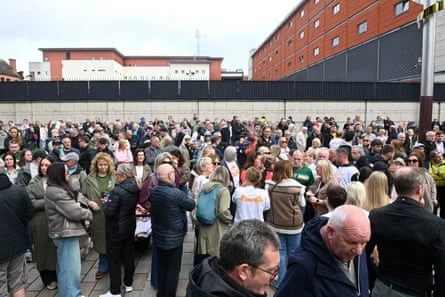
The Police Service of Northern Ireland (PSNI) has been placed on high alert as the legal battle continues. Reports surfaced during the court hearing that a request for a counter-march had already been submitted to the commission. Initial estimates suggested that up to 5,000 people might attend a protest against the Orange Order parade, though that figure was later revised down to 300.
Regardless of the number of protesters, the potential for a confrontation remains a primary concern for security officials. The PSNI is tasked with enforcing whatever decision the court ultimately reaches, a role that often puts officers in the middle of volatile sectarian disputes. The court heard that the "importance of this case to community relations" cannot be overstated, as the outcome could set a precedent for other disputed parade routes across Northern Ireland.
The Garvaghy Road has remained relatively peaceful for years precisely because the ban on the march removed the primary source of friction. Many fear that reopening this route, even for a small group of 35 marchers, would reopen old wounds and embolden hardliners on both sides.
The Path Forward for Northern Ireland
As the legal teams prepare for further hearings, the people of Portadown and the wider Northern Ireland community remain in a state of anxious uncertainty. The High Court’s decision to injunct the parade provides a temporary reprieve, but it does not resolve the underlying conflict over identity, tradition, and the right to the city.
The case highlights the enduring fragility of the peace process. While the Good Friday Agreement largely ended the armed conflict known as the Troubles, it did not erase the deep-seated cultural tensions that manifest during the annual "marching season." Parades remain one of the most visible and contentious reminders of the region’s divided past.
For now, the focus remains on the courtroom. The outcome of the loyalist appeal and the subsequent judicial review will determine whether the Garvaghy Road remains a quiet residential street or once again becomes the center of a national crisis. Justice Smyth’s warning about the "abyss" serves as a reminder that in Northern Ireland, the distance between peace and disorder can often be measured by the path of a single parade.