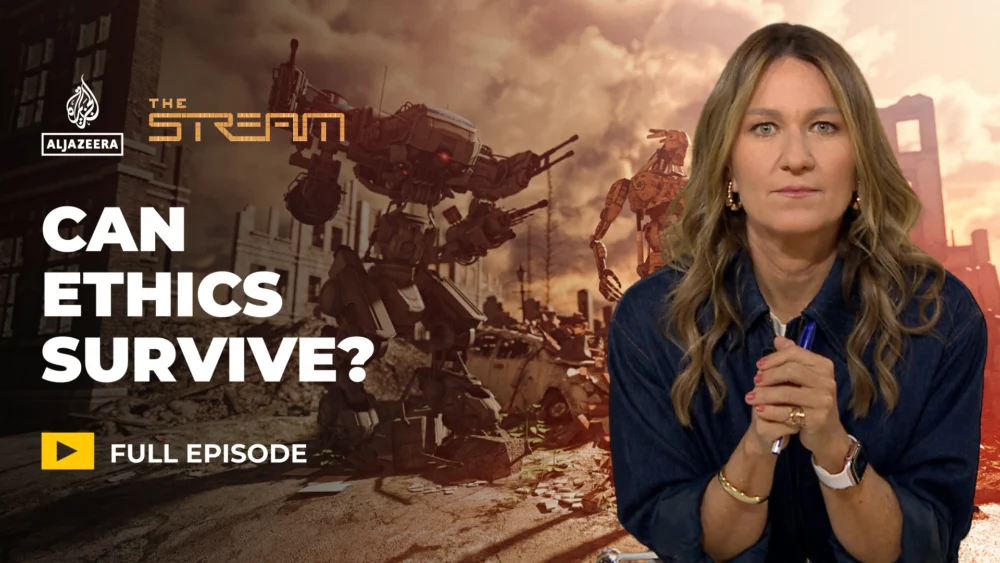
The escalating integration of artificial intelligence into military operations worldwide has ignited a fierce debate surrounding its ethical implications, prompting urgent questions about accountability, human control, and the very nature of warfare in the 21st century. As AI systems become increasingly sophisticated, capable of autonomous decision-making on the battlefield, concerns are mounting over the potential for unintended consequences, the erosion of human judgment, and the fundamental moral principles governing armed conflict. This complex landscape is further complicated by a growing public backlash against dominant AI developers, sparking calls for more responsible and ethically aligned technological alternatives.
Recent widespread criticism and social media campaigns targeting prominent AI developers, most notably ChatGPT and its creator OpenAI, underscore a growing public unease. These movements are not merely academic discussions; they represent a tangible demand for greater transparency and accountability from the tech industry, particularly concerning the development and deployment of powerful AI technologies. The backlash raises critical questions about whether emerging "ethical alternatives" genuinely offer a more responsible path forward or if they are merely repackaging existing challenges under a new guise.
The Ethical Minefield of Autonomous Warfare
The prospect of artificial intelligence making life-or-death decisions on the battlefield is perhaps the most contentious aspect of AI’s military application. Proponents argue that AI can enhance precision, reduce collateral damage, and minimize risks to human soldiers by operating with greater speed and objectivity than human commanders. They envision AI-powered systems that can process vast amounts of intelligence data, identify threats with unparalleled accuracy, and execute missions with minimal human intervention, thereby potentially saving lives on all sides of a conflict.
However, critics paint a far more alarming picture. They warn of the "slippery slope" toward fully autonomous weapons systems, often referred to as "killer robots," which could operate without meaningful human control. The core of their ethical objection lies in the delegation of lethal force to machines. Unlike human soldiers, AI systems lack the capacity for empathy, moral reasoning, or understanding the nuances of complex ethical dilemmas that frequently arise in combat. This absence of human judgment raises profound questions about who bears responsibility when an autonomous weapon makes a catastrophic error or commits a war crime.
Historical Context and the Evolution of Military Technology
The integration of AI into military operations is not an entirely novel concept, but rather the latest iteration in a long history of technological advancement in warfare. From the longbow and gunpowder to precision-guided munitions and drones, militaries have consistently sought to leverage new technologies to gain a strategic advantage. AI represents a significant leap forward, promising capabilities that extend far beyond previous innovations.
Early forms of military AI focused on logistics, intelligence analysis, and predictive maintenance. However, the rapid progress in machine learning and deep learning has paved the way for more complex applications, including autonomous reconnaissance, target identification, and even the potential for autonomous engagement. The development of unmanned aerial vehicles (UAVs), or drones, has been a significant stepping stone, with some advanced models already capable of operating with a degree of autonomy in target selection.
The Rise of "Ethical AI" and Emerging Challengers
In response to public pressure and growing ethical concerns, a new wave of initiatives is emerging, aiming to develop more accountable and ethically aligned AI systems. These efforts are often spearheaded by researchers, activists, and smaller tech companies seeking to challenge the dominance of established "Big Tech" firms, whose vast resources and market share have allowed them to shape the AI landscape significantly.
One such initiative involves the cofounding of Thaura.AI, a company that explicitly states its commitment to developing AI with a strong ethical framework. By focusing on transparency, explainability, and human oversight, companies like Thaura.AI aim to provide alternatives that prioritize safety and ethical considerations alongside technological advancement. These efforts are crucial in fostering a more diverse and responsible AI ecosystem, moving away from a model where a few dominant players dictate the trajectory of this transformative technology.
Public Backlash and the Demand for Accountability
The recent surge in public criticism against major AI developers, including widespread social media campaigns calling for boycotts, signifies a growing public demand for greater accountability. This backlash is fueled by a combination of factors, including concerns about the potential for AI to exacerbate existing societal inequalities, the opaque nature of many AI algorithms, and the perceived lack of ethical guardrails in their development and deployment.
The controversy surrounding large language models like ChatGPT has brought these issues to the forefront. Questions about data bias, the potential for misinformation, and the environmental impact of training these massive models have contributed to a broader skepticism about the unbridled advancement of AI. This public sentiment is now translating into pressure on governments and regulatory bodies to establish clearer guidelines and oversight mechanisms for AI development.
The Role of Tech Critics and Independent Voices
Independent voices and tech critics are playing a vital role in dissecting the complex ethical challenges posed by AI. Aya Jaff, a prominent tech critic and author, has been vocal in her analysis of the AI landscape, highlighting the often-unseen ethical implications of emerging technologies. Her work, and that of similar commentators, helps to demystify complex technical issues for the public and policymakers, fostering a more informed debate.
These critics often point out the disconnect between the promises of AI and the realities of its development and deployment. They scrutinize the business models of major tech companies, questioning whether profit motives can truly be reconciled with the imperative to develop AI responsibly, especially when it comes to applications with profound societal and military consequences.
Navigating the Complexities of Military AI Ethics
The ethical considerations surrounding AI in military operations are multifaceted. At the heart of the debate is the concept of meaningful human control. This principle suggests that humans must retain the ultimate authority over the use of force, even when AI systems are involved in identifying targets or recommending actions. The challenge lies in defining what constitutes "meaningful" control in rapidly evolving combat scenarios.
Furthermore, the development of AI weapons systems raises questions about international law and arms control. Existing treaties and conventions were designed for a pre-AI era, and there is a pressing need for international dialogue and agreements to govern the development and use of autonomous weapons. The absence of clear international norms could lead to an unchecked arms race, with potentially catastrophic global consequences.
The Impact on Geopolitics and Future Conflicts
The widespread adoption of AI in military operations is poised to reshape geopolitical dynamics and the very nature of future conflicts. Nations that lead in AI development and deployment may gain a significant strategic advantage, potentially altering the global balance of power. This could spur an AI arms race, as countries strive to keep pace with or surpass their rivals.
The increasing reliance on AI could also lower the threshold for conflict, as the perceived risks to human soldiers might be reduced. This raises concerns about the potential for more frequent and less constrained military engagements. The integration of AI into cyber warfare, intelligence gathering, and autonomous weapon systems creates a complex and unpredictable battlefield, where the lines between peace and war, and between human and machine, become increasingly blurred.
The Imperative for Transparency and Oversight
Addressing the ethical challenges of AI in military operations requires a multi-pronged approach. Greater transparency from AI developers regarding the capabilities, limitations, and intended uses of their systems is essential. This includes providing clarity on the data used to train AI models, the algorithms employed, and the safeguards in place to prevent misuse.
Robust oversight mechanisms, both domestically and internationally, are also crucial. This could involve independent review boards, regulatory bodies with the authority to audit AI systems, and the establishment of international treaties and norms to govern the development and deployment of military AI. The active involvement of ethicists, legal scholars, and civil society organizations in these discussions is paramount to ensure a comprehensive and balanced approach.
The Future of Warfare and the Ethical Compass
The question of whether AI in military operations can truly be ethical remains an open and urgent one. While the potential benefits of AI in enhancing military capabilities are undeniable, the ethical risks associated with autonomous decision-making, accountability, and the potential for escalation cannot be ignored. The ongoing public discourse, coupled with the emergence of initiatives focused on responsible AI development, offers a glimmer of hope.
However, the path forward demands sustained vigilance, robust international cooperation, and a steadfast commitment to prioritizing human values and ethical principles above all else. The decisions made today regarding the development and deployment of AI in warfare will have profound and lasting implications for global security and the future of humanity. The imperative is clear: to ensure that technological advancement serves as a tool for peace and security, rather than a catalyst for destruction.