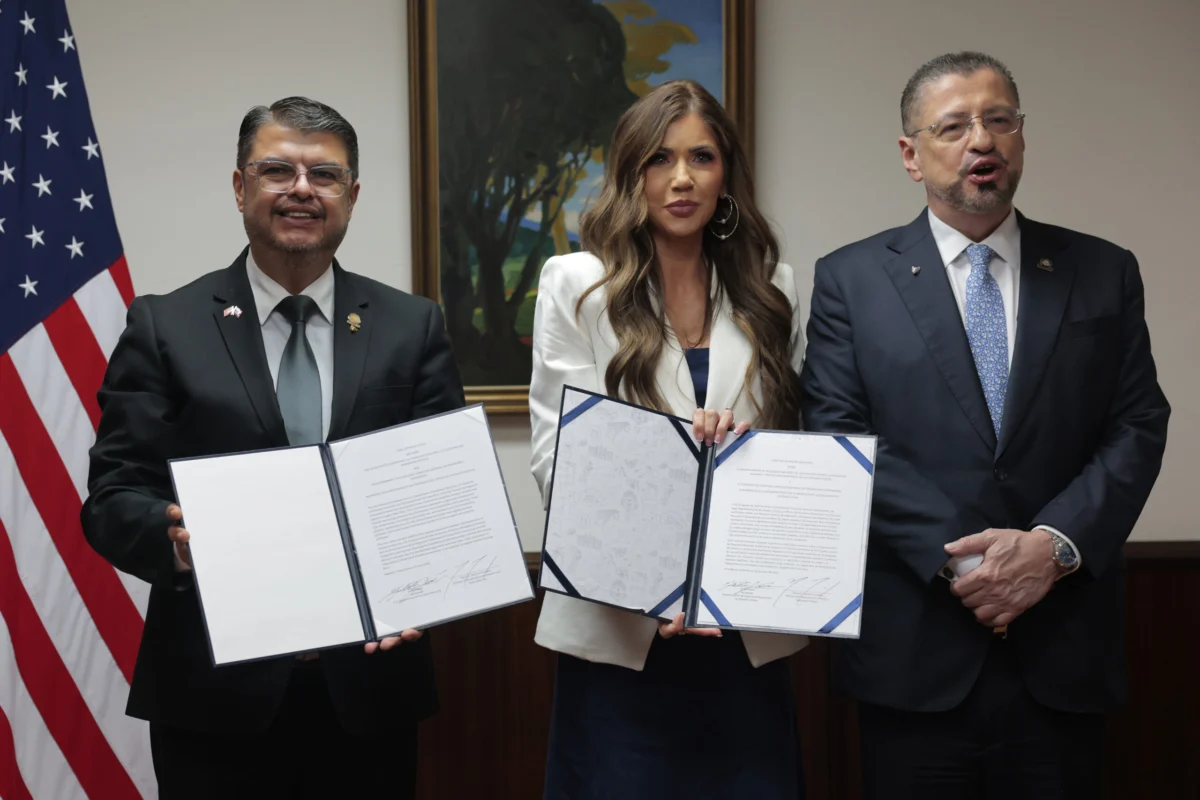
Costa Rica has formalized an agreement to receive up to 25 migrants deported from the United States weekly, a move that positions the Central American nation as a key partner in President Donald Trump’s expanded "third-country" deportation initiative. This pact signifies Costa Rica’s latest step in navigating complex international migration policies and underscores the growing network of countries participating in agreements to process individuals deported from the U.S.
Expanding the "Third-Country" Deportation Framework
The agreement, signed Monday during a visit by U.S. Special Envoy Kristi Noem, who is tasked with overseeing the "Shield of the Americas" initiative, allows for the transfer of non-Costa Rican nationals to the Central American nation. This development is part of a broader strategy by the Trump administration to manage migration flows by facilitating deportations to countries other than those of origin, a policy that has drawn significant scrutiny and criticism from human rights organizations.
Costa Rican Public Security Minister Mario Zamora Cordero stated that the country is "prepared to see this flow of people." The pact is described by Costa Rica’s government as a "non-binding migration agreement," and it includes provisions allowing the nation to accept or reject specific transfer proposals. Furthermore, Costa Rica has stipulated that deportees will be processed under its national migration laws, granted a special migratory status, and that the country will avoid returning individuals to nations where they face a risk of persecution.
A Growing Global Network of Deportation Agreements
Costa Rica is not an isolated case; it joins a growing list of nations across Africa and the Americas that have entered into similar, often opaque, agreements with the United States. These "third-country" deportation arrangements aim to decentralize the processing of migrants, diverting them from the U.S. and potentially from seeking asylum within American borders. Countries such as South Sudan, Honduras, Rwanda, Guyana, Dominica, and St. Kitts and Nevis have previously established such pacts.
Critics argue that these agreements create a "legal black hole" for migrants, leaving them in unfamiliar countries where they may not speak the language and face uncertain legal futures. The effectiveness and humanitarian implications of these policies are subjects of ongoing debate, with concerns raised about the potential for increased vulnerability and exploitation of deportees.
Previous Controversies and Assurances for Deportees
This latest agreement comes amid lingering concerns from a prior incident involving the reception of deportees in Costa Rica. Last year, the country accepted approximately 200 deportees from nations including Russia, China, Uzbekistan, and Afghanistan. Reports indicated that nearly half of these individuals were minors, and many experienced prolonged detention in a rural facility near the Panamanian border. Their passports were reportedly seized, and their detention led to lawsuits and accusations of human rights abuses. The Costa Rican Supreme Court eventually ordered their release in June.
In response to these past criticisms, Minister Zamora issued assurances on Thursday that the new cohort of deportees would be held under improved conditions. He indicated that the Costa Rican government would collaborate with the U.S. on repatriation efforts and with the International Organization for Migration (IOM) to provide housing for deportees. Specific details regarding detention locations and duration were not immediately disclosed, but Zamora emphasized that these measures would "ensure they remain in the best possible conditions while in Costa Rica and guarantee their safe return to their countries of origin."
The "Shield of the Americas" Initiative
U.S. Special Envoy Kristi Noem, who recently took on the role of overseeing the "Shield of the Americas," has been actively engaged in diplomatic efforts across Latin America to secure these deportation agreements. Noem, who previously served as Secretary of Homeland Security, has visited several countries, including Guyana and Ecuador, as part of this mission.
During the signing ceremony, Noem expressed pride in partnering with Costa Rica, stating, "We are very proud to have partners like President [Rodrigo Chaves] and Costa Rica, who are working to ensure that people who are in our country illegally have the opportunity to return to their countries of origin." This sentiment highlights the administration’s perspective on the agreements as a means of managing irregular migration and facilitating returns.
Circumventing Asylum Protections and Legal Challenges
Legal experts have raised concerns that these "third-country" transfer agreements may serve as a mechanism to bypass international and U.S. laws that prohibit sending individuals to countries where they could face persecution or harm. Many migrants who are deported under such arrangements have previously received legal protection from U.S. judges, shielding them from return to their home countries.
A report by the Democratic staff of the Senate Foreign Relations Committee in February indicated that the Trump administration had allocated at least $40 million to facilitate the deportation of approximately 300 migrants to countries other than their own. This expenditure underscores the financial and strategic investment the administration is making in these policies.
Broader Implications for Regional Migration
The expansion of "third-country" deportation agreements poses significant implications for regional migration dynamics. It shifts the burden of processing and accommodating migrants to countries that may have limited resources and established infrastructure to handle such challenges. This can exacerbate existing humanitarian concerns and strain public services in receiving nations.
The policy also raises questions about the long-term well-being of migrants transferred under these agreements. Without clear pathways to legal status or safe return, individuals can become stranded, facing precarious living conditions and further marginalization. The involvement of international organizations like the IOM in providing housing and facilitating returns is seen by some as a necessary safeguard, though the scope and effectiveness of such support remain critical factors.
Costa Rica’s Balancing Act
For Costa Rica, the agreement represents a delicate balancing act between cooperating with the United States on migration management and upholding its own humanitarian commitments and legal obligations. The country has historically been a destination and transit point for migrants and has faced internal and international pressure regarding its asylum policies and the treatment of vulnerable populations.
The government’s emphasis on processing deportees under its own laws and avoiding returns to countries of persecution is a key aspect of its strategy to mitigate criticism. However, the practical implementation of these assurances, particularly in light of past controversies, will be closely monitored by human rights advocates and international bodies.
The Future of "Third-Country" Deportations
The sustained commitment to "third-country" deportation agreements by the Trump administration suggests a continuing effort to reshape U.S. immigration enforcement. The success and sustainability of these policies will likely depend on the willingness of partner nations to participate, the adequacy of resources provided to receiving countries, and the extent to which the human rights of deported individuals are protected.
As more countries engage in such pacts, the international community faces the challenge of ensuring that migration policies do not inadvertently create new forms of hardship or undermine fundamental human rights protections. The ongoing developments in Costa Rica and elsewhere will continue to be a focal point for discussions on global migration governance and the ethical considerations of deportation practices.