Mounting speculation in Washington suggests the potential for a U.S. troop deployment on the ground in Iran, a scenario that has emerged as the U.S.-Israeli military campaign entered its twelfth day. The escalating conflict, initiated by strikes on Iranian targets, has prompted intense debate among policymakers and analysts regarding the scope and objectives of American involvement.
Growing Unease in Washington Over Iran Strategy
The prospect of American soldiers operating within Iran has become a focal point of concern for some lawmakers. Senator Richard Blumenthal, a member of the Senate Armed Services Committee, emerged from a classified briefing on the conflict deeply dissatisfied. He expressed a level of anger unmatched in his 15-year political career, stating that the briefing left him with more questions than answers regarding U.S. objectives.
"I am most concerned about the threat to American lives of potentially deploying our sons and daughters on the ground in Iran," Blumenthal told reporters. He voiced apprehension that the current trajectory of the conflict could lead to the deployment of U.S. troops to achieve unspecified objectives.
This sentiment reflects a broader critique from Democrats, who have consistently challenged the Trump administration’s rationale for the war. They accuse the White House of failing to adequately justify the initial attacks on Iran and the ongoing military operations. Senator Chris Murphy, another Democrat who attended the same briefing, echoed these concerns. He wrote on X that while officials cited the destruction of Iran’s military assets as a war aim, they were unable to present a coherent long-term strategy.
Unclear Objectives Fueling Speculation on Ground Operations
President Donald Trump initially stated that the U.S. objective was to prevent Iran from developing nuclear weapons, a claim Tehran has consistently denied, asserting its nuclear program is solely for civilian purposes. However, the ambiguity surrounding the ultimate goals of the conflict has fueled speculation about the necessity and potential form of a ground operation.

Analysts acknowledge the significant challenges of any ground invasion in Iran’s vast and rugged terrain. While not deemed impossible, such a mission would present formidable logistical and combat difficulties. The sheer scale of the country, coupled with its mountainous geography, would pose a stark contrast to previous U.S. interventions in more urbanized or desert environments.
U.S. Officials Offer Cautious, Evolving Stance
The U.S. government has maintained an official stance of not confirming or denying the possibility of deploying troops to Iran. However, statements from various officials suggest that all options remain on the table. Defense Secretary Pete Hegseth indicated a willingness for the U.S. to "go as far as we need to" to ensure Iran’s nuclear ambitions are thwarted.
White House Press Secretary Karoline Leavitt stated that ground operations are "not part of the plan right now," but acknowledged that President Trump is keeping his options open. This suggests a fluid strategic landscape where a ground component could be considered if circumstances dictated.
Securing Nuclear Assets: A Potential Trigger for Ground Action
Secretary of State Marco Rubio’s remarks at a congressional briefing provided a potential clue as to why a ground force might be contemplated. Rubio emphasized the need to "physically secure nuclear material in Iran," suggesting that boots on the ground might be required to directly retrieve or neutralize such materials. "People are going to have to go and get it," he stated, without specifying who would undertake this critical task.
This statement coincided with reports of President Trump engaging with Iranian Kurdish rebel groups based along the Iran-Iraq border. Analysts suggest this outreach could indicate a U.S. effort to leverage these groups as proxies on the ground, potentially reducing the need for direct U.S. troop involvement. However, it also raises questions about the potential for unintended consequences and regional destabilization.

Public Opinion Leans Against Ground Deployment
Public sentiment in the United States appears to be largely against the idea of deploying troops to Iran. A Quinnipiac University poll released this week indicated that approximately 74 percent of respondents opposed such a move, with a majority leaning politically to the left. Earlier polls conducted by The Washington Post at the outset of the war also showed significant public opposition to broader military engagement.
A Reuters-Ipsos poll conducted shortly after the war began revealed that 43 percent of respondents disapproved of the U.S.-Israeli attacks, with an additional 29 percent expressing uncertainty. Only one in four participants approved of the military action, underscoring a public appetite for caution and a clear understanding of the war’s objectives.
Historical Precedents: U.S. Military Interventions Since the Cold War
The current discussions about a potential U.S. ground presence in Iran draw parallels to recent American military engagements. Following the September 11, 2001, attacks, the U.S. and its NATO allies invaded Afghanistan in October 2001. The stated goal was to dismantle al-Qaeda and capture Osama bin Laden, leading to a 20-year occupation and the deaths of an estimated 170,000 to 210,000 people. At the time of withdrawal in 2021, approximately 2,500 U.S. soldiers remained stationed in the country.
The 2003 invasion of Iraq, ostensibly to find weapons of mass destruction and depose Saddam Hussein, resulted in a protracted war with an estimated 150,000 to one million fatalities. The initial deployment involved around 295,000 soldiers, with a significant withdrawal occurring in December 2011. More recently, U.S. special forces conducted a limited operation in Venezuela, reportedly abducting President Nicolas Maduro and his wife, which involved an aerial bombardment and a ground unit securing the presidential compound. This operation resulted in the deaths of at least 23 Venezuelan security officials and 32 Cuban nationals.
Potential Scenarios for a Limited Ground Operation in Iran
Analysts suggest that any U.S. ground operation in Iran would likely be a narrowly defined mission, focused on specific objectives and involving a smaller contingent of highly trained personnel. Given Iran’s challenging geography, a large-scale invasion is considered improbable.

Thomas Bonnie James, a professor at AFG College with The University of Aberdeen in Qatar, suggests that such operations would likely involve "limited, specialized operations involving small units targeting specific facilities, potentially supported by rapid-deployment forces, such as the 82nd Airborne Division." The 82nd Airborne, renowned for its rapid parachute deployment capabilities, has a history of involvement in key operations during World War II and subsequent conflicts in Afghanistan and Iraq.
The primary objective of such a mission would likely be to locate and neutralize enriched uranium. Key nuclear facilities like the Natanz Nuclear Facility, the Fordow Fuel Enrichment Plant, and the Isfahan Nuclear Technology Center are considered potential targets. The strategically vital Kharg Island, the hub of Iran’s oil exports, could also be a focus.
A limited ground operation would commence with securing air superiority and neutralizing Iranian air defenses. Rapid-deployment forces would then establish control over entry points, such as airfields. Elite units, including U.S. Navy SEALs and U.S. Army Special Forces, would then execute the most sensitive tasks, such as penetrating hardened facilities, gathering intelligence, and securing nuclear materials. The emphasis would be on speed, precision, and minimizing exposure, followed by a swift extraction strategy.
Iran’s Potential Responses to a Ground Incursion
Iran’s reactions to the ongoing U.S.-Israeli military campaign provide a stark indication of its likely response to a ground invasion. Tehran has already launched missile strikes against Israel and U.S. military assets in the Gulf, as well as targeting infrastructure in several regional countries, including Iraq, Bahrain, Kuwait, Qatar, Saudi Arabia, Jordan, Oman, and the United Arab Emirates.
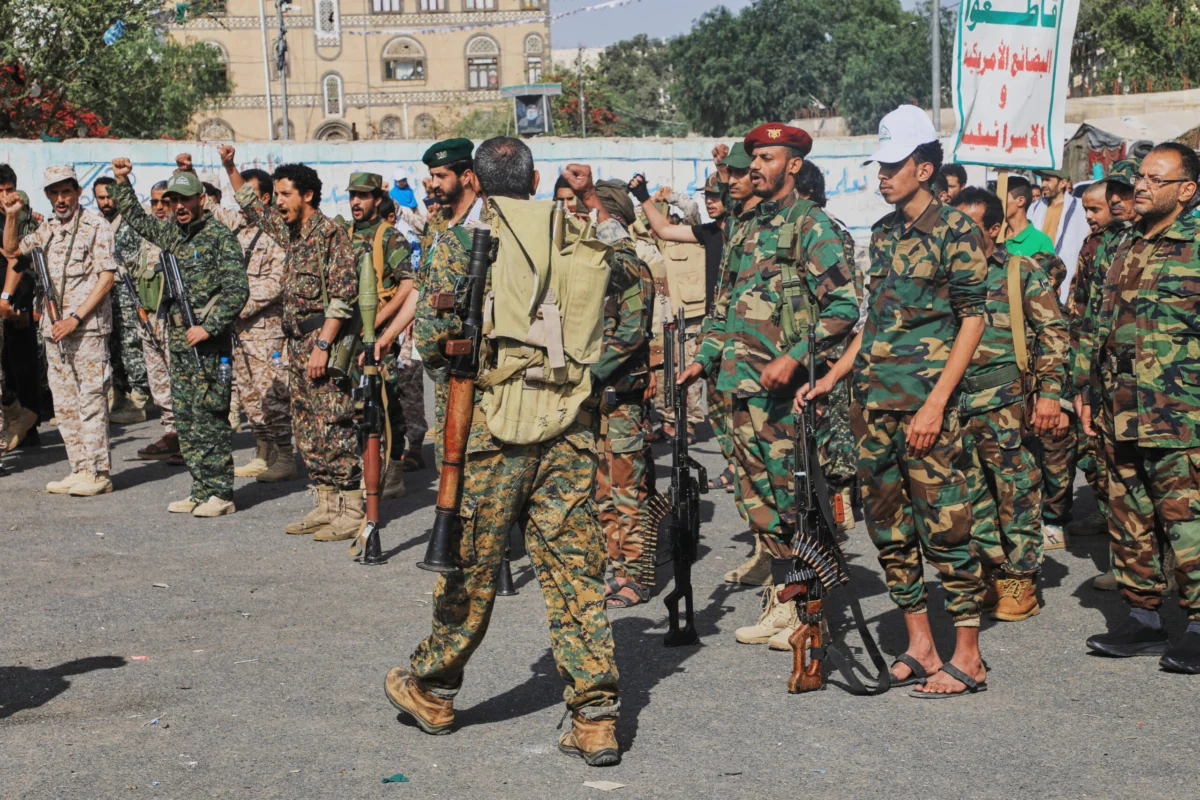
Experts warn that a sustained U.S. ground mission, even a limited one, carries the significant risk of triggering a severe retaliatory response from Iran. Neil Quilliam of the UK think tank Chatham House notes that such operations would be "high-risk, complex and lengthy operations taking place in very hostile environments and against facilities heavily protected by the country’s security forces." A ground incursion could escalate the conflict, leading to intensified missile strikes or coordinated attacks by Iranian proxy groups like Hezbollah and the Houthi rebels.

Previous Strikes on Iranian Nuclear Infrastructure
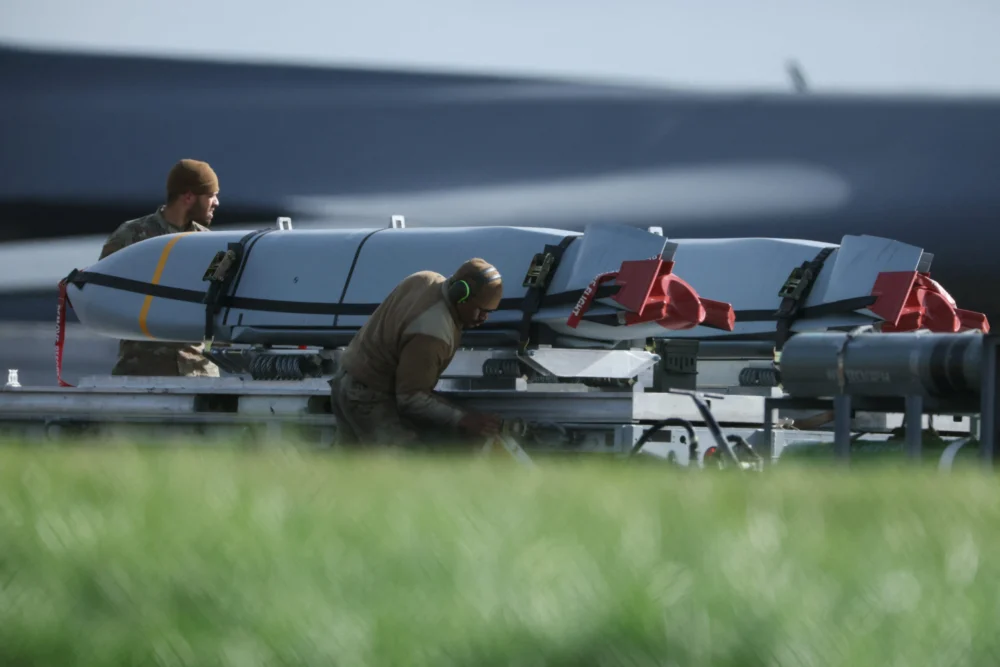
The current discourse follows previous direct attacks on Iran’s nuclear facilities. In June of the previous year, under "Operation Midnight Hammer," the U.S. targeted Iran’s three largest nuclear sites: Fordow, Natanz, and Isfahan. This covert operation aimed to dismantle Tehran’s nuclear enrichment capabilities. U.S. stealth bombers reportedly used bunker-buster bombs on the hardened facilities, while a submarine launched Tomahawk missiles at the Isfahan site.
President Trump declared the sites "obliterated," and Israel claimed responsibility for assassinating several Iranian nuclear scientists. However, Iranian officials contended that the attacks were anticipated and that Fordow had been evacuated in advance. Rafael Grossi, head of the International Atomic Energy Agency (IAEA), cautioned that Iran could resume uranium enrichment within months, as some facilities remained operational. He also noted that Iran possessed stockpiles of 60-percent enriched uranium, a level just below weapons-grade, and it was unclear if these materials had been relocated.
Despite these previous strikes, White House spokesperson Leavitt reiterated in late February that Operation Midnight Hammer had been an "overwhelmingly successful mission," underscoring the administration’s continued emphasis on neutralizing Iran’s nuclear program. The effectiveness of these past operations remains a subject of ongoing assessment, particularly in light of Iran’s continued enrichment activities.