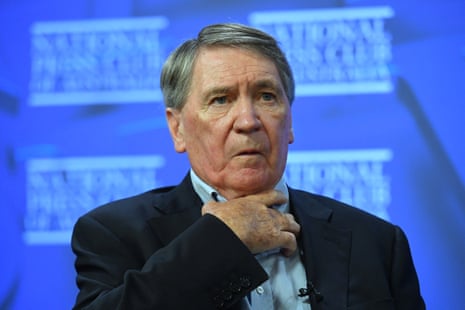
Dennis Richardson, the former head of Australia’s domestic intelligence agency, confirmed Wednesday that his sudden resignation from the federal royal commission into antisemitism was based on his belief that he was “surplus to requirements.” The veteran public servant and former spy chief clarified that his departure from the high-profile inquiry was not the result of government pressure but rather a realization that the body’s organizational structure lacked clarity from its inception.
The resignation of such a prominent figure has raised questions about the internal dynamics of the Royal Commission into Antisemitism and the Bondi Attack, which was established to investigate rising communal tensions and security failures following a mass stabbing event. Richardson, speaking during a broadcast on RN Breakfast, suggested that the administrative framework of the commission may have been flawed from the start, leading to his decision to step aside only a fortnight after the opening hearings commenced.
“I think probably there wasn’t enough discussion right at the beginning about the precise way things would work,” Richardson said during the interview. He maintained that despite his departure, he believes the remaining members of the commission will perform a “highly professional job” in addressing the sensitive and complex issues of religious prejudice and public safety.

Richardson Explains Departure as ‘Surplus to Requirements’
The term “surplus to requirements” has sparked significant debate in Canberra, as Richardson is widely considered one of the most experienced administrators in the country. Having previously served as the Director-General of Security for the Australian Security Intelligence Organisation (ASIO), the Secretary of the Department of Foreign Affairs and Trade, and the Australian Ambassador to the United States, his involvement was seen as a guarantee of the commission’s gravity and expertise.
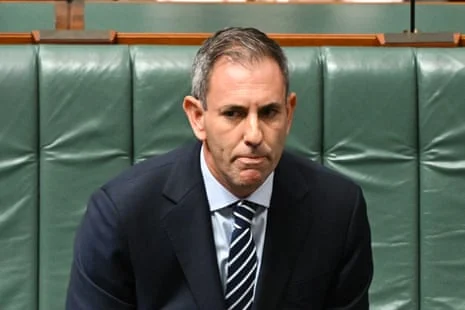
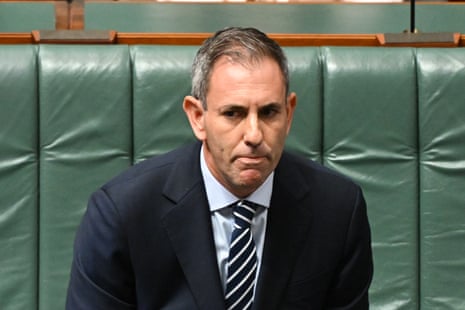
Government officials, including Treasurer Jim Chalmers, expressed personal disappointment over the resignation. Chalmers described the news as “really sad,” noting Richardson’s “immense experience and knowledge.” However, the Treasurer emphasized that the decision was ultimately a private matter between Richardson and the commission’s leadership, asserting that the federal government remains committed to the inquiry’s success regardless of the personnel changes.
The commission was tasked with a dual mandate: investigating the specific circumstances surrounding the Bondi shopping center attack and broader trends of antisemitism within the Australian community. Critics of the commission’s setup have suggested that combining a criminal security review with a sociological and religious inquiry created an unwieldy scope, which may have contributed to the lack of role clarity Richardson cited.
Global Energy Volatility and the Oil Reserve Release
As the political fallout from Richardson’s resignation continued, Federal Resources Minister Madeleine King addressed a major shift in global energy policy. The International Energy Agency (IEA) recently ordered the largest release of government oil reserves in its history, a move designed to stabilize global markets following the escalation of the war in Iran. The 32 member nations of the IEA unanimously agreed to release 400 million barrels of emergency crude, representing roughly one-third of the world’s total stockpiles.
Minister King sought to reassure the Australian public that the nation is well-positioned to handle the energy shock. While Australia is a participant in the IEA agreement, King clarified that the fuel earmarked for the release remains physically within the country. “What I want to make really clear to everybody listening is all that fuel remains in Australia,” King stated. “It doesn’t go anywhere because of this request.”
The Minister also defended Australia’s current fuel security levels, which have long been a point of contention among national security analysts. While the IEA recommends that nations maintain a 90-day supply of fuel, King noted that meeting this threshold would cost the Australian taxpayer approximately $20 billion in storage infrastructure and procurement. She argued that the current minimum stockholding obligations are sufficient and that scheduled shipments continue to arrive without interruption despite the conflict in the Middle East.
Economic Resilience Amid Regional Conflict
Treasurer Jim Chalmers echoed the sentiment of national resilience, stating that Australia is “incredibly well placed” to weather the economic fallout of the Middle East conflict. Despite the volatility in global oil prices and the resulting pressure on domestic inflation, the Treasurer confirmed that the government is not currently considering a cut to the fuel excise.
“We won’t be immune from these developments,” Chalmers said, acknowledging that the war in Iran is placing additional strain on Australian households already struggling with the cost of living. However, he maintained that the government’s fiscal strategy is designed to protect the economy from the “worst the world can throw at us.”
The Treasurer indicated that the government is working closely with the Australian Competition and Consumer Commission (ACCC) to monitor fuel supply chains, particularly in regional areas where shortages or price gouging could have a disproportionate impact. The government’s refusal to provide temporary tax relief at the pump suggests a focus on long-term fiscal stability over short-term political fixes as the international situation remains fluid.
Human Rights Concerns and the Iranian Football Team
In a separate development that has drawn international attention, New South Wales Anti-Slavery Commissioner Dr. James Cockayne raised urgent questions regarding the departure of the Iranian women’s football team from Australia. The squad’s exit followed intense speculation regarding the safety of the players and potential coercion by the Iranian regime.
Cockayne questioned the roles of the Australian Federal Police (AFP), Sydney Airport, and Qantas in facilitating the team’s departure. He expressed concern that the players may have been victims of “exit trafficking,” a form of modern slavery where individuals are coerced into returning to a country where they face a high risk of persecution or harm.
According to reports, two members of the squad initially sought to remain in Australia after a private meeting with Home Affairs officials, though one later changed her mind and boarded the flight. Cockayne expressed deep skepticism about whether these decisions were made free from duress. “This was an extraordinarily tough and traumatizing decision to have to make—whether to return home to a war-torn country and face the wrath of a highly repressive, misogynistic regime or stay with a very uncertain future far away from family,” Cockayne said.
The Commissioner has called for an investigation into whether the athletes received independent legal advice and whether the AFP properly interviewed the women to determine if they were being threatened. The situation has placed a spotlight on the responsibilities of private corporations, such as airlines and airport operators, in identifying and preventing human rights abuses on Australian soil.
Victoria Proposes Mandatory Building and Pest Inspections
On the state level, Victorian Premier Jacinta Allan announced a major policy shift aimed at reducing the financial burden on prospective homebuyers. Under a new plan to be implemented if the Labor government is re-elected in November, vendors—not buyers—would be required to pay for mandatory building and pest inspections.
Currently, the Australian Capital Territory (ACT) is the only jurisdiction in the country with such a scheme. In Victoria, as in most of Australia, it is common for multiple potential buyers to pay hundreds of dollars each for independent reports on the same property, only to lose out at auction. Data from the Consumer Policy Research Centre suggests that these reports can cost up to $600 each, and approximately 17% of buyers currently forgo inspections entirely due to the cost, effectively “buying blind.”
“The status quo isn’t working,” Premier Allan said. “When you buy a car, the seller pays for the roadworthy. It should work the same way when you look for a home.” The proposed legislation, slated for introduction in 2027, would require sellers to make these reports available to all interested parties, potentially saving buyers thousands of dollars during the search process.

Natural Disasters and Search Efforts in Queensland and New South Wales
The Australian landscape continues to be shaped by volatile weather and geological events. In Queensland, police and State Emergency Service (SES) teams have located a vehicle belonging to two tourists who went missing in the flood-ravaged Kilkivan area. The 26-year-old man and 23-year-old woman were traveling from Brisbane to North Burnett when they disappeared.
The search, which has utilized helicopters and ground crews, discovered the couple’s silver Subaru Forester near McArthur Road. The region has been inundated by severe rainfall, leading to flash flooding that has cut off roads and inundated hundreds of homes in nearby Bundaberg. Authorities have not yet confirmed the status of the missing tourists but remain at the scene as recovery efforts continue.
Simultaneously, residents in New South Wales and the Australian Capital Territory were shaken by a 4.4 magnitude earthquake on Tuesday night. The quake, centered near Boorowa, occurred just after 7:00 p.m. and was felt by more than 4,000 people who reported the event to Geoscience Australia within the first hour. While no major structural damage was immediately reported, the tremor serves as a reminder of the unpredictable environmental challenges facing the region.
Implications for the Royal Commission into Antisemitism
The departure of Dennis Richardson remains the most significant political hurdle for the federal government this week. While Richardson’s explanation of being “surplus to requirements” suggests a personal professional assessment rather than a scandal, it highlights the difficulties of managing high-stakes public inquiries. The Royal Commission into Antisemitism must now move forward without one of its most respected voices, even as it navigates a domestic climate defined by international conflict, economic anxiety, and complex human rights challenges.

The coming months will determine if the commission can maintain its momentum and public trust. With the government’s focus split between international energy security, state-level housing reforms, and emergency disaster responses, the findings of the royal commission will be essential in shaping Australia’s social cohesion strategy for years to come.