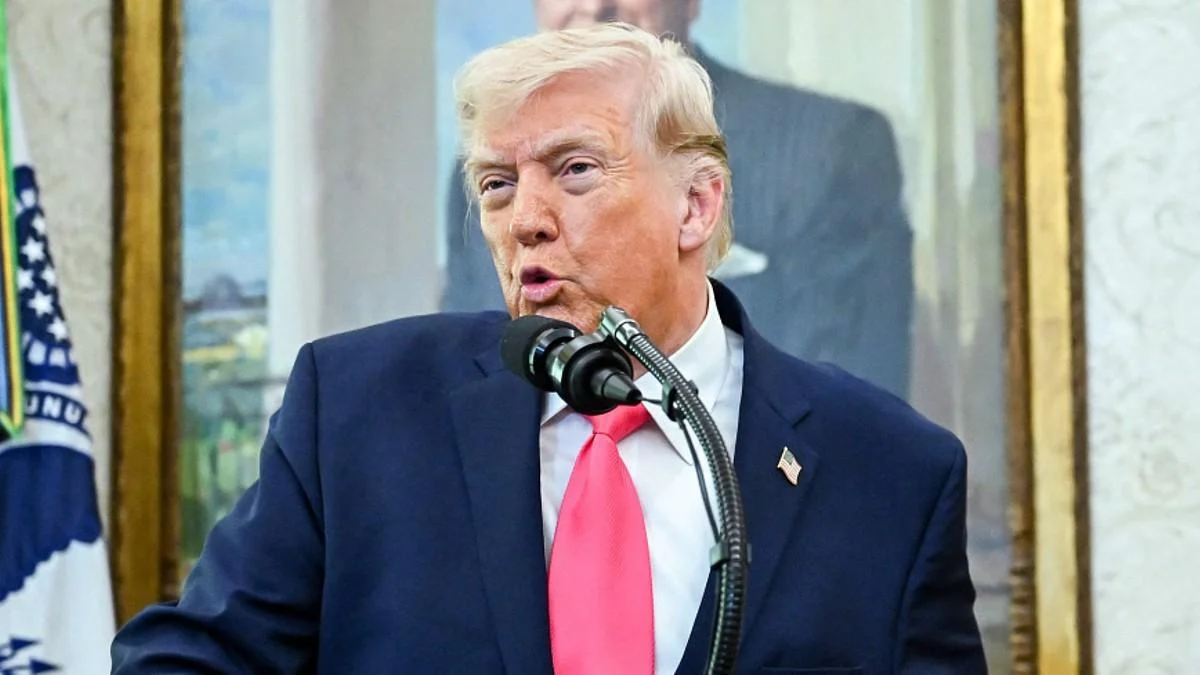
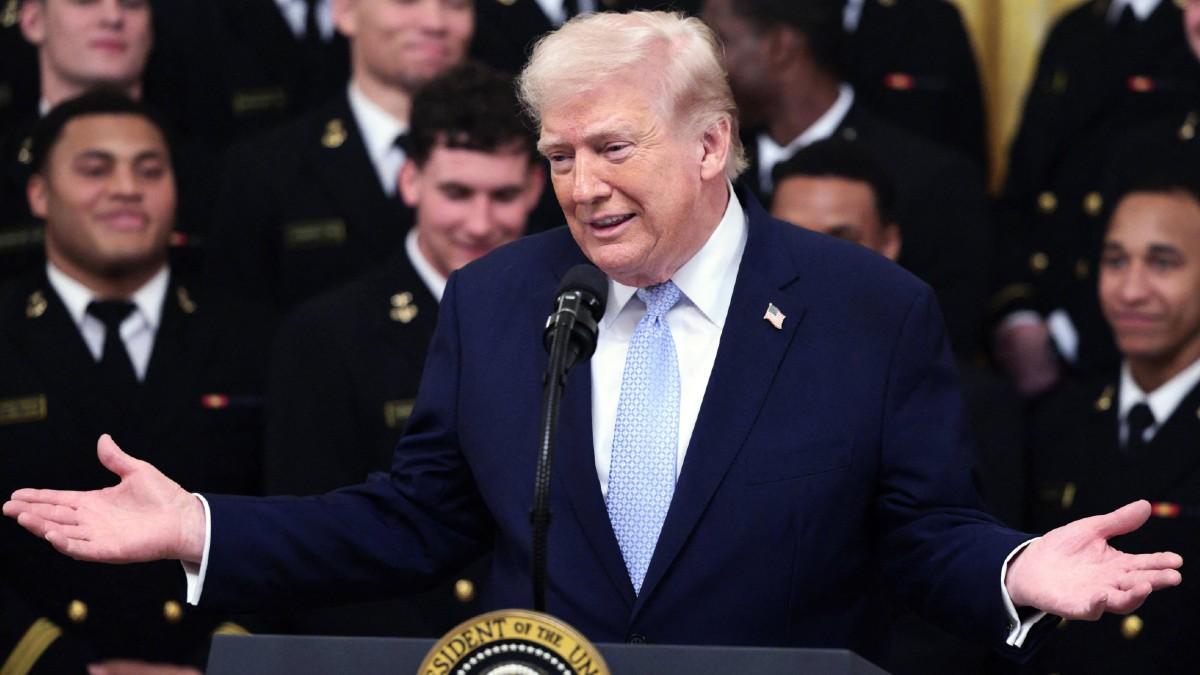
During a high-profile fundraising dinner for the National Republican Congressional Committee on Wednesday, March 25, former President Donald Trump stumbled over his own rhetoric, explicitly admitting his administration was intentionally avoiding the term "war" to describe ongoing military actions in Iran, only to then use the very word moments later. The peculiar gaffe immediately drew scrutiny, highlighting the administration’s contentious approach to military engagements and its efforts to bypass traditional congressional oversight.
Trump’s remarks underscored a deliberate strategy to reframe the nature of the U.S. military presence and offensive operations against Iran, which officially commenced on February 28. His administration has consistently opted for euphemistic terms such as "kinetic conflict" or "combat operation," a linguistic maneuver critics argue is designed to circumvent constitutional requirements for congressional authorization before committing U.S. armed forces to sustained hostilities.
The War Powers Resolution and Presidential Authority
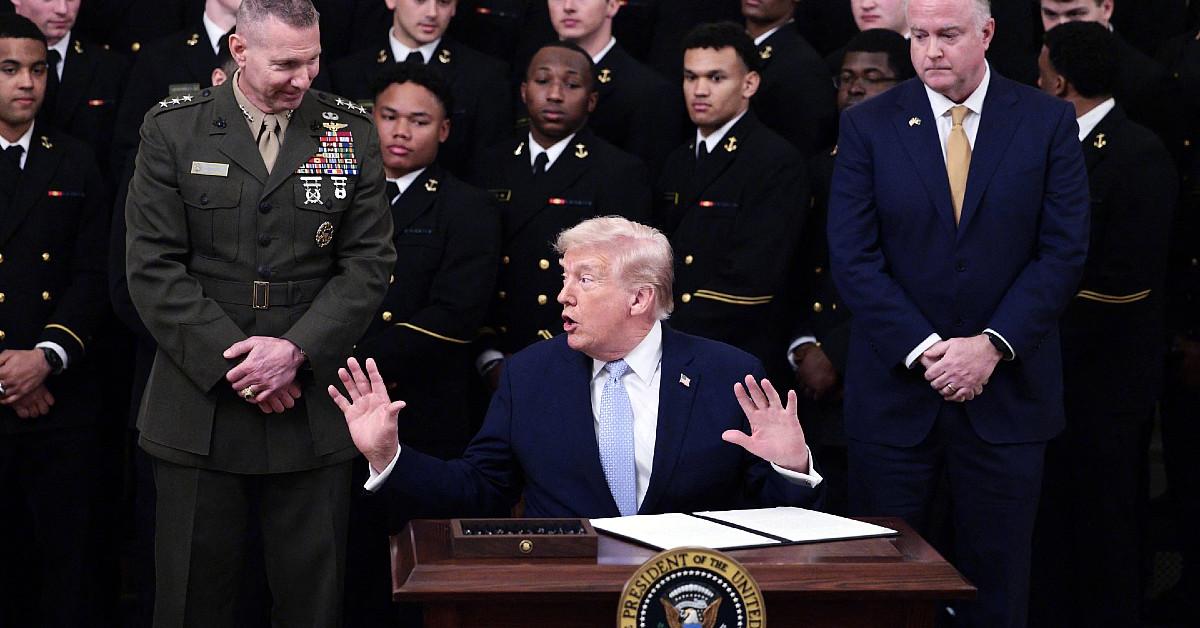
The controversy centers on the War Powers Resolution of 1973, a federal law enacted in the wake of the Vietnam War to reassert congressional authority over military interventions. This act mandates that the President notify Congress within 48 hours of deploying U.S. armed forces into armed conflict and requires troop withdrawal within 60 to 90 days unless Congress formally declares war or explicitly authorizes the action. Historically, presidents from both parties have viewed the Resolution as an infringement on their executive powers as Commander-in-Chief, often interpreting its provisions narrowly or sidestepping them altogether.
Trump’s explicit acknowledgment of this avoidance strategy – "I won’t use the word ‘war’ because they say, if you use the word war, that’s maybe not a good thing to do. They don’t like the word ‘war,’ because you’re supposed to get approval, so I’ll use the word ‘military operation,’ which is really what it is" – laid bare the administration’s legal rationale. However, the subsequent slip, where he proclaimed, "The war essentially ended a few days after we went in," immediately contradicted his stated intent, fueling accusations of disingenuousness and potential legal jeopardy.
Congressional Standoff Over Iran War Powers
The political landscape surrounding the Iran conflict has been fraught with tension between the executive and legislative branches. Despite the War Powers Resolution’s clear directives, the Republican-controlled Congress has largely aligned with the Trump administration’s foreign policy agenda. Recently, attempts by some lawmakers to rein in the President’s military actions through war powers resolutions were defeated. The House of Representatives rejected a measure 212-219, and the Senate followed suit with a 47-53 vote, effectively allowing the strikes against Iran to continue without new, explicit congressional authorization.

This legislative inaction has intensified the debate over the separation of powers, with critics arguing that Congress is abdicating its constitutional responsibility to declare war. Proponents of the administration’s actions, however, often cite the President’s inherent authority to protect national interests and respond to threats without prior legislative approval, particularly in situations deemed urgent or defensive.
Conflicting Objectives and the Escalating Iran Conflict
The military offensive against Iran, initiated on February 28, has been characterized by a lack of clear, consistent objectives from the Trump administration. Initially, stated goals included preventing nuclear development and securing vital oil routes in the Persian Gulf. However, the rhetoric escalated dramatically following the killing of Ayatollah Ali Khamenei, with Trump explicitly calling for "regime change" in Iran. This shift in stated objectives has further complicated the legal and political landscape, raising questions about the scope and duration of U.S. involvement.
The conflict itself has seen continued Iranian missile strikes targeting various locations, including Tel Aviv and U.S. military bases in the region, directly contradicting Trump’s repeated claims that the "war is won" or that Iran is "defeated militarily." These ongoing hostilities highlight a disconnect between the administration’s public pronouncements and the realities on the ground, creating a sense of instability and uncertainty regarding the true state of affairs.
The Perils of Linguistic Rebranding in Military Actions
The administration’s efforts to rebrand military action with terms like "kinetic conflict" or "military operation" rather than "war" carry significant implications. Such linguistic acrobatics can obscure the true nature of armed engagement from the public, potentially diminishing public debate and oversight. By avoiding the term "war," the administration may seek to lower the political threshold for military intervention, making it easier to commit troops without the full scrutiny and accountability that a formal declaration of war would entail.
Critics argue that this approach undermines democratic principles by bypassing the deliberative process intended by the War Powers Resolution. It also risks setting a dangerous precedent for future administrations to engage in prolonged military actions under alternative, less evocative labels, thereby eroding the checks and balances inherent in the U.S. constitutional system.
Public Perception and Media Scrutiny
The Trump administration’s messaging strategy has also drawn fire for its presentation of the conflict. Reports indicate the use of "sizzle reels" and "video-game-style imagery" on social media platforms to package the military action, a tactic that critics contend trivializes the serious human and geopolitical consequences of armed conflict. This approach to public relations, they argue, risks desensitizing the public to the realities of war and framing complex international relations as mere entertainment.
Late-night host Stephen Colbert quipped, encapsulating the public’s bewilderment, "I say war because it sure looks like a war and Trump keeps calling it a war, but Congress never declared it a war, and MAGA was promised no new wars." This commentary reflects a broader sentiment among segments of the public and media who see a clear discrepancy between the administration’s rhetoric and the observable facts of the conflict. The promise of "no new wars" was a cornerstone of Trump’s political platform, making his current actions and wordplay particularly jarring for some of his base.
Conflicting Claims and Cognitive Concerns
Beyond the "war" versus "military operation" semantic debate, Trump’s broader rhetoric surrounding the Iran conflict has been marked by inconsistencies. He has frequently claimed imminent victory or that the conflict was "won" mere days after it began, despite evidence of ongoing hostilities. Furthermore, his recent assertion that talks with Iran were yielding "great progress" was swiftly contradicted by Iranian officials, who flatly denied any direct or indirect contact with the United States.
These verbal missteps, including confusing "excursion" with "incursion" when describing military action, have contributed to a broader public discussion about the former President’s cognitive and physical health. Such concerns have been amplified by other instances of verbal stumbles and perceived physical difficulties observed in recent public appearances.
Historical Rebranding: The Department of War
The current linguistic gymnastics over the Iran conflict are not isolated incidents but fit within a broader pattern of the Trump administration’s reinterpretation of military and governmental terminology. In late 2025, Trump issued an executive order to rename the Department of Defense back to its historical title, the Department of War. The original change from War to Defense occurred in 1947, intended to reflect a shift towards a more defensive, rather than overtly aggressive, posture in the post-World War II era. Trump’s reversal of this symbolic change was seen by many as a deliberate signal of a more assertive, potentially confrontational, foreign policy stance.
This renaming, coupled with the administration’s current efforts to rebrand the Iran conflict, suggests a conscious and systematic attempt to alter public perception and legal frameworks surrounding U.S. military engagement. As the conflict in Iran continues, the implications of this linguistic and policy reorientation remain a critical point of analysis for constitutional scholars, foreign policy experts, and the American public alike. The balance of power between the executive and legislative branches in matters of war, and the transparency of government actions, are fundamental tenets of American democracy that continue to be tested by these developments.