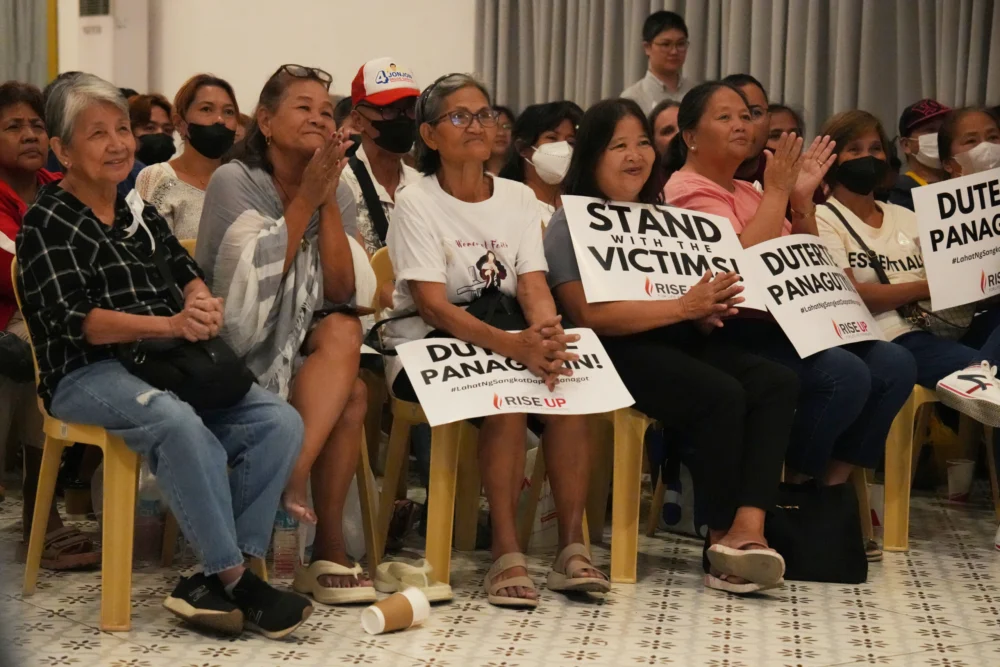
The Hague has emerged as a pivotal venue for accountability, offering a long-sought reckoning for the Philippines’ controversial anti-drug campaign as global norms face significant strain. In late February, proceedings at the International Criminal Court (ICC) provided a rare glimpse of potential justice for victims and their families, marking a critical juncture in the legal battle against former Philippine President Rodrigo Duterte. The court convened a hearing to examine charges of crimes against humanity allegedly committed during his administration’s extensive and often brutal "war on drugs."
For those who have endured years of violence, denial, and the dehumanization of their loved ones, this judicial step represents the first tangible movement toward justice. During the hearing, Filipino lawyer and counsel for the victims, Joel Butuyan, articulated this sentiment, telling the court, "Truth is the antidote to the virus of impunity." The proceedings are central to determining whether sufficient evidence exists to move forward with a trial against the former president, a process that has been years in the making and fraught with political and legal challenges.
A three-judge panel, comprised of esteemed female jurists from Romania, Mexico, and Benin, meticulously reviewed arguments presented by the prosecution, victims’ representatives, and Duterte’s defense team. Their mandate at this stage is not to determine guilt but to assess the strength of the evidence and decide if the case warrants a full trial. This crucial decision will weigh heavily on the prospects for international justice in a case that has captured global attention.
The charges under scrutiny by the ICC focus on 49 alleged incidents of murder and attempted murder, involving a total of 78 victims, including minors. These alleged crimes are said to have occurred between November 2011 and March 2019, a period during which the ICC maintained jurisdiction over the Philippines. The timeline of the ICC’s involvement is critical; the preliminary inquiry by the former ICC prosecutor into the situation in the Philippines was announced in March 2018, shortly after which Duterte initiated the Philippines’ withdrawal from the court’s membership. This withdrawal became legally finalized one year later.
The scope of the case against Duterte encompasses both his tenure as the mayor of Davao City, a southern Philippine metropolis, and the period following his election as president in 2016. Prosecutors emphasized that the selected incidents, while horrific, represent only a fraction of the thousands of killings attributed to law enforcement and alleged vigilante groups during Duterte’s aggressive anti-drug campaign. This assertion underscores the sheer scale of the violence that characterized his presidency and the challenge of bringing all perpetrators to account.
Witnesses to the proceedings in The Hague included a diverse group of individuals who had traveled from the Philippines. In the public gallery sat alongside victims’ families, human rights activists, members of the clergy, journalists, and legal advocates, all gathered to observe a moment many believed they would never see. The presence of Duterte’s supporters also highlighted the deeply divided sentiments surrounding the former president and his policies. Duterte himself was notably absent, having waived his right to attend the hearing. He submitted a written statement asserting his non-recognition of the court’s jurisdiction and claiming he had been "kidnapped." His refusal to appear in person was a significant disappointment for many victims’ families who had hoped to see him face them directly in the courtroom.
Despite his physical absence, Duterte’s voice resonated powerfully within the courtroom through audio and video evidence presented by the prosecution. Prosecutors played numerous recordings of Duterte issuing directives to police and military personnel, frequently urging them to kill drug suspects and disregard legal constraints. One particularly chilling address from 2016 featured Duterte stating, "If I become the president, I will order the military and the police to hunt down the drug lords, the big ones, and kill them." In response, Duterte’s defense lawyer argued that the prosecution had selectively presented these speeches, omitting crucial context and information that could exonerate his client, such as references to the use of force in self-defense scenarios.
Human Rights Watch has been a persistent chronicler of Duterte’s drug war since 2009. The organization documented the operations of the so-called "Davao Death Squad" during Duterte’s time as mayor, an entity implicated in the targeted killings of street children, petty criminals, and drug suspects. A comprehensive Human Rights Watch report published in 2017 detailed how Duterte’s "drug war" escalated dramatically across the nation after his presidential election. The organization’s ongoing reporting has been instrumental in bringing international attention to the human rights abuses associated with the campaign.
ICC Deliberations and the Path Forward
The three-judge panel at the ICC is now tasked with a critical decision: within 60 days, they must determine whether the evidence presented is sufficient to authorize a trial against Rodrigo Duterte. This deliberation period occurs against a backdrop of continued drug-related killings in the Philippines, though these have reportedly decreased from their peak during the Duterte administration.
The Dire State of Domestic Accountability
Compounding the international legal proceedings is the stark reality of inadequate domestic accountability within the Philippines. Nearly a decade after the nationwide "drug war" commenced, only a handful of cases have resulted in convictions, with a total of nine police officers sentenced. The vast majority of individuals believed to be responsible, including senior officials and those who orchestrated the campaign, have evaded any form of legal consequence. This lack of robust domestic justice mechanisms has fueled the perception of widespread impunity and has been a driving factor behind the ICC’s intervention.
Political Undercurrents and the Marcos Administration
The political landscape surrounding the ICC case is complex and carries significant implications for the current administration of President Ferdinand Marcos Jr. While pursuing Duterte at The Hague may serve to distance Marcos Jr. from the most egregious excesses of his predecessor, it also navigates a delicate political terrain. Many of the alleged co-perpetrators, including senior police officials who were instrumental in replicating Davao City’s "neutralization" strategies on a national scale, continue to hold positions of influence or have gone into hiding. The security infrastructure that facilitated the widespread killings within the national police force remains largely intact, raising concerns that a shift in political will could easily reignite the violence.
President Marcos Jr. now faces a pivotal moment that will define his commitment to justice and the rule of law. He has the option to continue relying on the ICC for accountability while tacitly permitting a culture of impunity to persist domestically. Alternatively, he can demonstrate a genuine dedication to justice by taking decisive action. Such a commitment would necessitate a clear and public repudiation of the decade-long police operations that underpinned the anti-drug campaign and an explicit assurance that such brutal methods are no longer state policy.
Strengthening Domestic Justice Mechanisms
For credible domestic accountability to take root, President Marcos Jr. should empower the Department of Justice to conduct thorough investigations and prosecutions with genuine earnestness. Furthermore, the Philippines should seriously consider rejoining the ICC, a move that would significantly bolster domestic efforts to ensure accountability and uphold international human rights standards. Without tangible and effective action from within the Philippines, any promises of reform risk sounding hollow to victims and the international community.
A Defining Moment for the Philippines
This period represents a critical moment of reckoning for the Philippines. The families who have endured years of waiting for answers and justice deserve more than political expediency; they deserve a comprehensive and truthful resolution. Regardless of the ICC’s forthcoming decision, the Philippine government has an immediate and imperative responsibility to act. Ending impunity and honoring the dignity of victims is not an external obligation; it is a fundamental duty that begins at home. The path toward healing and reconciliation requires a resolute commitment to justice, transparency, and the unwavering protection of human rights for all citizens.