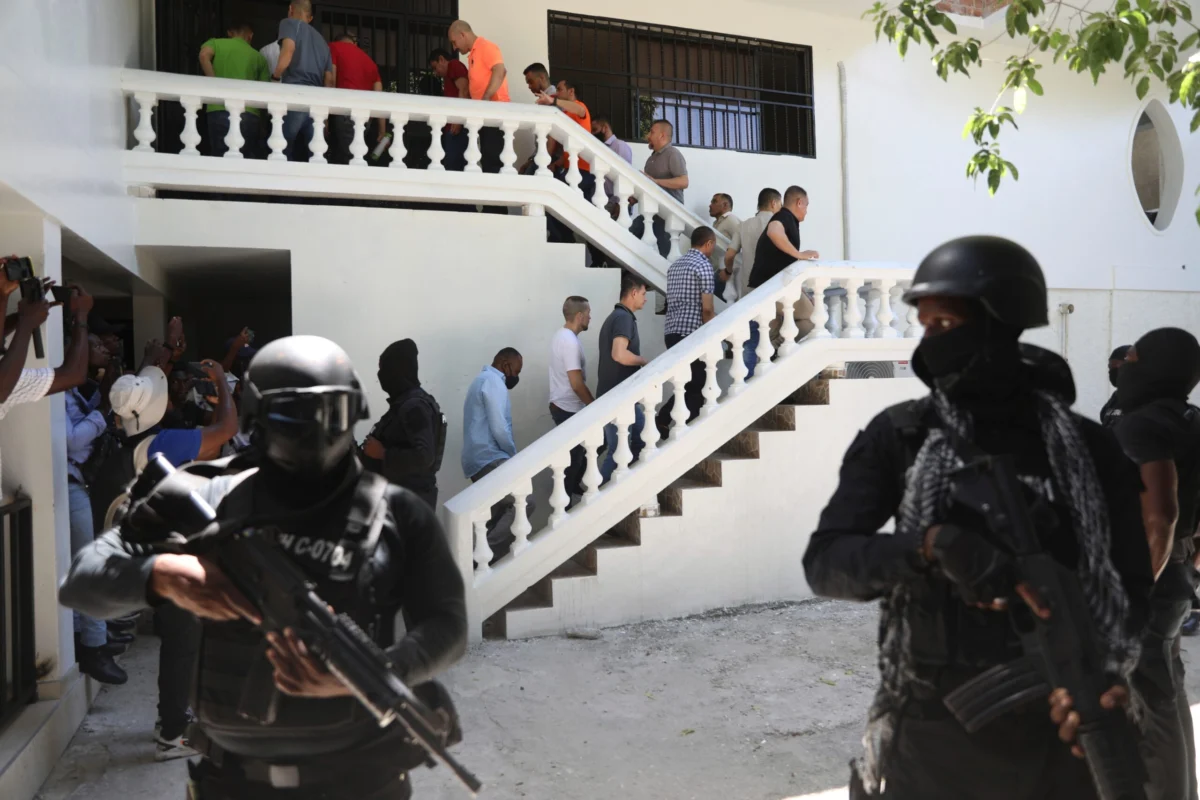
Eighteen individuals accused of orchestrating the assassination of Haitian President Jovenel Moïse in July 2021 have been extradited to the United States, marking a significant escalation in the pursuit of justice for the high-profile killing. A military transport flight on Sunday delivered the suspects from the Haitian capital, Port-au-Prince, to Florida, where they are slated to face federal charges in U.S. courts. This development signals a new, intensive phase in an investigation that spans international borders and implicates individuals believed to have played key roles in the plot to eliminate the Haitian head of state.
Transnational Plot Unravels: U.S. Takes Custody of Suspects
The transfer of these 18 suspects to American soil underscores the transnational nature of the alleged conspiracy to assassinate President Moïse. Federal prosecutors in the Southern District of Florida have been spearheading the complex legal effort, building upon earlier convictions secured against individuals deemed to be "gang leaders" and "co-conspirators." This latest action represents a determined push by U.S. authorities to hold all alleged financiers, facilitators, and perpetrators accountable, regardless of their location.
U.S. Attorney Jason A. Reding Quiñones, who was appointed by former President Donald Trump, emphasized the ongoing commitment to the case. "Today marks the next major phase in our pursuit of accountability for the assassination of President Jovenel Moïse," Quiñones stated via social media. "We will follow the evidence wherever it leads, to those who financed it, facilitated it, supported it or committed crimes to make it possible. Five years later, we are still bringing defendants before American courts, and we are not finished."
The suspects arriving in Florida have not been publicly identified by name. However, it is understood that a significant number of those remaining in Haiti pending trial include former Colombian soldiers and a former Haitian government official, suggesting a complex web of involvement that extends beyond mercenary operatives.
The Shadow of Gangs and Political Instability
The assassination of President Jovenel Moïse plunged Haiti into a deeper political and security crisis, creating a power vacuum that armed gangs have exploited with devastating effect. Moïse, 53, was shot dead at his private residence in the Pèlerin 5 neighborhood on July 7, 2021, while his wife was critically wounded. His killing left the Caribbean nation without any elected national leaders, fostering an environment of extreme instability.
In the aftermath of Moïse’s death, gang influence surged dramatically, with estimates suggesting they now control as much as 90 percent of the capital, Port-au-Prince. The escalating violence has had catastrophic consequences for the Haitian population. The United Nations reported at least 8,100 gang-related killings in 2025 alone, and the pervasive insecurity has displaced approximately 1.5 million people.
The inability of Haiti’s own justice system to effectively handle such a high-profile and complex case is a stark indicator of the nation’s systemic challenges. The ongoing security collapse, coupled with entrenched corruption and paralyzing political chaos, has rendered a fair trial within Haiti increasingly impossible. This dire situation has necessitated the involvement of international judicial processes, particularly in the United States, given the alleged planning and financing of the plot originating from Florida.
Legal Basis for U.S. Jurisdiction
Federal courts in Florida have established legal jurisdiction over the case due to evidence indicating that the overarching plot to assassinate President Moïse was primarily engineered, financed, and staged out of the southern part of the state. This geographical nexus, combined with the alleged involvement of U.S.-based individuals and entities in facilitating the assassination, provides a strong foundation for American prosecution.
The decision to prosecute in the U.S. also reflects the profound challenges faced by Haiti’s judicial infrastructure. The country’s legal system has been severely weakened by years of political turmoil, widespread corruption, and the overwhelming power of criminal gangs. These factors have created an environment where ensuring due process and a fair trial for defendants, particularly in a case as sensitive and politically charged as the presidential assassination, is an immense undertaking.
A Glimmer of Accountability: Earlier Convictions and Ongoing Investigations
The extradition of these 18 suspects follows previous legal victories for U.S. prosecutors. In May, a jury in Florida convicted four men in connection with Moïse’s killing. At least five other individuals have already pleaded guilty to charges related to the assassination and are currently serving life sentences in U.S. federal prisons.
FBI Special Agent in Charge Brett Skiles confirmed that Sunday’s extraditions were part of a broader effort, with multiple arrests made both domestically and internationally. The FBI and its partners have reiterated their steadfast commitment to ensuring that all individuals who allegedly profited from the assassination of a head of state are held fully accountable under the law.
This ongoing pursuit of justice highlights the long and arduous nature of dismantling complex criminal networks and bringing those responsible for high-level political violence to account. The U.S. Attorney’s office has indicated that the investigation is far from over, suggesting that further arrests and prosecutions may be forthcoming as evidence continues to be uncovered.
Haitian Perspectives on Justice and Sovereignty
While the U.S. efforts are seen by some as a necessary step towards accountability, the transfer of suspects from Haiti to American jurisdiction has also drawn criticism and raised questions about Haitian sovereignty and the capacity of its own justice system.
Pierre Esperance, a prominent human rights activist and executive director of the National Human Rights Defense Network in Haiti, described the transfer of the 18 suspects to the U.S. as a "disgrace for the Haitian justice system." He called for a comprehensive overhaul of the country’s judicial infrastructure to enable Haiti to prosecute such complex and internationally significant cases within its own borders in the future.
Esperance’s remarks underscore a broader concern among some Haitians and international observers: that the reliance on foreign legal systems for resolving critical national crises can undermine the development of robust domestic institutions and perpetuate a sense of external control over internal affairs. The hope for Haiti is that, in time, its own legal framework will be strong enough to uphold justice for its citizens.
The Lingering Political Void
The assassination of Jovenel Moïse and the subsequent instability have left Haiti in a profound political vacuum. No national elections have been held in the country since the president’s death, further exacerbating the governance crisis and hindering any progress towards democratic stability. The ongoing absence of elected national leadership continues to fuel the cycle of violence and insecurity that plagues the nation.
The legal proceedings in the United States represent a critical chapter in the quest for justice for President Moïse and, by extension, for the people of Haiti. As the U.S. judicial system prepares to try these latest defendants, the focus remains on uncovering the full scope of the conspiracy and ensuring that those responsible for destabilizing a nation through targeted political violence are brought to justice. The outcome of these trials will undoubtedly have significant implications for Haiti’s path forward, as it grapples with the enduring consequences of this tragic event.