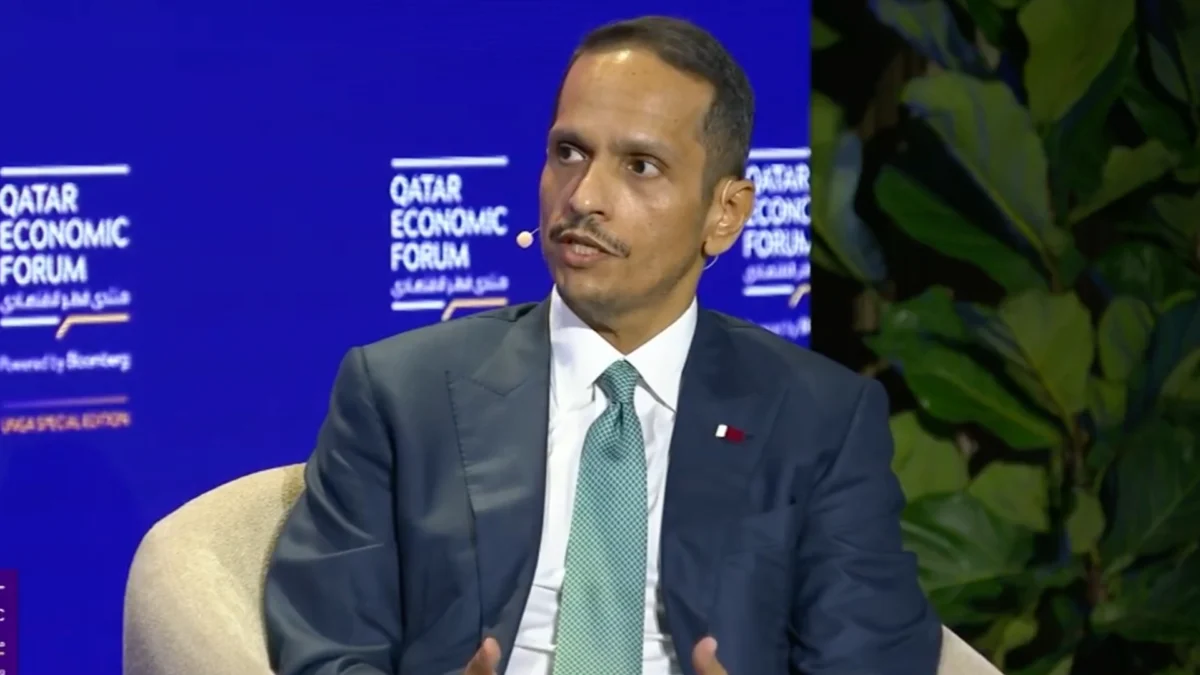
Qatar’s Prime Minister has called for a comprehensive security framework in the Persian Gulf region that explicitly includes Iran, asserting that the area cannot return to its pre-war stability without such an arrangement ensuring mutual non-aggression. Speaking at the Qatar Economic Forum in New York, Sheikh Mohammed bin Abdulrahman Al Thani emphasized the critical need for improved regional relations to achieve lasting peace and security.
The Prime Minister’s remarks underscore a significant shift in diplomatic discourse, highlighting Qatar’s proactive stance in addressing the complex geopolitical landscape of the Middle East. His vision for a secure Gulf hinges on establishing clear understandings and guarantees that no nation poses a threat to another, a sentiment that resonates deeply in a region historically marked by intermittent tensions and proxy conflicts.
The Imperative for a New Gulf Security Architecture
Sheikh Mohammed bin Abdulrahman Al Thani’s address at the prestigious Qatar Economic Forum, held in the global financial hub of New York, provided a platform for his vision of a redefined regional security. The forum, a key event attracting global business leaders, policymakers, and media, served as an ideal venue to broadcast Qatar’s strategic outlook on Gulf stability.
The Qatari leader articulated that the current state of affairs in the Persian Gulf is unsustainable and that a fundamental recalibration is necessary. He directly linked the region’s future stability to the establishment of a robust security framework that actively involves all key players, notably Iran. This call for inclusion signifies a departure from past approaches that have often sought to isolate or contain Tehran’s influence.
The Prime Minister’s assertion that the Gulf "won’t be the same as before the war" suggests an acknowledgment of the profound and lasting impacts of recent regional crises. These conflicts, often fueled by sectarian divides and competing geopolitical interests, have left a scar on the region, necessitating a new paradigm for diplomacy and security cooperation.
Historical Context: A Volatile Regional Landscape
The Persian Gulf has long been a theater of complex geopolitical rivalries, primarily between Saudi Arabia and Iran, with other regional powers like Qatar, the United Arab Emirates, Kuwait, Bahrain, and Oman navigating these turbulent waters. These rivalries have manifested through various means, including diplomatic disputes, economic sanctions, and, at times, proxy conflicts in neighboring countries such as Yemen, Syria, and Iraq.
For decades, security arrangements in the Gulf have largely been bilateral or focused on alliances with external powers. The Gulf Cooperation Council (GCC), established in 1981, has served as a primary regional bloc, but its effectiveness in mediating fundamental disputes, particularly between Riyadh and Tehran, has been frequently tested.
The involvement of external powers, particularly the United States, has also played a significant role in shaping the security dynamics of the Gulf. While these alliances have provided a sense of security for some nations, they have also been a point of contention and have, at times, exacerbated regional tensions.
The "war" alluded to by the Prime Minister could refer to a confluence of conflicts and crises that have destabilized the region, including the prolonged Syrian civil war, the conflict in Yemen, and the intermittent tensions between Iran and Western powers, particularly concerning its nuclear program and regional activities. These events have had ripple effects, impacting trade routes, energy markets, and the overall political climate.
Qatar’s Diplomatic Pivot and the Iran Factor
Qatar has, in recent years, adopted a more independent foreign policy, seeking to maintain constructive relationships with a wide array of regional and international actors. This approach has been particularly evident in its efforts to mediate disputes and foster dialogue, even in the face of significant regional polarization.
The inclusion of Iran in a future security framework is a bold proposition that reflects Qatar’s commitment to de-escalation and dialogue. Iran’s strategic position, its significant military capabilities, and its influence in regional conflicts make its participation indispensable for any lasting security arrangement.
The Prime Minister’s emphasis on "ensuring no one is a threat to each other" directly addresses the core anxieties that have fueled regional mistrust. This principle of mutual non-aggression is fundamental to building confidence and fostering a stable environment where all nations can pursue their development goals without fear.
The Qatar Economic Forum provided a crucial platform for Sheikh Mohammed bin Abdulrahman Al Thani to articulate this vision to an international audience. By speaking in New York, he aimed to garner support for his proposal and to signal to global stakeholders that Qatar is a proponent of pragmatic and inclusive security solutions.
Building Bridges: The Case for Gulf-Iran Dialogue
The current geopolitical climate in the Persian Gulf presents a critical juncture. Decades of mistrust and intermittent confrontation have created a volatile environment, impacting economic stability, hindering regional cooperation, and diverting valuable resources that could otherwise be used for development and prosperity.
A comprehensive security framework involving Iran would necessitate addressing several key issues. These could include discussions on maritime security, de-escalation mechanisms for regional crises, confidence-building measures, and potentially, a reassessment of existing security alliances.
For such a framework to be successful, it would require a significant shift in diplomatic engagement. This would involve sustained dialogue, a willingness to compromise, and a shared commitment to de-escalating tensions and fostering a spirit of cooperation.
The economic implications of a secure and stable Gulf are immense. The region is a global hub for energy production and trade, and its stability is crucial for global economic well-being. Improved security would attract greater investment, boost tourism, and unlock new avenues for economic diversification and growth.
The Path Forward: Challenges and Opportunities
Implementing a new Gulf security framework with Iran will undoubtedly face numerous challenges. Deep-seated historical grievances, ideological differences, and the complex web of regional alliances will need to be carefully navigated.
However, the potential benefits of such an initiative are substantial. A secure and stable Persian Gulf could usher in an era of unprecedented cooperation, leading to greater economic prosperity, enhanced regional integration, and a more peaceful and secure future for all its inhabitants.
The Prime Minister’s call is not merely a diplomatic suggestion; it is a strategic imperative for a region that has endured too much conflict. By advocating for an inclusive security architecture, Qatar is positioning itself as a key facilitator of dialogue and a proponent of a more stable and prosperous future for the Persian Gulf.
The success of such an endeavor will depend on the collective will of the nations in the region to move beyond past antagonisms and embrace a new era of diplomacy, mutual respect, and shared security. The vision articulated by Qatar’s Prime Minister offers a compelling roadmap for achieving this critical objective, emphasizing that true security can only be built on the foundation of mutual trust and a commitment to non-aggression. The region’s future prosperity and stability hinge on its ability to embrace such forward-thinking initiatives.