Department of Justice records recently transmitted to the House Judiciary Committee reveal that federal investigators scrutinized an incident in which Donald Trump allegedly displayed a classified map to associates while traveling on his private aircraft. The briefing materials, prepared for then-Attorney General Merrick Garland in January 2023, suggest the event occurred several months before Special Counsel Jack Smith filed formal charges regarding the mishandling of sensitive government documents.
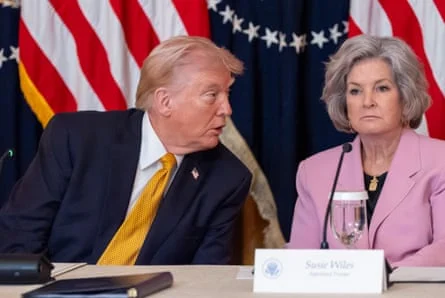
According to the 11-page memorandum, the encounter took place aboard a flight in June 2022 as the former president traveled from Palm Beach International Airport in Florida to LaGuardia Airport in New York. Among those identified as a witness to the event was Susan Wiles, who served at the time as the CEO of Trump’s Save America Super PAC and has since been named White House Chief of Staff for his second administration.
The disclosure of this specific investigation adds a new layer to the narrative of how highly sensitive national security information was handled after the Trump administration concluded in 2021. While the incident was documented by prosecutors, it did not ultimately result in a specific criminal count in the indictment that was later dismissed by the courts.
The 2023 Briefing Memo and the Flight to New York
The January 13, 2023, memo reviewed by investigators provides a detailed account of the evidence gathered during the early stages of the Special Counsel’s probe. The document explicitly mentions that "The Map" was a focal point of witness testimony and physical evidence recovered during the investigation into the retention of records at Mar-a-Lago.
"We have identified a classified map that we believe Trump may have shown to individuals on board an airplane after he left office," the memo stated. Investigators noted that Wiles was present on the flight, though large portions of the description regarding the map’s contents and the specific reactions of those on board remain redacted in the versions provided to Congress.
A flight manifest attached to subsequent legislative inquiries indicates that 14 passengers, excluding the flight crew, were on the aircraft during the June 2022 trip. The presence of multiple aides and associates on the plane raised concerns among federal prosecutors regarding the potential exposure of sensitive intelligence to individuals without the necessary security clearances.
Comparing the Plane Incident to the Bedminster Disclosure
The allegation involving the aircraft is the second documented instance where the former president is accused of brandishing a classified map in a non-secure environment. The original indictment filed by Jack Smith described a similar occurrence at Trump’s golf club in Bedminster, New Jersey, where he reportedly showed a "representative of his political action committee" a classified military map.
In the Bedminster incident, the map was identified as a tactical illustration related to a military operation in Afghanistan. Trump reportedly displayed the document while criticizing the Biden administration’s 2021 withdrawal from the country, allegedly acknowledging to those in the room that the information remained sensitive.
It remains unclear if the map shown on the plane was the same Afghanistan-related document or a separate piece of intelligence. Legal experts suggest the decision not to charge the plane incident as a separate felony may have stemmed from the difficulty in proving the map still constituted "national defense information" under the Espionage Act, particularly if the information it contained was considered historical or no longer operationally vital.
Motive and the Connection to Business Interests
One of the most striking revelations in the internal DOJ memo involves the alleged motive for retaining specific classified materials. Prosecutors wrote that Trump possessed documents "pertinent to his business interests," suggesting that the retention of government secrets was not merely a matter of administrative oversight or a dispute over the Presidential Records Act.
The memo noted that some of the documents held at Mar-a-Lago were among the most restricted in the federal government’s inventory. One specific document was kept in a "compartment" so sensitive that, prior to the investigation, only six people in the world—including the President of the United States—had authorized access to it.
The assertion that business interests may have played a role in the retention of these files has become a focal point for Democratic lawmakers. Representative Jamie Raskin, the ranking member of the House Oversight Committee, has formally requested that the Department of Justice clarify which documents were linked to Trump’s private enterprises and whether any of that information was shared with foreign entities or business partners.
Legislative Demands for Transparency
In a letter addressed to Attorney General Pam Bondi, Jamie Raskin demanded a full accounting of the map incident and the broader implications of the Special Counsel’s findings. Raskin’s inquiry seeks to identify every individual on the June 2022 flight and asks for a detailed description of the "business-related" classified documents mentioned in the 2023 memo.

The request comes at a time of significant transition within the Department of Justice. With the change in administration, the focus of the House Judiciary Committee has shifted toward examining the conduct of the Special Counsel’s office itself. However, Raskin and other Democrats argue that the public has a right to know the full extent of any potential national security breaches.
"The American people deserve to know the truth about the handling of these documents," Raskin wrote in his letter. He also raised concerns about whether the Department of Justice may have violated court orders by withholding or selectively releasing information related to the closed investigation.
The Legal Path to Dismissal
The investigation into the classified map and the broader documents case faced a series of legal hurdles before its ultimate conclusion. U.S. District Judge Aileen Cannon, who was appointed to the bench by Trump during his first term, presided over the case in the Southern District of Florida and issued several rulings that slowed the prosecution’s momentum.
In July 2024, Judge Cannon dismissed the entire documents case, ruling that the appointment of Special Counsel Jack Smith was unconstitutional because he had not been appointed by the President or confirmed by the Senate. This ruling departed from decades of legal precedent regarding the authority of the Attorney General to appoint special prosecutors.
Following the dismissal, Smith initiated an appeal with the U.S. Court of Appeals for the 11th Circuit. However, following the results of the 2024 presidential election, the legal landscape shifted. Citing long-standing DOJ policy against prosecuting a sitting president, Smith moved to drop the appeal and subsequently resigned from his post, effectively ending the federal government’s criminal pursuit of the matter.
Restrictions on the Final Special Counsel Report
As the investigation wound down, Judge Cannon issued a permanent injunction barring the Department of Justice from releasing Jack Smith’s final report to the public. The report was expected to contain a comprehensive summary of the evidence gathered, including the details of the classified map incident and the testimony of witnesses like Susie Wiles.
The suppression of the report has created a vacuum of information, leading to the current friction between House Democrats and the Department of Justice. While the criminal case is legally over, the political and historical implications of the findings continue to resonate in Washington.
The Department of Justice has historically released reports following major special counsel investigations, such as those conducted by Robert Mueller and Leon Jaworski. The decision to bar the release of the Smith report represents a significant shift in how high-profile federal investigations are concluded and disclosed to the citizenry.
Impact on National Security Policy
The revelations concerning the disclosure of classified maps have prompted discussions within the intelligence community regarding the protection of sensitive data by former executives. The "compartmentalized" nature of the documents found at Mar-a-Lago underscores the risk associated with the unauthorized removal of intelligence products from secure facilities.
Security experts note that even if a map is "historical," such as one detailing the withdrawal from Afghanistan, it can reveal "sources and methods"—the specific ways the U.S. gathers intelligence. If a foreign adversary were to see such a document, they could potentially deduce the capabilities of U.S. satellite imagery or the location of ground-level assets.
The debate over the Presidential Records Act and the Espionage Act remains a central point of contention. While supporters of the former president argue that he had the ultimate authority to declassify documents at will, prosecutors maintained throughout the investigation that there is a formal process for declassification that was not followed in these instances.
Future Implications for the Executive Branch
As Donald Trump returns to the White House, the individuals involved in these investigations now occupy central roles in the new administration. Susie Wiles’ transition from a potential witness in a federal probe to the Chief of Staff highlights the unique intersection of law and politics that has characterized the last several years of American governance.
The House Judiciary Committee continues to seek answers, but the likelihood of further federal disclosure appears slim under the new Department of Justice leadership. The focus is expected to turn toward legislative reforms aimed at clarifying the handling of classified materials during presidential transitions to prevent similar disputes in the future.
The closure of the Smith investigation leaves many questions unanswered, particularly regarding the specific contents of the map shown on the plane and the nature of the "business-related" documents. For now, the details remain locked within redacted memos and suppressed reports, serving as a footnote to one of the most complex legal chapters in the history of the American presidency.