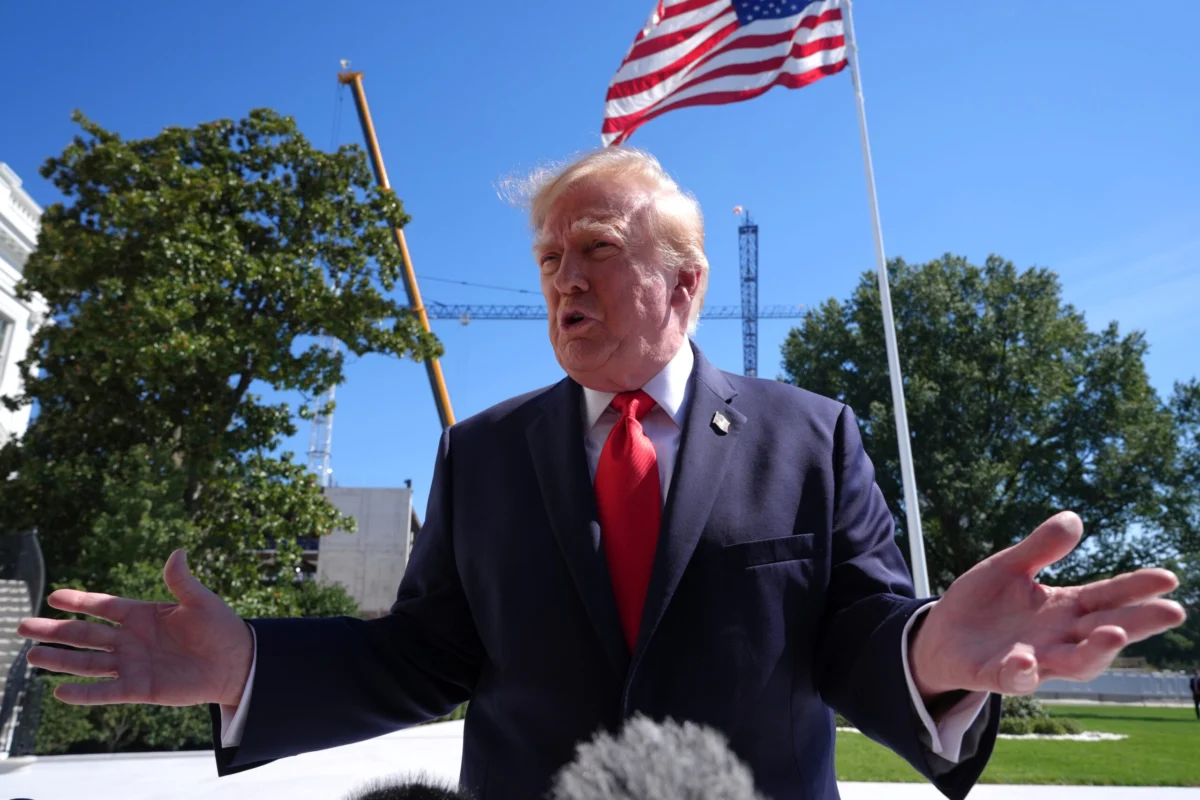
German Chancellor Friedrich Merz declared his intention to remain in leadership on Monday following a historic and destabilizing victory by the far-right Alternative für Deutschland (AfD) in the state of Saxony-Anhalt. The election results, which saw the nativist party secure nearly 44% of the vote, have sent shockwaves through the federal government in Berlin and raised urgent questions about the future of the nation’s political establishment.
Appearing before reporters with a visibly strained demeanor, Merz described the electoral outcome as a seismic event that has shaken his conservative Christian Democratic Union (CDU) to its "very foundations." The Chancellor’s admission of a "shocked" and "chastened" perspective comes as the AfD moves within striking distance of forming a state government, a development that would mark the first time a far-right party has held such power in Germany since the end of the National Socialist era.
The landslide victory in the eastern region represents a total rout of the CDU, which managed only 17% of the vote. For Merz, the defeat is particularly stinging; upon taking office 16 months ago, he had publicly pledged to halve the AfD’s support at the national level. Instead, the Chancellor has presided over a period where the far-right has not only consolidated its base but expanded its reach into the mainstream of German provincial politics.
The Magnitude of the AfD Triumph in State Election
The scale of the AfD’s success in Saxony-Anhalt has fundamentally altered the German political map. Led by Ulrich Siegmund, a 35-year-old former fragrance salesman who has proven himself a master of digital communication, the party fell just three seats short of an absolute majority. Siegmund’s campaign focused heavily on anti-immigrant rhetoric and a pro-Kremlin foreign policy, positions that resonated deeply with a frustrated electorate.
During his victory celebrations, Siegmund mocked the 70-year-old Chancellor, labeling Merz "a very good campaigner" for the AfD, suggesting that the government’s unpopularity was the far-right’s greatest asset. The AfD’s platform in the region includes radical proposals such as the mass deportation of immigrants and asylum seekers, as well as a significant increase in social welfare spending—policies that critics argue are both illegal and fiscally unfeasible.
The domestic intelligence service has officially classified the AfD’s chapter in Saxony-Anhalt as "confirmed right-wing extremist." Despite this designation, or perhaps because of the outsider status it confers, the party was able to tap into a profound sense of alienation among voters. Exit polls revealed a deep-seated dissatisfaction with the political status quo, with one survey showing that a mere 9% of voters in the state approved of Merz’s performance as Chancellor.

German Chancellor Vows to Stay in Office Amid Internal Pressure
Despite the scale of the defeat and his own plummeting approval ratings, Merz remained defiant during his Monday press conference. He acknowledged that his personal standing had become a liability during the campaign but insisted that he would not step down. "Giving up is not an option for me," Merz told the assembled media, adding that he intended to continue his program of structural reforms to the nation’s healthcare and pension systems.
The Chancellor’s insistence on staying the course comes as influential voices in the German media call for a change in leadership. Dirk Kurbjuweit, the editor-in-chief of Der Spiegel, argued that Germany needs a "clean slate" and a "fresh start" that must begin with Merz’s departure. Under German law, however, replacing a sitting Chancellor is a complex and often protracted process, and for now, the CDU leadership appears to be standing behind their embattled leader.
Merz admitted that he must improve his "communication" with the public, stating that the government must find ways to reach people "in the full range of their emotions." However, he also signaled that there would be "consequences" for the worst electoral defeat the CDU has suffered in decades. Whether those consequences involve a cabinet reshuffle or a shift in policy remains to be seen, as the junior coalition partner, the Social Democrats, has already hinted at a willingness to soften some of the government’s more contentious economic reforms.
Economic Anxiety and the "Second-Class Citizen" Narrative
The AfD’s surge is inextricably linked to the unique socio-economic landscape of the former communist East. More than three decades after the fall of the Berlin Wall, many residents of states like Saxony-Anhalt feel they are treated as "second-class citizens" compared to their counterparts in the West. This sense of grievance has been exacerbated by recent signs of industrial decline in the steel, chemical, and automotive sectors—the traditional engines of the German economy.
Voters in the East have expressed increasing alarm over the stewardship of Europe’s largest economy. As inflation and energy costs remain high, the AfD’s promise of economic protectionism and a return to cheaper Russian energy has gained significant traction. The party has also targeted cultural institutions and public broadcasters, accusing them of being "unpatriotic" and attempting to establish a "cultural hegemony" that ignores the values of the working class.
This cultural war was exemplified by the AfD’s attacks on the Bauhaus movement in Dessau, which the party has characterized as a symbol of elitism. By framing themselves as the defenders of traditional German identity against a "globalist" establishment in Berlin, the AfD has managed to build a coalition of voters that transcends simple ideological lines, drawing in those who feel economically vulnerable and culturally ignored.
Geopolitical Shifts and the Kremlin Connection
One of the most concerning aspects of the AfD’s rise for Germany’s international allies is the party’s overt pro-Russian stance. Throughout the campaign, AfD candidates called for an end to sanctions against Moscow and a cessation of military aid to Ukraine. Merz, however, used his post-election address to reassure allies that Germany would not waver in its support for Kyiv.

The Chancellor vowed to "not budge a single millimeter" from his conviction that Germany must defend its freedom against Russian aggression. He accused Moscow of actively supporting the AfD’s campaign through interference and sabotage, citing a recent alleged Russian drone attack on Leipzig airport as evidence of a broader hybrid war aimed at destabilizing German democracy. Merz warned that the Kremlin would "cheer" the results in Saxony-Anhalt, viewing them as a victory for Russian interests in the heart of Europe.
To Germany’s vulnerable minorities, Merz offered a promise of protection, asserting that the country’s institutions remain "resilient and stable." He emphasized that Germany carries a "special responsibility because of its history" to uphold democratic values and the constitution, even if the far-right gains a foothold in regional governance.
The Future of the German Political Landscape
The immediate challenge for the mainstream parties in Saxony-Anhalt is the formation of a functioning government. For 13 years, Germany’s established parties have maintained a "firewall"—a formal refusal to cooperate or enter into coalitions with the AfD. However, the current arithmetic makes this strategy increasingly difficult. Sven Schulze, the CDU state premier, admitted his party has "no mandate" to govern after its humiliating 17% finish.
The populist BSW party, led by Sahra Wagenknecht, has emerged as a potential kingmaker. While the BSW shares some of the AfD’s views on immigration and Russia, it ruled out a formal coalition before the election. Nevertheless, AfD leaders believe they can "pick off" rebel lawmakers from other parties to reach the majority needed to elect Ulrich Siegmund as state premier.
The political pressure on Merz will only intensify in the coming weeks. Germany faces two more regional elections this month—one in Berlin and another in the eastern state of Mecklenburg-Western Pomerania. Both regions have seen strong polling for the AfD, and further losses for the CDU could make Merz’s position tenable only in the short term.
As the AfD co-leader Alice Weidel looks toward the 2029 general election with a target of 40% of the national vote, the German political establishment finds itself at a crossroads. The strategy of sidelining the AfD as a permanent "outsider" appears to have backfired, as that very status has become a badge of honor for millions of voters fed up with "politics as usual." The "shocked" and "chastened" Chancellor now faces the daunting task of proving that his government can still provide the stability and prosperity that have long been the hallmarks of the German state.