The new horror film Hokum, starring Adam Scott, delivers a fractured yet atmospheric journey into a haunted Irish hotel, premiering to a mixed critical reception at the SXSW Film Festival. While lauded for its unsettling production design and Scott’s compelling performance, director Damian McCarthy’s latest offering struggles to coalesce its disparate narrative threads, leaving audiences with a chilling premise that ultimately falls short of a fully satisfying resolution. The film attempts to blend supernatural dread with psychological trauma, set against the verdant, mystical backdrop of the Emerald Isle, but its ambitious scope frequently unravels into an opaque and occasionally frustrating experience.
The Genesis of Dread: An Unconventional Opening
Hokum immediately defies genre expectations with an opening sequence set in a vast desert landscape, featuring a 16th-century conquistador, played by Austin Amelio, staggering across the arid terrain clutching an ancient parchment. This enigmatic framing device, while visually striking, initially disorients viewers expecting an immediate dive into Irish folklore. Critics have noted its resemblance to an outtake from a more art-house production, questioning its immediate relevance to the main narrative. Though intended to provide a symbolic bookend for the protagonist’s journey of redemption and self-forgiveness, its cumbersome nature sets a precedent for the film’s sometimes muddled storytelling.
Adam Scott’s Departure into Darkness
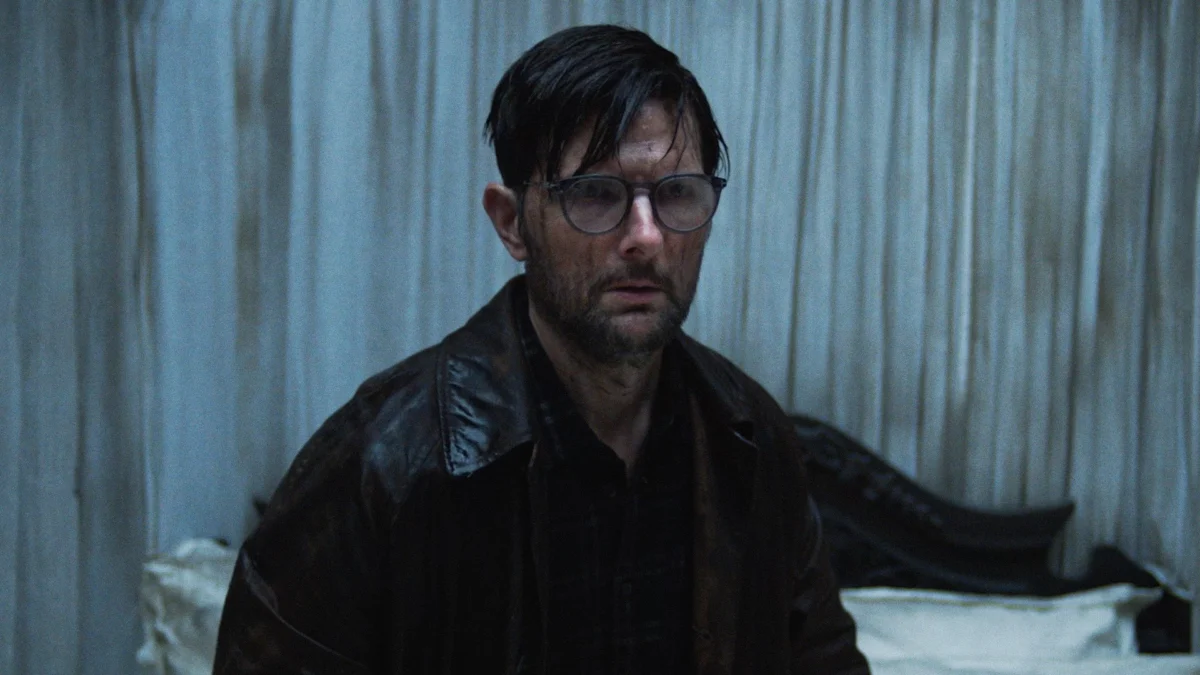
Adam Scott, widely recognized for his comedic and dramatic roles in productions like "Parks and Recreation" and "Severance," undertakes a significant departure in Hokum. He portrays Ohm Bauman, a successful but deeply troubled American novelist grappling with the concluding chapters of his popular Conquistador Trilogy. Bauman’s character is introduced as tetchy, rude, and overtly entitled, exhibiting a misanthropic nature rooted in profound childhood trauma, specifically the early death of his mother shortly after her honeymoon in Ireland. This psychological weight forms the bedrock of Scott’s performance, portraying a man teetering on the edge of unraveling.
Ohm’s journey to Ireland is ostensibly to scatter his long-deceased parents’ ashes, a quest that leads him to the quaint but foreboding Billberry Woods Hotel—the very establishment where his parents spent their honeymoon. A lone photograph of his mother, leaning against a distinct "big redwood" in the nearby forest, serves as his only tangible link to this past, fueling his reclusive and often hostile demeanor. Scott embodies this internal turmoil, transforming from his usual charismatic persona into a haggard, desperate figure battling both external and internal demons.
The Billberry Woods Hotel: A Hub of Irish Horror
The Billberry Woods Hotel itself serves as a central character, meticulously crafted by production designer Til Frohlich to evoke a sense of timeless decay and lingering malevolence. Its creaking floors, dusty corridors, and untouched aesthetic contribute significantly to the film’s pervasive atmosphere of dread. Upon arrival, Ohm alienates the hotel staff with his American arrogance, encountering a cast of eccentric locals who deepen the sense of unease. These include the gruff handyman Fergal (Michael Patric), who bizarrely slaughters goats with a crossbow; the inane front desk clerk Mal (Peter Coonan); the aspiring writer bellhop Alby (Will O’Connell); and the crusty owner Mr. Cobb (Brendan Conroy), who delights in recounting tales of a local witch. Only the bartender, Fiona (Florence Ordesh), manages to elicit semi-civil treatment from Ohm, a connection that proves crucial later in the narrative.
Adding to the hotel’s sinister reputation is the long-locked "honeymoon suite," rumored by Fiona to be the prison for an ancient witch trapped by Mr. Cobb years prior. These elements collectively establish a rich tapestry of Irish folklore and supernatural menace, promising a compelling haunted hotel narrative. However, the film’s critical reception indicates that this potential is not fully realized, as the underlying mystery surrounding the vengeful spirit and its origins remains largely unexplained, frustrating audience expectations for a coherent supernatural horror plot.
Narrative Threads and Unresolved Mysteries in ‘Hokum’
Damian McCarthy’s script, while ambitious, has been critiqued for its "diffuse" nature, piling on story points and portentous symbols without adequately elucidating the central mystery. The film introduces numerous danger signals: Mr. Cobb’s chilling tales of underworld witches, the unsettling presence of dotty Jerry (David Wilmot) living out of his van and offering powdered magic mushrooms in goat’s milk as a demonic deterrent, and the unsettling animalistic acts committed by Fergal. These elements contribute to a pervasive sense of unease but often feel like loose threads rather than integral parts of a cohesive horror tapestry.
The narrative intensifies after Ohm experiences an accident and returns to the hotel to find a staffer missing, Jerry as the primary suspect, and the establishment preparing to close for the season. Driven by an unexplained compulsion, Ohm persists in staying, eventually drawn to the insistently ringing call bell from the fabled honeymoon suite. His exploration of this forbidden room thrusts him into a confrontation with the hotel’s dark history, where "murky deeds come to light," and he finds himself ensnared by a past that actively seeks him out.
Blurring the Lines: Supernatural vs. Terrestrial Terror
One of the significant critiques leveled against Hokum is its struggle to define its central antagonist and the nature of its horror. While the film expertly builds tension through the combined efforts of McCarthy, editor Brian Phillip Davis, and composer Joseph Bishara, it ultimately blurs the lines between an ancient, demonic evil and a more grounded, "sordid but disappointingly non-supernatural crime." This narrative ambiguity, intended perhaps as a sophisticated subversion of genre tropes, instead results in a sense of narrative unsatisfaction for many viewers.
Expectations for a clear explanation of the witch’s identity or a malevolent nature spirit connected to the ominous redwood tree and the sacrificed goats are largely unmet. Instead of a definitively supernatural entity, the film veers towards a more terrestrial explanation for the terror, diminishing the impact of its initial supernatural setup. Adam Scott’s portrayal of Ohm becomes increasingly grubby and haggard as he resorts to desperate measures like chalk circles for protection and a rickety dumbwaiter for escape, effectively conveying claustrophobic fear but within a narrative context that fails to fully commit to its own mythology.
Broader Implications and Critical Reception
The Hokum Review highlights a growing trend in the horror genre where filmmakers attempt to fuse traditional scares with deeper psychological narratives or ambiguous endings. While such approaches can yield powerful results, Hokum serves as an example of the challenges inherent in this balancing act. The film’s strengths, including its unique setting, strong performances, and atmospheric tension, are frequently overshadowed by its narrative inconsistencies and a perceived lack of commitment to its own rules.
For Damian McCarthy, Hokum represents an ambitious, if flawed, attempt to explore complex themes of trauma, guilt, and redemption within a horror framework. The film’s premiere at SXSW, a festival known for showcasing innovative and challenging independent cinema, provided a platform for this particular brand of psychological horror. However, the critical consensus suggests that while McCarthy demonstrated skill in crafting individual moments of dread and atmosphere, the overarching vision for Hokum remained just out of reach, preventing it from achieving the status of a truly memorable or impactful horror film.
The Aftermath: A Mixed Legacy for ‘Hokum’
The ultimate impact of Hokum on the horror landscape remains to be seen. Its anticipated release on streaming platforms will likely find an audience among genre enthusiasts who appreciate its visual style and Adam Scott’s committed performance, despite its narrative shortcomings. The film’s struggle to reconcile its mystical Irish setting with a less supernatural resolution could spark discussions among horror fans about the effectiveness of narrative ambiguity versus clear-cut genre conventions.
Ultimately, Hokum leaves critics and audiences with a sense of a missed opportunity. It possesses all the ingredients for a compelling Irish horror film: a talented cast, a skilled director, an evocative setting, and a protagonist grappling with profound personal demons. Yet, its inability to weave these elements into a cohesive and satisfying whole means that while it may not be entirely "ho-hum," it also falls short of being "wholly satisfying." The film stands as a testament to the adage that in horror, as in life, sometimes the most fertile ground can still yield an unpredictable and ultimately perplexing harvest.