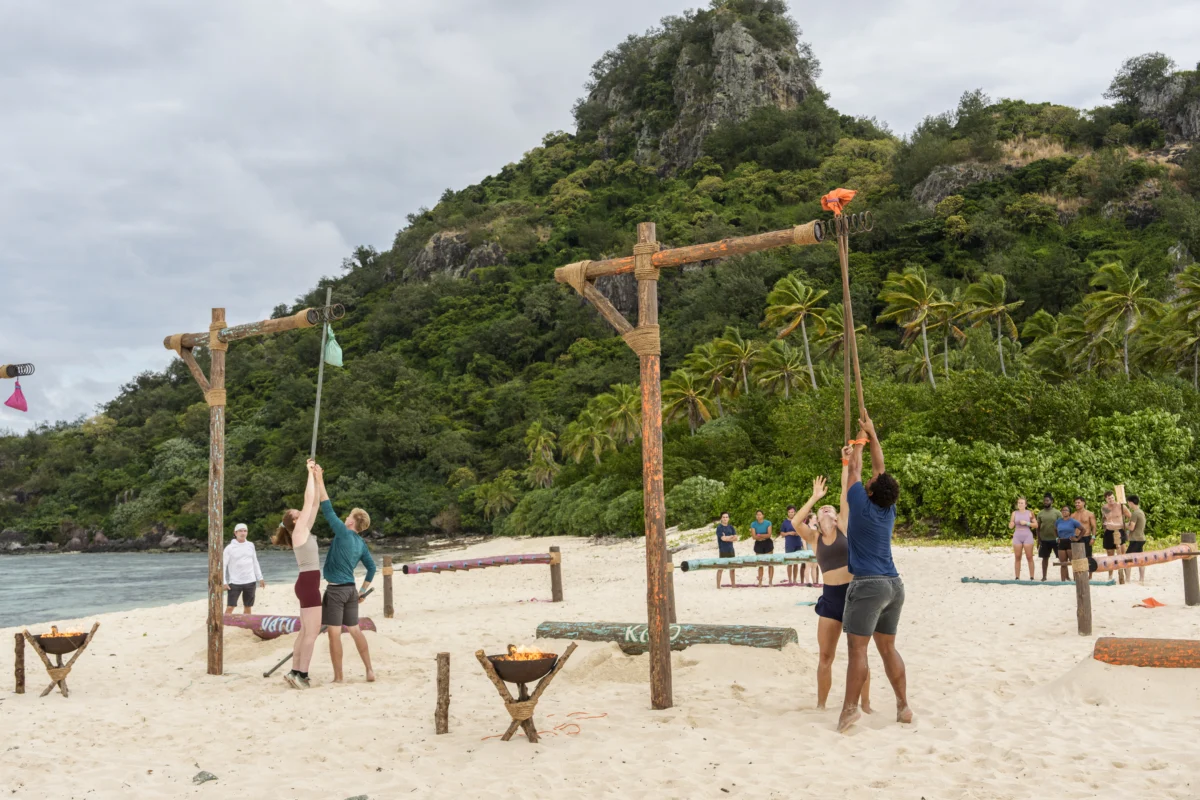
John Kirhoffer, the co-executive producer and Survivor challenge mastermind who has shaped the series’ iconic physical and mental trials for an unprecedented 50 seasons, has revealed the origins and profound impact of the show’s "Dream Team," an innovative program that began as a practical necessity and evolved into a vital talent incubator for the entertainment industry. For over two decades, this behind-the-scenes initiative has not only ensured the integrity and safety of Survivor‘s elaborate challenges but has also quietly launched the careers of numerous television professionals, creating a unique pipeline for unscripted production.
The Genesis of Survivor‘s Defining Elements
Since its debut in 2000, Survivor has captivated audiences with its blend of strategic gameplay, exotic locales, and grueling challenges that push contestants to their physical and mental breaking points. While host Jeff Probst has been the public face of the franchise, Kirhoffer’s role in conceiving, designing, and executing these pivotal challenges has been instrumental to the show’s enduring appeal. His vision has consistently raised the bar for reality competition, transforming mere games into defining moments of television. The challenges are not simply obstacles; they are narratives in themselves, often determining alliances, betrayals, and the ultimate fate of castaways.
In the nascent days of reality television, production resources were often lean, and ingenuity was paramount. The creation of the Dream Team was a direct response to the hands-on, often improvisational nature of early Survivor production. The show, a groundbreaking experiment in its time, faced logistical hurdles that required creative solutions, especially when it came to ensuring the fairness and safety of its physically demanding competitions.
From Improvised Testing to a Formalized System
The concept for the Dream Team emerged from the raw, trial-and-error environment of Survivor‘s inaugural season. Before filming began, Kirhoffer, Probst, and series creator Mark Burnett, alongside other producers, were personally running through makeshift versions of challenges in Los Angeles parks. This rudimentary testing continued on location, where the production team soon realized a critical flaw: without a dedicated group of testers, the very people designing and overseeing the challenges were also the ones physically participating, leaving no one to objectively observe and refine the games.
"Holy crap, we don’t have 16 designated people," Kirhoffer recalled thinking during Season 1. "I’m doing it. Mark Burnett’s doing it. Jeff Probst is doing it. And so right away I was like, We need designated people. It was us testing all these games, and nobody’s watching it. That’s part of the problem, we need to watch it to learn." This immediate recognition of a critical operational gap laid the groundwork for a more structured approach.

For Season 2, set in the Australian Outback, Kirhoffer pitched the idea to production’s financial decision-makers. He requested a team of "young people," initially envisioned as production assistants (PAs), who could not only test challenges but also assist other departments like camera crews. This pragmatic request marked the official birth of the Dream Team. In those early years, the recruitment process was far from sophisticated. With limited budgets and no intention of flying in personnel, Kirhoffer sought out local talent, famously posting signs in youth hostels promising $200 a week plus meals for several weeks of work. These "kids on holiday from all over the world" became the first iteration of what would become a cornerstone of Survivor‘s production.
The name itself, "Dream Team," was coined by Kirhoffer’s colleague, Kevin McManus, who drew inspiration from the legendary Olympic basketball team. What started as a simple, practical workaround to ensure efficient challenge testing quickly evolved into something far more significant.
The Evolution of a Mentorship Program
Over the subsequent seasons, the Dream Team transcended its initial purpose as merely a source of "bodies." Senior producers Hudson Smith (co-executive producer) and Matt Van Wagenen (executive producer) recognized the inherent potential for mentorship within the group. Their vision shifted the focus from purely physical labor to identifying and nurturing aspiring talent, particularly those from film schools.
Today, securing one of the approximately 25 coveted Dream Team positions is a highly competitive process, mirroring the selection of the Survivor cast itself. Kirhoffer, along with supervising producer Chris Marchand (affectionately known as "Milhouse" by the crew), conducts much of the vetting. While the program doesn’t officially advertise, hundreds of applications pour in annually, driven by word-of-mouth and outreach efforts at colleges and universities. Additionally, crew members often recommend promising relatives or friends, though a significant portion of successful applicants have no prior connections, earning their spot purely on merit and ambition. This rigorous selection process ensures that the Dream Team comprises individuals genuinely passionate about television production and eager to learn.
Beyond Testing: A Holistic Training Ground
Once accepted, Dream Teamers are immersed in the multifaceted world of Survivor production. Their duties extend far beyond simply running obstacle courses. They actively assist the Art Department and Challenges team, undertaking tasks such as painting sets, loading and unloading trucks, and providing essential support to prop and construction crews. This hands-on experience provides them with a comprehensive understanding of the physical demands and collaborative nature of large-scale television production.
Crucially, the Dream Team also serves as a formal shadowing program. At the beginning of each season, Kirhoffer personally meets with each member to ascertain their specific interests within television production. He encourages them to express aspirations in areas like camera operation, audio engineering, art direction, or producing. This personalized approach allows for tailored learning experiences, where Dream Teamers can observe and learn directly from seasoned professionals in their chosen fields.

The success stories emerging from the Dream Team are numerous and underscore its effectiveness as a talent incubator. Brittany Crapper, for instance, began as a Dream Teamer and has risen through the ranks to become a co-executive producer, now a contemporary to Kirhoffer himself. Her husband, Riley, also a former Dream Teamer, went on to become the show’s prop master. These professional connections often extend into personal relationships; Kirhoffer proudly notes attending six Dream Team weddings and highlights that Brittany and Riley are parents to three of the "80-something Survivor babies" born to couples who met through the show. This vibrant network of former and current Dream Teamers speaks volumes about the program’s profound impact on individuals’ lives and careers.
The Enduring Legacy of the Dream Team
The legacy of the Dream Team, as articulated by Kirhoffer, lies in its ability to "find talent where you weren’t initially looking." It transforms what might otherwise be viewed as a temporary labor force into a dynamic pool of future industry leaders. Kirhoffer emphasizes a management philosophy centered on nurturing individual potential rather than simply retaining good assistants. He advocates for promoting talent as swiftly as possible, understanding that a new crop of eager, capable individuals will always emerge.
"I think it’s the responsibility of everybody who’s a boss or a manager to the people that are below them, not to just keep the good ones where they are, but to nurture them," Kirhoffer stated, echoing the sentiment of Whitney Houston’s "I Believe the Children Are Our Future." This philosophy has not only cemented the Dream Team’s status as a vital part of Survivor‘s production but has also contributed significantly to the broader unscripted television industry by consistently feeding it with well-trained, experienced professionals. The program stands as a unique model for talent development, demonstrating how an in-house initiative can organically grow into a robust career launchpad.
A Glimpse into the Relentless Spirit of Production
Kirhoffer’s tenure across 50 seasons has also provided him with countless anecdotes, including a memorable early encounter with Mark Burnett’s legendary competitive drive. During Season 1, while testing a challenge called "In From the Deep"—which required swimming out, diving down, and retrieving a heavy, lead-filled chest—Kirhoffer found himself paired with Burnett. Despite being a 35-year-old surfer and scuba diver in excellent shape, Kirhoffer was pushed to his absolute limit by Burnett.
"Mark Burnett is the most competitive person I’ve ever met in my life," Kirhoffer recounted. During the challenge, after resurfacing for air, Kirhoffer was met with Burnett’s incredulous question, "What happened? What’s wrong? Are you okay? Yeah. Well, why’d you stop?" Kirhoffer’s explanation of running out of breath was met with a resolute, "You’re freaking kidding me. We have to win this thing." This experience taught Kirhoffer a fundamental lesson about competing alongside Burnett: "You don’t stop. You just don’t stop at all." This relentless spirit, embodied by the show’s creator, has undoubtedly permeated the production culture and contributed to Survivor‘s consistent drive for excellence in its challenges.
As Survivor 50 continues to air new episodes on Wednesdays at 8 p.m. on CBS and streams on Paramount+, the behind-the-scenes work of John Kirhoffer, the Survivor challenge mastermind, and his Dream Team remains an invisible but indispensable force. Their combined efforts not only craft the iconic trials that define the series but also cultivate the next generation of talent, ensuring the continued evolution and success of one of television’s most enduring reality franchises. The Dream Team’s legacy is a testament to the power of practical innovation evolving into a profound commitment to mentorship and industry development.