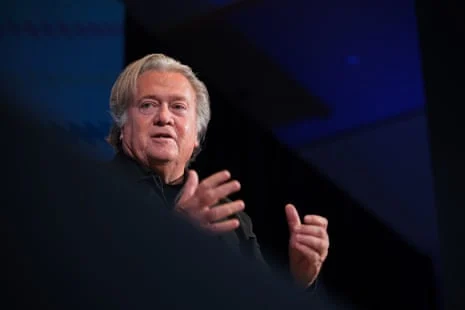
Former White House chief strategist Steve Bannon has suggested that the recent deployment of Immigration and Customs Enforcement (ICE) officers to major U.S. airports serves as a strategic "test run" for a broader rollout at midterm polling stations later this year. During a broadcast of his "War Room" podcast, Bannon and conservative attorney Mike Davis discussed the administrative move as a precursor to active federal involvement in the 2026 election cycle. The proposal comes amid a period of significant domestic and international volatility, marked by a partial government shutdown, military engagement in the Middle East, and a legislative push to overhaul federal election laws.
The presence of ICE officers at airports follows a wave of absences among Transportation Security Administration (TSA) screening agents, many of whom have reportedly refused to report for duty while working without pay. Security lines at major hubs, including Atlanta’s Hartsfield-Jackson, Newark Liberty, New Orleans Louis Armstrong, and New York’s John F. Kennedy International, stretched for several hours on Monday. While the administration framed the ICE deployment as a necessary measure to maintain transit security, Bannon characterized the move as an opportunity to "perfect" the agency’s role in monitoring federal elections.
Strategic Deployment and the Polling Station Proposal
Bannon’s dialogue with Mike Davis highlighted a growing sentiment among some segments of the Republican base that federal agents should have a visible presence where ballots are cast. Davis argued that the presence of ICE agents at polling places would serve as a deterrent against non-citizen voting, which is already a federal crime. "If you’re an American citizen, you should be happy that ICE is there," Davis said during the podcast, "because you’re not going to have illegal aliens canceling out your vote."
Critics and voting rights advocates have expressed alarm at the suggestion, noting that the presence of armed federal immigration agents could constitute voter intimidation. Current federal law generally restricts the deployment of armed federal troops or agents at polling places, though the administration’s "Save America Act" seeks to reassert federal control over various aspects of the electoral process. Bannon’s suggestion that agents could "pick ‘em out of line" starting immediately suggests a shift toward a more aggressive enforcement posture that overlaps with civil administrative functions.
The Save America Act and the Mail-In Voting Contradiction
The rhetoric surrounding election integrity has been bolstered by the Save America Act, a sweeping piece of legislation championed by President Donald Trump. The bill proposes significant restrictions on mail-in voting, mandates proof of citizenship for voter registration, and requires approved identification at the polls. Proponents argue these measures are essential to restoring public trust in the democratic process, while opponents view them as barriers to ballot access.

In a move that has drawn accusations of hypocrisy from political rivals, President Trump recently cast his own ballot by mail in a special election in Palm Beach County, Florida. Records from the county elections office confirmed that the President, who is registered at his Mar-a-Lago residence, used a mail-in ballot for a state legislative race between Republican Jon Maples and Democrat Emily Gregory. While the President has frequently criticized mail-in voting as being ripe for fraud, his aides have previously distinguished between "absentee" voting by necessity and the universal mail-in systems used in other states.
Negotiations Over DHS Funding and ICE Resources
The debate over the role of ICE is currently playing out in the halls of the U.S. Senate, where Republicans are attempting to broker a deal to fund the Department of Homeland Security (DHS). President Trump had previously signaled a refusal to negotiate on DHS funding unless the Save America Act was advanced. However, recent reports suggest a potential shift in the White House’s stance.
Senate Republicans briefed on a Monday night meeting at the White House indicated that the President might be open to a "parallel process." Under this proposal, a funding package for DHS would be passed to keep the agency operational, even if it does not include the full level of ICE funding initially requested. Republicans would then attempt to secure additional resources through the budget reconciliation process, while simultaneously pushing for elements of the Save America Act in follow-up legislation. This tactical pivot is seen as an attempt to win enough Democratic support to avoid a prolonged lapse in agency operations.
Judicial Scrutiny and the Future of Asylum Policy
Simultaneously, the U.S. Supreme Court is set to hear arguments regarding the administration’s authority to limit asylum processing at the southern border. The case centers on "metering," a policy that allows immigration officials to turn away asylum seekers at ports of entry when they deem the system to be overburdened. The Trump administration is seeking to revive the practice, which was largely discontinued during the Biden presidency.
The legal crux of the case rests on whether migrants who are stopped on the Mexican side of the border have technically "arrived" in the United States under the definitions provided by federal law. A lower court previously found that the policy violated the government’s statutory obligation to inspect and process those seeking protection. This case is distinct from the broader, more controversial ban on asylum that the President announced upon returning to office, which remains entangled in separate litigation.
The State of American Democracy
The cumulative effect of these policy shifts and the administration’s aggressive use of executive power has had a measurable impact on perceptions of American democracy. According to a new survey from Bright Line Watch, a nonpartisan project that tracks democratic health, the quality of U.S. democracy has stabilized but remains at a "diminished state." The survey of hundreds of political science scholars found that while the sharp decline seen last year has leveled off, the current "baseline" is significantly lower than at any point prior to the President’s second term.

Researchers noted a brief uptick in democratic sentiment following Democratic successes in off-year elections, which experts interpreted as a sign that free and fair elections were still possible. However, this optimism was tempered by the administration’s military actions abroad and its domestic immigration crackdowns. The survey highlighted a deep partisan divide in the general public’s view of the system, with supporters and detractors of the administration holding diametrically opposed views on the health of the republic.
International Diplomacy and Legal Challenges for the State Department
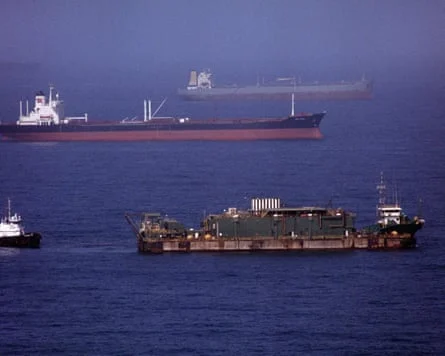
While the administration focuses on domestic control, Secretary of State Marco Rubio is navigating a complex international landscape. Rubio is scheduled to meet with G7 foreign ministers in France this Friday to discuss the ongoing war in Ukraine and the escalating conflict between the U.S., Israel, and Iran. The region has seen a spike in volatility following the U.S. bombing campaign in Iran, which has disrupted global shipping and led to retaliatory strikes in the Strait of Hormuz.
Rubio’s schedule also includes a domestic legal obligation. He is expected to testify in the criminal trial of former Congressman David Rivera in Miami. Rivera faces charges of acting as an unregistered agent for the government of Nicolas Maduro in Venezuela. Prosecutors allege that Rivera was paid $20 million to lobby U.S. politicians, including Rubio, to soften the stance against the Maduro regime. Both Rubio and Rivera share a Cuban-American background and have historically been staunch critics of socialist governments in Latin America, making the testimony a high-stakes moment for the Secretary of State.
Domestic Policy Battles and Legislative Hurdles
Back in Washington, the Senate has confirmed Markwayne Mullin as the Secretary of the Department of Homeland Security. Mullin, a former Republican senator, is expected to be a primary architect of the administration’s deportation and border enforcement strategies. His confirmation, which passed 54-45 along party lines, solidifies the executive branch’s leadership as it prepares for the potential deployment of ICE agents in more civic-oriented roles.
On the state level, California is leading a legal challenge against the federal government’s energy policies. Attorney General Rob Bonta has sued the U.S. Department of Energy to block the restart of the Sable Offshore pipeline system. The project, which utilizes Cold War-era laws to supersede state environmental regulations, was authorized via an executive order invoking the Defense Production Act. This clash between state autonomy and federal executive overreach is expected to be a recurring theme as the administration seeks to expand its control over national infrastructure and energy production.
As the midterm elections approach, the intersection of immigration enforcement, election law, and judicial authority remains the focal point of the American political discourse. The suggestion by Steve Bannon that airport security measures are a precursor to polling station monitoring indicates that the administration’s "test run" may soon move from the terminals of JFK to the voting booths of the American heartland. While the legal and ethical implications of such a move are fiercely debated, the administration appears committed to a strategy of maximum federal presence in all spheres of public life.