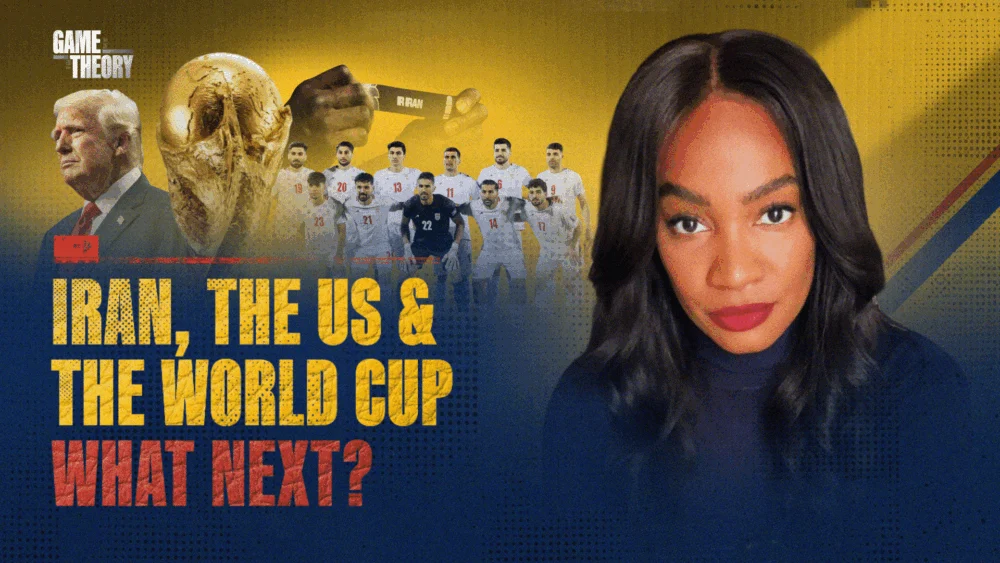
The specter of political turmoil is casting a long shadow over Iran’s participation in the 2026 World Cup, with less than 100 days remaining until the global football tournament kicks off. This looming uncertainty, fueled by escalating geopolitical tensions and potential internal pressures, raises profound questions about the intersection of international sport and national sovereignty, and whether the beautiful game can truly remain a neutral ground when nations are at odds.
Iran’s World Cup Ambitions Under Threat
Iran’s qualification for the 2026 World Cup, a significant achievement for the nation’s football program, is now facing unprecedented challenges. Reports suggest that the Iranian Football Federation, or even governmental bodies, may be contemplating a withdrawal from the prestigious tournament. Such a decision would not only be a blow to the millions of Iranian fans eagerly anticipating their team’s performance on the world stage but would also reverberate through the global football community.
The underlying reasons for this potential withdrawal are complex, reportedly stemming from a confluence of domestic political pressures and strained diplomatic relations with several key nations, including the United States. While official statements remain guarded, the narrative emerging points to a difficult balancing act for Iranian authorities, where the symbolic capital of World Cup participation could be weighed against perceived national interests or international obligations.
The Political Minefield of International Sport
The 2026 World Cup, co-hosted by the United States, Canada, and Mexico, is more than just a sporting event; it’s a global stage where national pride, political statements, and cultural exchanges converge. For Iran, participating in such a prominent tournament, especially with the US as a host nation, presents a unique set of political considerations. The current geopolitical climate, characterized by ongoing diplomatic friction, makes the prospect of Iran’s presence at the World Cup a sensitive issue for all parties involved.
Historically, sport has often become entangled with political narratives. The Olympics, for instance, have frequently seen boycotts and political statements from participating nations. The World Cup, while perhaps less prone to outright boycotts, is not immune to these forces. A withdrawal by Iran would undoubtedly be interpreted through a political lens, regardless of the official reasons provided. This situation highlights the perennial debate about whether sport can truly exist in a vacuum, separate from the complex realities of international relations.
Background and Context: Iran’s Football Journey
Iran has a rich footballing history, with its national team, known as "Team Melli," having qualified for multiple FIFA World Cups. Their participation has often been a source of national unity and pride, transcending internal political divisions. The team’s performance on the international stage has been a consistent aspiration for the nation, with fans investing significant emotional energy into their successes.
However, Iranian sport, like many other sectors within the country, has not been immune to the impact of international sanctions and political isolation. The complexities of navigating these challenges while maintaining a competitive edge in global sporting arenas are immense. The current discussions around withdrawal suggest that these pressures may have reached a critical point, forcing a re-evaluation of the benefits versus the costs of participation.
The US-Iran Dynamic and the World Cup Stage
The United States and Iran share a complicated and often adversarial relationship. The prospect of Iran competing in a World Cup hosted in part by the US adds another layer of potential tension. While FIFA’s mandate is to promote football globally and ensure inclusivity, the geopolitical realities cannot be entirely ignored. Any interaction, on or off the pitch, between Iranian athletes and US officials or citizens during the tournament would be scrutinized through the prism of bilateral relations.
This dynamic raises questions about the symbolic implications of a potential Iranian withdrawal. Would it be seen as a capitulation to external pressure, or a strategic move to assert national sovereignty? The answer likely lies in how the narrative is framed both domestically within Iran and internationally. The absence of Iran from the World Cup stage would mean a significant loss for the tournament’s diversity and a missed opportunity for cultural exchange, however strained.
Timeline and Key Developments: A Looming Decision
The 2026 FIFA World Cup is scheduled to commence in June 2026. With the tournament date rapidly approaching, the decision regarding Iran’s participation needs to be made imminently. The precise timeline for such a significant announcement remains unclear, but sources close to the situation indicate that discussions are ongoing at various levels of Iranian governance and the football federation.
The process leading to a potential withdrawal would likely involve extensive internal deliberation, consultation with key stakeholders, and consideration of FIFA regulations regarding tournament participation. The announcement, when it comes, will be closely watched by football governing bodies, fan groups, and political analysts worldwide. The implications of any decision will be felt far beyond the realm of sport.
The Role of FIFA and International Regulations
FIFA, the international governing body for football, operates under a charter that emphasizes neutrality and non-discrimination in sports. However, the organization also navigates a complex web of political realities when dealing with member nations. While FIFA typically discourages political interference in football, the pressure on national federations can be significant.
The federation’s stance on any potential withdrawal would be crucial. FIFA would likely seek clarification on the reasons behind such a decision and explore all avenues to ensure Iran’s participation, if at all possible, in line with its statutes. However, the ultimate decision rests with the national football association, which is bound by its own country’s regulations and political climate.
Analysis and Broader Implications: Beyond the Pitch
The potential withdrawal of Iran from the 2026 World Cup transcends the immediate disappointment for football fans. It underscores the increasing politicization of international sporting events and the challenges faced by athletes and sporting bodies when national interests clash with global competition. Professor Simon Chadwick, an expert in sports diplomacy, has frequently highlighted the delicate balance between sport and politics, noting that "sport can be a powerful tool for diplomacy and understanding, but it can also become a battleground for political agendas."
The implications of Iran’s absence would be felt across various domains. Economically, it could impact sponsorship deals and broadcast rights, though likely on a marginal scale for the overall tournament. Culturally, it would mean a missed opportunity for millions of Iranians to connect with the global football community and showcase their passion for the sport. Symbolically, it could be interpreted as a hardening of political stances, further isolating Iran on the international stage.
Can Sport Remain Neutral? The Enduring Question
The recurring question in such scenarios is whether sport can ever truly be neutral. While the ideal of sport as a unifying force, transcending borders and political ideologies, is aspirational, the reality is often far more complex. National teams represent their countries, and their participation or withdrawal is often imbued with political significance.
The situation surrounding Iran’s potential World Cup absence serves as a stark reminder that the global sporting arena is not immune to the political currents that shape international relations. The desire for sport to be a platform for unity and shared passion is constantly tested by the realities of national interests, geopolitical tensions, and domestic pressures.
Impact on the Public and Global Football Community
For Iranian football fans, the prospect of their team not participating in the World Cup is a deeply disappointing one. They have followed their team’s journey through qualification, experiencing the highs and lows, and eagerly anticipating the chance to see them compete against the world’s best. The exclusion would represent a significant loss of national sporting engagement and a dampening of national spirit.
Globally, the absence of a qualified team, particularly one with a passionate fanbase like Iran, diminishes the richness and diversity of the World Cup. It reduces the competitive landscape and removes an element of the global narrative that the tournament aims to celebrate. Other nations and their fans would miss out on the unique cultural energy that Iranian supporters often bring to major tournaments.
Broader Consequences for International Sport
The decision, if made, could set precedents for how political considerations influence participation in future major sporting events. It raises concerns about the increasing intertwining of sports governance with national political agendas, potentially leading to a more fragmented and politicized global sporting landscape. This could, in turn, impact the inclusivity and universality that FIFA and other international sporting bodies strive to uphold.
The economic ripple effects, while perhaps not catastrophic for the World Cup as a whole, could be felt by individual teams, federations, and associated businesses that had planned for Iran’s participation. Sponsorships, merchandise, and fan engagement strategies would all need to be re-evaluated, highlighting the intricate economic ecosystem that surrounds major sporting events.
Reactions, Consequences, and Next Steps
As the clock ticks down to the 2026 World Cup, the global football community is awaiting a definitive statement from Iran. Reactions from FIFA, continental football confederations, and various national football associations are likely to be varied, ranging from expressions of concern to calls for continued dialogue.
The consequences of a withdrawal would extend beyond the immediate tournament. It could lead to further scrutiny of Iran’s engagement with international sporting bodies and potentially influence future bids for hosting rights or participation in other global events. The narrative surrounding such a decision would be heavily debated, with different stakeholders offering their interpretations of the motivations and implications.
The Path Forward for Team Melli
Should Iran decide to withdraw, the focus will inevitably shift to the future of its national football program. Questions will arise about the impact on player development, the morale of the squad, and the long-term vision for Iranian football. Rebuilding momentum and re-engaging with the international football community would become paramount.
Conversely, if a path to participation is found, the focus will then shift to the team’s performance on the pitch and how they navigate the political undertones that may accompany their presence at the tournament. The narrative would then likely center on the resilience of sport and its ability to provide moments of unity and celebration, even amidst broader global complexities. The coming weeks are critical for determining Iran’s fate in the 2026 World Cup, a decision that will resonate far beyond the boundaries of the football field.