The Middle East conflict escalated significantly on Thursday as Canadian Prime Minister Mark Carney refused to rule out military participation in the widening theater of operations, while the Israeli Defense Forces initiated a massive new wave of aerial bombardments targeting the Iranian capital. As the war entered its sixth day, the geographical scope of the violence expanded from the Levantine coast to the Indian Ocean, involving NATO air defenses and triggering a potential global economic crisis centered on the semiconductor industry.
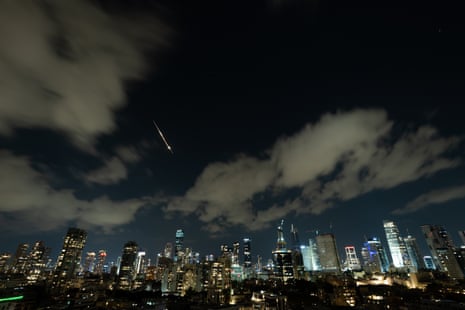
Israeli military officials confirmed Thursday morning that they had begun a "widespread wave of attacks" across Tehran, following a series of Iranian ballistic missile launches that targeted Tel Aviv and central Israel earlier in the day. While the Israeli government claimed "historic gains" in its campaign to dismantle Iran’s nuclear and military infrastructure, the human cost and diplomatic fallout continue to mount, with Western nations struggling to evacuate tens of thousands of citizens caught in the crossfire.

Canada Weighs Military Options Amid Tehran Bombardment
In a joint press conference held in Canberra alongside Australian Prime Minister Anthony Albanese, Canadian Prime Minister Mark Carney signaled a shift in Ottawa’s posture toward the conflict. When asked about the possibility of the Canadian Armed Forces joining the U.S.-Israeli coalition, Carney stated that "one can never categorically rule out participation." He emphasized that while he viewed the initial strikes on Iranian soil as "inconsistent with international law," Canada would ultimately "stand by our allies" as the security situation deteriorates.
The Canadian government’s stance comes as a direct response to the "Iran war live updates: Mark Carney doesn’t rule out Canada joining war; Israel launches fresh strikes on Tehran" headlines that have dominated global discourse since the outbreak of hostilities on Saturday. Prime Minister Albanese echoed the gravity of the situation, announcing that Australia has launched "Operation Beech" to assist the estimated 24,000 Australian citizens currently stranded in the United Arab Emirates and other regional hubs.
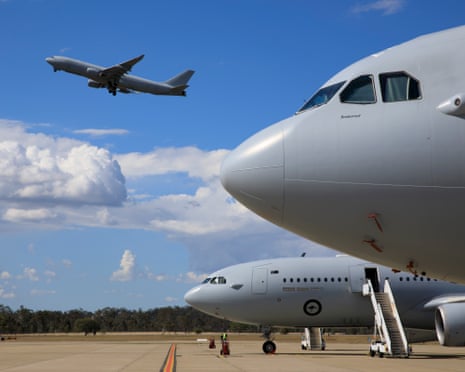
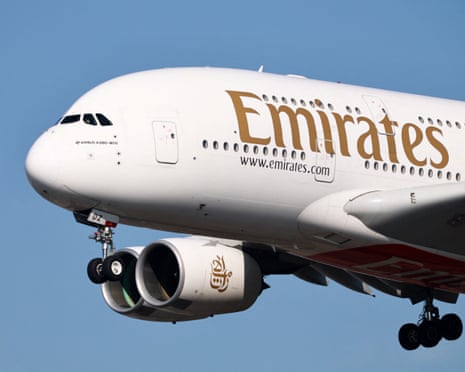
The Australian government has already deployed a RAAF C-17A Globemaster and a KC-30A multi-role tanker to the region. These assets are intended to facilitate the evacuation of permanent residents and citizens as commercial air travel remains almost entirely paralyzed by the closure of regional airspace.

The Maritime Front: Sinking of the IRIS Dena
The conflict reached the Indian Ocean on Wednesday when a U.S. Navy submarine torpedoed and sank the Iranian frigate IRIS Dena off the coast of Sri Lanka. The warship had been conducting a diplomatic visit to India when it was engaged by American forces. Sri Lankan naval officials reported that at least 87 bodies have been recovered from the site of the sinking, marking one of the deadliest maritime engagements of the war to date.
The sinking of the IRIS Dena underscores the global nature of the current hostilities. While the primary combat zones remain concentrated in Iran, Lebanon, and the Israel-Syria border, the U.S. military appears to be systematically targeting Iranian naval assets regardless of their proximity to the Persian Gulf. In a separate incident in the Strait of Hormuz, the Omani navy was forced to rescue 24 crew members from a commercial container ship that was struck by missiles, further threatening the world’s most vital oil transit point.
Israel Launches Fresh Strikes on Tehran and Beirut
Following a brief lull in activity, the Israeli Air Force intensified its campaign against Iranian leadership and infrastructure. The latest "fresh strikes on Tehran" are reportedly aimed at what Prime Minister Benjamin Netanyahu’s office described as "new underground bunkers" used to house the remnants of Iran’s atomic bomb program. Netanyahu’s spokesperson asserted that the strikes were a preemptive necessity to prevent a nuclear breakout.
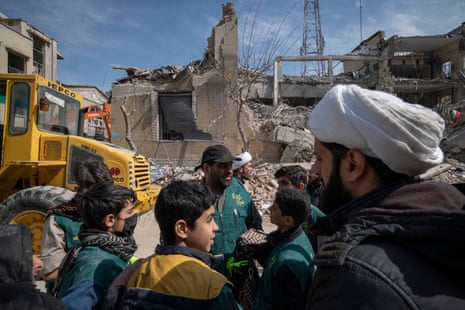
Simultaneously, Israeli operations in Lebanon have expanded. Airstrikes targeted the Dahiyeh district of south Beirut, a known Hezbollah stronghold, after the IDF issued urgent evacuation orders for residents. Additional strikes hit vehicles along the Beirut airport highway, resulting in at least three deaths. The Israeli military has now urged all civilians south of the Litani River to flee north, signaling a potential ground incursion or a significant expansion of the aerial buffer zone.
NATO Interception and Regional Instability
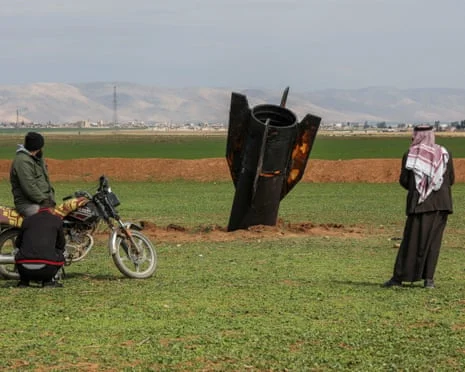
The risk of the war spilling into NATO territory was narrowly averted on Wednesday when Turkish defense officials confirmed that a ballistic missile, launched from Iran and traversing Syrian and Iraqi airspace, was intercepted by NATO air defense systems over the Eastern Mediterranean. The missile was reportedly heading toward Turkish airspace before it was neutralized.
While the Iranian government issued a statement via state media denying that it had intentionally fired upon Turkey and reiterating its respect for Turkish sovereignty, the incident has put Ankara and its NATO allies on high alert. The interception serves as a stark reminder of the technical volatility of the conflict, where a single stray projectile could trigger the alliance’s Article 5 collective defense clause.
Economic Consequences: The Semiconductor Crisis
Beyond the immediate kinetic violence, the "Iran war live updates: Mark Carney doesn’t rule out Canada joining war; Israel launches fresh strikes on Tehran" narrative is beginning to impact the global high-tech economy. South Korean officials warned on Thursday that a prolonged war could cause a catastrophic disruption in the production of semiconductors.
Kim Young-bae, a lawmaker for South Korea’s ruling party, met with executives from Samsung Electronics and SK Hynix to discuss the supply of helium. Helium is a critical component in heat management during the chip-making process and has no viable synthetic alternative. With Qatar being one of the world’s primary producers, the instability in the Persian Gulf and the closure of Qatari airspace have created a severe bottleneck.
South Korea currently supplies nearly two-thirds of the world’s memory chips. Any prolonged interruption in material sourcing could lead to a global shortage of smartphones, automobiles, and the specialized hardware required for AI data centers. While SK Hynix reported sufficient short-term inventory, the industry remains on edge as energy costs continue to climb due to the regional instability.
Domestic Political Reactions and Repatriation Efforts
In the United States, Donald Trump praised the military’s performance, claiming that the decapitation of Iran’s leadership was proceeding ahead of schedule. "We’re doing well on the war front, to put it mildly," Trump said, rating the current campaign a "15 out of 10." However, the administration faces internal pressure over the safety of U.S. civilians.
The U.S. State Department confirmed that while 17,500 Americans have been successfully repatriated since Saturday, thousands more remain in high-risk zones. Lawmakers have criticized the State Department for "inadequate planning" and delayed warnings. In response, Washington has begun facilitating charter flights from Saudi Arabia, Jordan, and the UAE to bypass the gridlocked commercial aviation sector.
In the United Kingdom, Prime Minister Keir Starmer is facing similar domestic scrutiny. Although Starmer announced the deployment of the Type 45 destroyer HMS Dragon and Wildcat helicopters, defense officials revealed the ship would not set sail until next week. Opposition leaders have slammed the delay, noting that the UK Royal Air Force base Akrotiri in Cyprus has already been targeted by Iranian drone strikes.
Humanitarian Impact and the Border Front
The human toll of the war was highlighted by reports of a deadly strike on a girls’ school in Iran. Iranian officials claim at least 165 students were killed in the Saturday attack. U.S. Defense Secretary Pete Hegseth remained evasive when questioned about the incident, stating only that the U.S. is "investigating" the reports.
On the Iran-Iraq border, a new front appears to be opening. Intense airstrikes have hit Iranian military positions and police stations along the northern frontier. U.S. officials have indicated a readiness to provide air support for Kurdish peshmerga fighters should they choose to cross the border and engage Iranian forces directly. This move suggests a strategy of internal destabilization to complement the external aerial campaign.
As the "Iran war live updates: Mark Carney doesn’t rule out Canada joining war; Israel launches fresh strikes on Tehran" continue to evolve, the international community remains divided. While the U.S. and Israel press their military advantage, the risk of a total regional collapse and a global economic depression looms. With the UK’s naval deployment delayed and Canada’s potential entry into the war now a matter of public debate, the second week of the conflict promises to be even more volatile than the first.