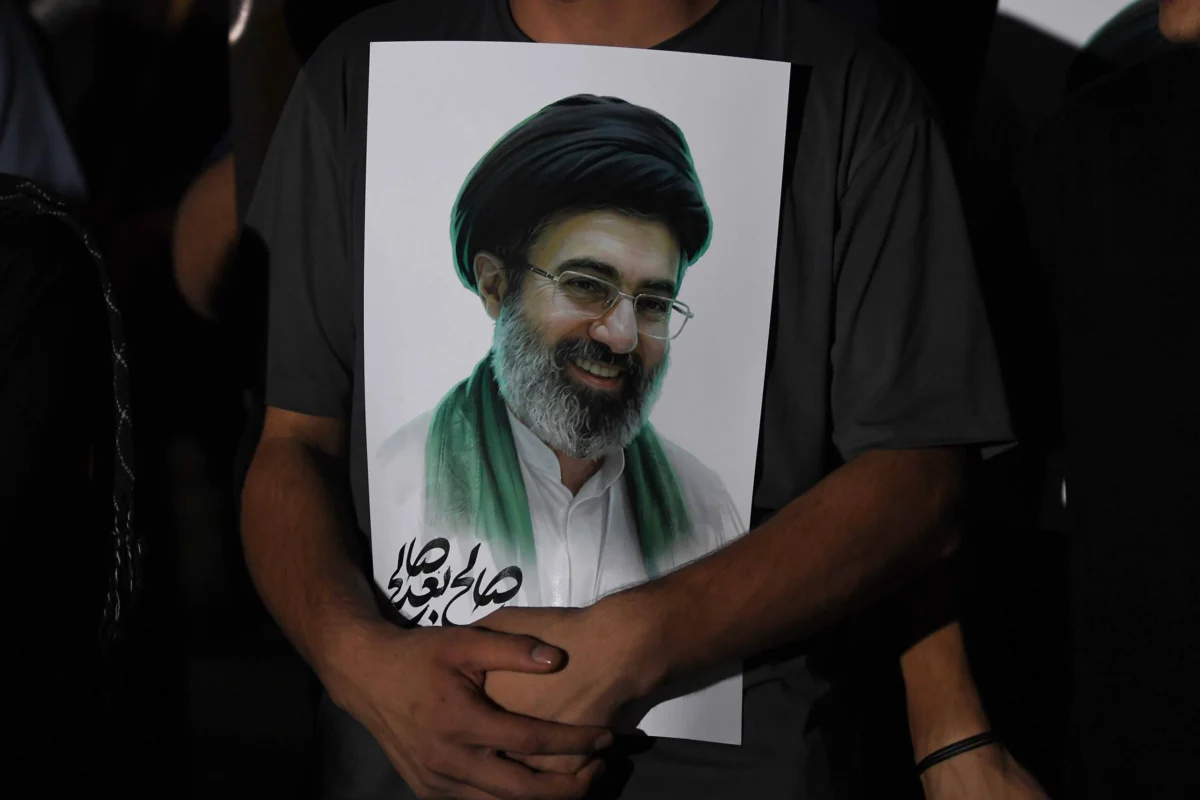
Iran’s new Supreme Leader, Mojtaba Khamenei, has asserted that the nation’s adversaries are experiencing defeat, delivering this message in a written statement for the Persian New Year, Nowruz, as the United States and Israel continue their military operations against Iran. The declaration comes at a critical juncture, following the recent assassination of his father, Ayatollah Ali Khamenei, and amidst a complex geopolitical landscape characterized by regional instability and alleged foreign interference.
Mojtaba Khamenei, who has maintained a low public profile since assuming the highest religious and political office in the country, released his Nowruz message on Friday, which was subsequently broadcast on Iranian television. The statement highlighted the resilience of the Iranian populace as they observe the traditional New Year, which he proclaimed would usher in "the year of a resistance economy under national unity and national security." This framing suggests a strategic focus on economic self-sufficiency and internal cohesion as a bulwark against external pressures.
The Supreme Leader’s message emphasized the perceived unity among Iranians, stating, "At the moment, due to the particular unity that has been created between you, our compatriots – despite all the differences in religious, intellectual, cultural and political origins – the enemy has been defeated." This assertion directly challenges the narrative propagated by Iran’s rivals, who, according to Khamenei, had anticipated internal dissent and governmental collapse following the targeted killings of key leadership figures.
The assassination of Ayatollah Ali Khamenei on February 28 marked a significant turning point, initiating what has been described as a period of heightened conflict. The U.S. and Israel, implicated in the attack, reportedly believed that such a decisive blow would destabilize the Iranian government and incite a popular uprising. However, Mojtaba Khamenei characterized this assumption as a "gross miscalculation," underscoring the Iranian regime’s preparedness and the nation’s enduring resolve.
The Supreme Leader elaborated on the motivations behind the recent escalations, suggesting that the perpetrators harbored ambitions of dominating and fragmenting Iran. "The war was launched under the delusion that if the pinnacle of the regime and certain influential military figures were to attain martyrdom, it would instil fear and despair in our dear people… and through this means, the dream of dominating Iran and subsequently dismembering it would be realised," he articulated. Instead of succumbing to fear, the Iranian leadership contends that these actions have paradoxically created a "fracture" within the enemy’s ranks, a claim that remains to be substantiated by independent observers.
Iran’s Constitutional Framework and Succession Planning
The smooth transition of power following Ayatollah Ali Khamenei’s death has been attributed, in part, to the foresight embedded within Iran’s constitutional structure. Analysts point to specific "survival protocols" designed into the foundational legal document, which anticipate scenarios of extreme shock and leadership vacuum. This intricate framework aims to ensure the continuity of the state apparatus, even in the face of catastrophic events, thereby preventing a complete collapse of the system. The rapid and seemingly organized succession of Mojtaba Khamenei, despite his limited public exposure, exemplifies the efficacy of these pre-emptive measures.
Denials of Transnational Attacks and Accusations of "False Flags"
In a significant development, Mojtaba Khamenei vehemently denied any Iranian involvement or that of its allied forces in recent attacks targeting Turkiye and Oman. He characterized these incidents as "false flag" operations orchestrated by Iran’s adversaries with the explicit intention of fomenting discord among regional neighbors. This accusation carries considerable weight, given the escalating tensions and the potential for wider conflict.
The Turkish Ministry of National Defence confirmed last week that NATO air defenses had intercepted a ballistic missile originating from Iran. Concurrently, reports emerged of two fatalities in Oman due to drone strikes in the Sohar province, with additional drones reportedly being fired towards Saudi Arabia. Khamenei’s assertion suggests that these events are part of a broader disinformation campaign aimed at isolating Iran and drawing regional powers into a conflict. The Iranian leadership’s proactive denial and attribution of these incidents to a "false flag" strategy aim to preemptively counter narratives that could incriminate Tehran and escalate international pressure.
Diplomatic Overtures to Eastern Neighbors Amidst Regional Instability
Beyond the immediate security concerns, Mojtaba Khamenei extended a diplomatic hand to Afghanistan and Pakistan, urging them to resolve their ongoing hostilities. He expressed Iran’s readiness to mediate and assist in fostering better relations between the two neighboring nations. "We consider our eastern neighbors to be very close to us," the Supreme Leader stated. "I appeal to our two brotherly countries, Afghanistan and Pakistan, to establish better relations with each other… and I myself am ready to take the necessary actions."
This call for de-escalation comes at a time when Afghanistan and Pakistan have been engaged in a cycle of retaliatory strikes and heightened border tensions. The two countries recently agreed to a temporary "pause" in hostilities for the Muslim holiday of Eid al-Fitr, following weeks of deadly exchanges. Iran’s involvement, or its offer to mediate, could potentially play a crucial role in stabilizing the volatile border region and preventing further loss of life.
The "Resistance Economy" and National Unity: A Strategic Imperative
The concept of a "resistance economy" has been a recurring theme in Iranian political discourse, particularly in the face of international sanctions and external pressures. Mojtaba Khamenei’s emphasis on this economic model, coupled with a call for "national unity and national security," signals a strategic prioritization of self-reliance and internal cohesion. This approach aims to insulate the Iranian economy from external shocks and build resilience against what the leadership perceives as a protracted campaign of economic warfare waged by its adversaries.
The notion of national unity, especially in a country with diverse ethnic and religious demographics, is presented as a critical component of this strategy. By rallying the population behind a common cause and fostering a sense of shared purpose, the Iranian regime seeks to project an image of strength and stability, both domestically and internationally. This message of unity is intended to counter narratives of internal division and demonstrate the collective will of the Iranian people to resist external coercion.
Broader Implications for Regional Security and International Relations
The pronouncements from Iran’s new Supreme Leader carry significant implications for the already fragile security landscape of the Middle East. The declaration of enemy defeat, while potentially a rhetorical maneuver to bolster domestic morale and project strength, is juxtaposed against ongoing military engagements and accusations of cross-border aggression. The denial of involvement in attacks in Turkiye and Oman, coupled with the "false flag" accusation, could either de-escalate tensions by shifting blame or further inflame them by introducing new layers of mistrust and suspicion.
Furthermore, Iran’s active engagement in regional diplomacy, particularly its offer to mediate between Afghanistan and Pakistan, highlights its strategic positioning as a key player in regional stability efforts. However, the effectiveness of such mediation will depend on the willingness of the involved parties to accept Iran’s role and the broader geopolitical context, which remains heavily influenced by the ongoing conflict between Iran and its principal adversaries.
The succession of Mojtaba Khamenei and his subsequent public statements suggest a continuation, and perhaps an intensification, of Iran’s current foreign policy and security doctrines. The emphasis on resistance, unity, and the denial of aggressive intent positions Iran as a state determined to protect its interests and assert its regional influence, even in the face of significant external challenges. The coming months will likely reveal the extent to which Iran’s declared "defeat" of its enemies translates into tangible shifts in regional dynamics or whether the current trajectory of escalating tensions will persist. The international community will be closely observing Iran’s actions and its interactions with its neighbors as it navigates this complex and often perilous geopolitical environment.