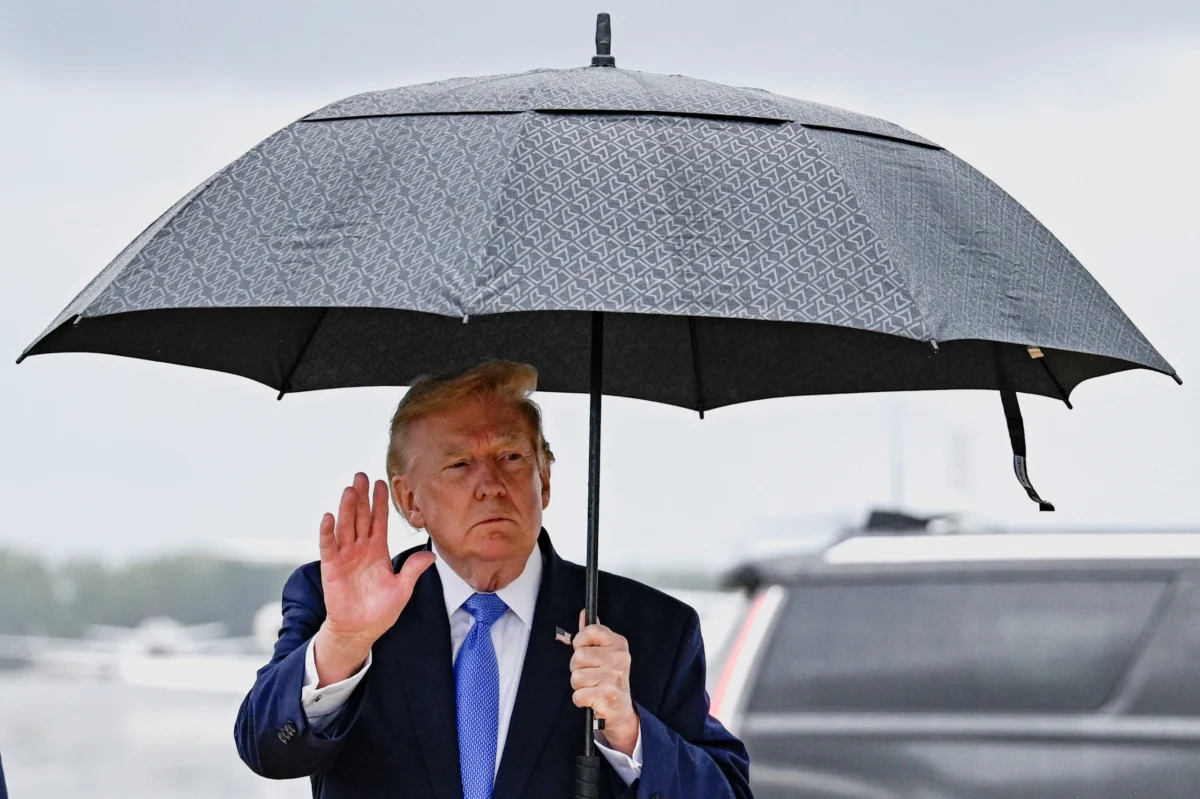
United States President Donald Trump announced Sunday that a new round of negotiations with Iran is scheduled to commence on Monday, signaling a significant diplomatic pivot after he decided to hold off on planned military strikes against the Islamic Republic. The President stated that the decision to pause the strikes, which he described as potentially "the biggest attack since World War II," was made to allow diplomacy a chance to succeed. This unexpected shift towards negotiation comes after a period of heightened tensions and a near-escalation of conflict in the Persian Gulf.
The prospect of renewed talks between the U.S. and Iran marks a critical juncture in a relationship long characterized by adversarial stances and intermittent crises. President Trump’s pronouncement suggests a willingness to explore diplomatic avenues, a move reportedly encouraged by key regional allies. The nature and scope of these impending negotiations remain largely undefined, with no specific details provided regarding the venue, participants, or the agenda beyond a general reference to a potential deal concerning the Strait of Hormuz and Iran’s nuclear program.
Diplomatic Overture Amidst Escalating Tensions
President Trump’s decision to halt military action followed a period where U.S.-Iran tensions had reached a boiling point. The U.S. had been contemplating retaliatory strikes after Iran shot down a U.S. drone in international airspace, an incident that nearly triggered a broader military engagement. However, the President revealed on Sunday that both Iran and several Gulf allies had urged him to reconsider the use of force, believing that a diplomatic resolution was within reach.
"Obviously, they don’t want to be attacked. They knew the extent of the attack because they saw it forming," Trump told reporters aboard Air Force One, referring to Iran’s awareness of the impending U.S. military response. He elaborated that the current strategy involves engaging Iran in discussions, with negotiations set to begin the following afternoon. This statement indicates a significant departure from the brinkmanship that had defined recent interactions between the two nations.
Regional Allies Advocate for De-escalation
The President specifically cited the involvement of U.S. partners Saudi Arabia, the United Arab Emirates, and Qatar in urging him to delay any military action. According to Trump, these allies believed that a diplomatic breakthrough was possible, prompting his decision to pause the planned strikes and open the door for dialogue. "When the allies asked to call it off, you’ve got to sort of say, ‘Well, let’s see.’ And the reason they ask is they think there’s a deal," Trump explained.
This consensus among regional players to pursue a diplomatic rather than a military solution underscores the shared desire to avoid a wider conflict in the already volatile Middle East. Saudi Arabia’s Crown Prince Mohammed bin Salman was also mentioned by Trump as having advised against the strikes, warning of the potential for unforeseen and destabilizing consequences, including humanitarian crises and regional upheaval. The Crown Prince’s counsel highlights the intricate web of diplomatic considerations at play.
A Potential Deal on Hormuz and Nuclear Program
President Trump alluded to the possibility of an imminent agreement concerning the Strait of Hormuz, a crucial chokepoint for global energy supplies, and Iran’s nuclear program. "There’s a deal on [the Strait of] Hormuz, and then there will be a deal on the nuclear, or you might call it the denuclearization of Iran," he stated, suggesting that these two critical issues could be addressed through the upcoming negotiations. This framing indicates a potential linkage between maritime security and Iran’s nuclear ambitions.
The Strait of Hormuz has been a focal point of recent tensions, with Iran asserting control over the waterway and engaging in actions that have disrupted shipping. A previous ceasefire agreement that included reopening the strait had faltered, leading to a renewed cycle of attacks and counter-attacks. The prospect of a deal that resolves these long-standing issues represents a significant diplomatic opportunity.
Concurrent Diplomatic Efforts in the Region
The announcement of impending U.S.-Iran talks coincided with reports of parallel diplomatic engagements involving Iran and its neighbors. Iranian Foreign Minister Mohammad Javad Zarif reportedly held a second phone call with Saudi Foreign Minister Prince Faisal bin Farhan Al Saud, with Pakistani Army Commander General Asim Munir also participating. This trilateral discussion focused on recent diplomatic initiatives aimed at de-escalating regional tensions and fostering stability in West Asia.
According to a Telegram post by Zarif, the officials exchanged views on the current situation and discussed "initiatives aimed at maintaining and strengthening security and stability" in the region. They emphasized the importance of regional cooperation and the pursuit of political solutions, signaling a coordinated effort to manage the escalating crisis through dialogue.
Progress on Strait of Hormuz Navigation
Earlier on Sunday, Iran’s official news agency IRNA reported that negotiations between Tehran and Oman regarding maritime traffic through the Strait of Hormuz were in their final stages. Citing Foreign Minister Zarif, IRNA indicated that these discussions were focused on establishing new navigation routes through the strait. A spokesperson for the Iranian Ministry of Foreign Affairs clarified that these talks were distinct from discussions about whether the strait would be opened or closed, framing it as a separate issue related to safe passage.
This development suggests that Iran has been actively engaged in seeking diplomatic solutions to maritime concerns in the Persian Gulf, even as broader tensions with the U.S. persisted. The focus on navigation routes, rather than the complete opening or closing of the strait, points to a nuanced approach to managing a vital international waterway.
Historical Context of U.S.-Iran Standoff
The current diplomatic overtures occur against a backdrop of decades of strained relations between the United States and Iran, punctuated by periods of intense hostility and intermittent attempts at dialogue. The current phase of elevated tension can be traced back to the U.S. withdrawal from the Joint Comprehensive Plan of Action (JCPOA) in 2018, which reimposed stringent sanctions on Iran and led to a significant deterioration of bilateral ties.
The period following the U.S. withdrawal saw Iran respond by increasing its uranium enrichment activities and reducing its commitments under the JCPOA. This set the stage for a series of incidents in the Persian Gulf, including attacks on oil tankers and the aforementioned downing of the U.S. drone, which brought the two nations perilously close to direct military confrontation. The possibility of a new nuclear deal or a revised framework for Iran’s nuclear program will likely be a central theme in any future negotiations.
Broader Implications for Regional Security
The potential for a diplomatic breakthrough between the U.S. and Iran carries significant implications for the broader security landscape of the Middle East. A de-escalation of tensions could reduce the risk of a wider regional conflict, which could draw in other major powers and lead to devastating humanitarian consequences. Furthermore, a resolution to the issues surrounding the Strait of Hormuz could stabilize global energy markets and alleviate concerns about the security of vital shipping lanes.
The involvement of regional actors like Saudi Arabia, the UAE, and Qatar in mediating this crisis highlights their vested interest in a peaceful resolution. Their active participation suggests a growing recognition of the interconnectedness of regional security and the need for collective diplomatic efforts to address shared challenges. The success of these negotiations could pave the way for more comprehensive regional security dialogues.
Impact on Global Energy Markets and Trade
The Strait of Hormuz is one of the world’s most critical maritime chokepoints, through which approximately 20-30% of global oil consumption passes. Any disruption or closure of this waterway can have immediate and significant impacts on global energy prices, supply chains, and economic stability. The current tensions have already led to increased shipping insurance premiums and a degree of uncertainty in the oil market.
A diplomatic resolution that ensures the free flow of navigation through the Strait of Hormuz would be a significant positive development for global trade and economic stability. It would likely lead to a reduction in oil price volatility and a greater sense of security for energy-dependent nations. The potential for a deal on this issue, as alluded to by President Trump, is therefore of considerable economic interest worldwide.
The Path Forward: Navigating Complex Negotiations
The upcoming talks between the United States and Iran will undoubtedly be complex, with significant hurdles to overcome. The fundamental disagreements over Iran’s nuclear program, regional policies, and past grievances will require careful navigation. The U.S. demand for Iran’s denuclearization, coupled with Iran’s insistence on sanctions relief and recognition of its regional role, presents a challenging balancing act.
The renewed emphasis on diplomacy, however, offers a critical opportunity to de-escalate tensions and pursue a more stable future for the region. The willingness of both sides to engage in dialogue, spurred by regional allies, signals a potential shift from confrontation to cooperation. The success of these negotiations will depend on the ability of both parties to find common ground and make the necessary concessions to achieve lasting peace and security. The world will be watching closely as these critical discussions unfold, hoping for a peaceful resolution that benefits not only the immediate parties involved but also the broader international community.