SAN SEBASTIÁN, Spain — Acclaimed British-Australian actress Naomi Watts received the prestigious Donostia Award at the San Sebastián International Film Festival on Saturday night, dedicating the honor to visionary director David Lynch, whose seminal film Mulholland Drive launched her into international stardom. Watts’ emotional acceptance speech underscored Lynch’s profound impact on her career, acknowledging him as the catalyst who fundamentally reshaped her understanding of acting and self-belief. The ceremony preceded a screening of her latest feature, The Housewife, and was marked by poignant tributes and a powerful call for greater representation of women in cinema.
A Career-Defining Honor at San Sebastián
The Donostia Award, the highest accolade bestowed by the San Sebastián International Film Festival, recognizes an actor or director for their enduring career contributions to the world of cinema. Watts, 57, joined a distinguished list of recipients honored for their artistic excellence and significant influence on the industry. Her presence at the festival highlighted not only her celebrated body of work but also her continued relevance in an evolving Hollywood landscape. The award celebrated a career that seamlessly blends independent productions with major studio blockbusters, showcasing her versatility and resilience.
Watts’ journey to becoming a two-time Academy Award nominee was far from conventional. Born in Shoreham, Kent, England, and raised partially in Australia, she navigated a decade of relentless auditions and rejections in Hollywood before her breakthrough role. Her early career was marked by supporting parts and near-misses, a period she openly discussed as challenging and often disheartening. This struggle forged a tenacious spirit that would later become a hallmark of her performances. The Donostia Award recognized this arduous path and the eventual triumph of her talent and determination.
A Heartfelt Introduction by J.A. Bayona
The ceremony began with a moving introduction from Spanish filmmaker J.A. Bayona, who directed Watts in the critically acclaimed 2012 disaster drama The Impossible. The film earned Watts her second Academy Award nomination for Best Actress, solidifying her reputation as a formidable dramatic talent. Bayona spoke eloquently about their collaboration, revealing a deep professional and personal bond formed during the demanding production.
"Naomi, I want to thank you for having trusted that young director who was scared to death," Bayona stated, recalling his initial apprehension. He praised Watts as "the best travel companion I’ve ever had," emphasizing her unwavering dedication and professionalism under challenging circumstances. Bayona also credited Watts with imparting invaluable lessons about acting, a wisdom he continues to seek in every new collaborator. "I admire you deeply, but above all, I love you. And tonight I can also say that I am fulfilling a dream, a dream come true," he concluded, his words echoing the profound respect and affection shared between director and muse. His introduction set a deeply personal tone for the evening, highlighting the collaborative spirit central to filmmaking.
Watts Reflects on a Challenging Yet Rewarding Career
Visibly emotional as she approached the stage to accept her award, Watts began by thanking Bayona for his heartfelt tribute. She recounted her experiences filming The Impossible, specifically recalling the intensive shoot in Spain and the opportunity to engage with the Thai community, whose real-life experiences during the 2004 Boxing Day tsunami formed the basis of the film. Watts characterized the entire production as filled with "full, brilliant memories," acknowledging that even the most difficult aspects contributed to the richness of the experience.
She humorously recounted the arduous process of filming in a water tank, enduring up to 30 takes submerged. "Tom Holland called it the best water park he ever went to. I called it pure pain!" she quipped, referencing her then-15-year-old co-star who made his live-action debut in the film. Despite the physical demands, the film’s global box office success, grossing over $198 million, and its critical acclaim underscored the profound impact of their collective efforts. Watts’ ability to infuse her performance with raw emotional power in The Impossible showcased her remarkable range and commitment, earning her widespread praise.
The Transformative Power of David Lynch and Mulholland Drive
Watts then pivoted to the pivotal turning point in her career: her encounter with David Lynch and the making of Mulholland Drive. She candidly shared the struggles she faced during her first decade in Hollywood, describing it as "not an easy trajectory" riddled with "so much rejection." She revealed that many within the industry had told her she "wasn’t going to make it," a sentiment that persisted through numerous setbacks. This period of adversity, however, inadvertently prepared her for the unconventional genius of Lynch.
Everything changed, Watts explained, when she met the iconic director. "He saw me, and all those wounds from all that rejection now appeared as growth," she stated, emphasizing Lynch’s unique ability to perceive potential where others saw only limitations. "He gave me the role that you couldn’t even dream for. He really just changed my life." Mulholland Drive, initially conceived as a television pilot, was eventually transformed into a feature film, premiering at the 2001 Cannes Film Festival where Lynch won Best Director. Watts’ dual role as Betty Elms and Diane Selwyn became a masterclass in psychological complexity and vulnerability, cementing her status as a formidable talent.
Watts elaborated on Lynch’s influence, stating, "He gave me a different understanding of what it meant to act, to trust instinct, to embrace uncertainty, and to not be afraid of the strange or the unexplained." This philosophical approach to performance, encouraging actors to delve into the subconscious and the surreal, became a hallmark of her subsequent work. More than just a director, Lynch was a mentor who instilled a profound sense of self-belief. "He believed in something in me before I fully believed in myself, and that is a gift that you never forget," Watts reflected. Her voice filled with conviction, she declared, "So tonight, I do really feel like this award is very much about David." The film’s enigmatic narrative, dreamlike sequences, and Watts’ mesmerizing performance earned Mulholland Drive a permanent place in cinema history, frequently appearing on lists of the greatest films ever made.
Challenging Ageism and Advocating for Women in Film
Beyond her artistic tribute, Watts used her platform to address broader industry issues, particularly the pervasive problem of ageism against women in Hollywood. At 57, she reflected on the stark warnings she received early in her career. "As a woman of my age, despite what I was told at 31 when I was launching Mulholland Drive — that it’d be all dried up and finished at the age of 40 — I’m grateful beyond words to be part of shifting that narrative," she beamed, her words resonating with a defiant optimism.
Her rallying cry continued, emphasizing the urgent need for diverse representation on screen. "We need to see ourselves. Women are consumers of films and storytelling too. We want to see ourselves reflected on screen." This statement highlighted the ongoing efforts within the industry to create more opportunities and tell more authentic stories featuring women of all ages, pushing back against historical biases that often sideline actresses after a certain age. Watts’ sustained career, marked by diverse and challenging roles, serves as a powerful testament to the falsehood of such restrictive narratives. Her advocacy aligns with a growing movement demanding greater inclusivity and equity across the entertainment landscape.
A Look Ahead and an Enduring Legacy
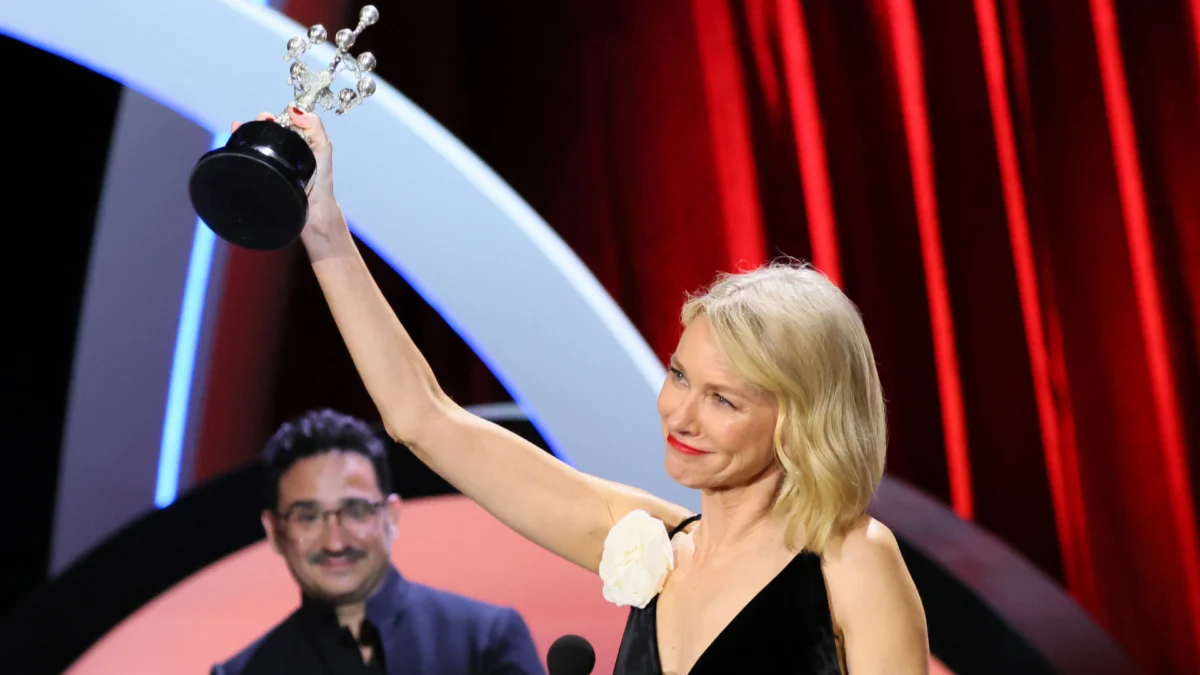
After expressing gratitude to the festival organizers and the applauding audience, Watts reaffirmed her passion and commitment to her craft. "I still have lots more in me and I’m still reaching for the stars," she vowed, signaling her intention to continue pursuing challenging and meaningful projects. "So thank you for giving me the privilege of doing what I love to do." In a final, heartfelt gesture that brought the audience to a hush, she raised her Donostia Award, looking towards the sky as if addressing her mentor directly, and emotionally declared, "And David Lynch, I miss you!" The moment encapsulated the deep reverence and gratitude she holds for the director who unlocked her potential.
Watts’ latest film, The Housewife, which screened after the award ceremony, further demonstrates her commitment to diverse storytelling. Directed by Ben Shirinian and co-starring Tye Sheridan, Michael Imperioli, and Luke Evans, the film is based on a true story set in 1964 New York. It follows a young journalist who tracks down a potential Nazi officer living secretly in Queens, only to befriend the lead suspect’s charming wife. The investigation soon takes a disturbing turn, promising another compelling performance from Watts.
The San Sebastián Film Festival, which runs from September 18-26, has a rich history of celebrating cinematic excellence. This year’s festival also honored legendary filmmaker Werner Herzog with a Donostia Award on Friday, preceding a screening of Fatih Akin’s Ghost Song. The festival’s outgoing director, José Luis Rebordinos, has been recognized for his legacy and for fostering an environment where cinema can engage with political and cultural discourse.
Naomi Watts’ receipt of the Donostia Award is more than just a recognition of her acting prowess; it is a celebration of resilience, the transformative power of mentorship, and a defiant stance against industry limitations. Her enduring career, marked by collaborations with esteemed filmmakers such as Peter Jackson (King Kong), David Cronenberg (Eastern Promises), Clint Eastwood (J. Edgar), and Michael Haneke (Funny Games), exemplifies a commitment to artistic integrity. From her Oscar nomination for Alejandro González Iñárritu’s 21 Grams to her pivotal role in Mulholland Drive, Watts has consistently delivered performances that captivate and challenge audiences. As she continues to advocate for change and pursue new artistic horizons, her voice remains a significant one in the ongoing dialogue about the future of cinema and the representation of women on screen.