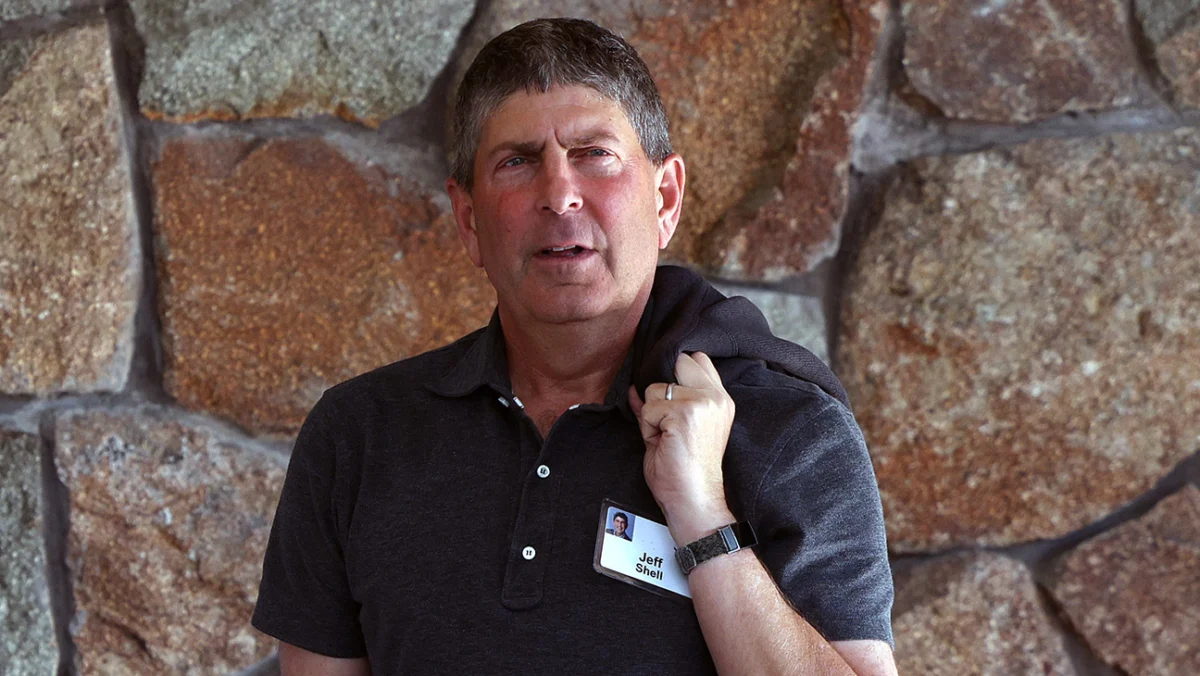
Jeff Shell, the former high-ranking Paramount Global executive, has launched a counter-lawsuit against R.J. Cipriani, his former public relations adviser, alleging extortion and defamation. This legal maneuver comes in response to Cipriani’s earlier lawsuit accusing Shell of reneging on a business deal and, more significantly, for sparking an internal investigation and a federal inquiry into Shell’s conduct related to a multi-billion-dollar UFC media rights agreement.
The legal battle unfolds against a backdrop of corporate scrutiny and high-stakes media deals, drawing attention to the intricate relationships between powerful executives and their consultants. Shell’s lawsuit, filed Monday in California state court, claims Cipriani threatened to make false accusations about federal securities law violations unless his demands were met, describing Cipriani’s narrative as an "utterly false tale" aimed at leveraging a lucrative settlement.
The Unraveling of a Business Relationship
At the heart of the dispute lies the complex and now acrimonious relationship between Jeff Shell and R.J. Cipriani. Shell, who previously served as the CEO of Paramount Global’s film and entertainment group, held a pivotal position within one of Hollywood’s most prominent studios, overseeing its vast content portfolio. Cipriani, a figure described in some circles as a "high-stakes gambler," had been providing public relations and crisis communication services to Shell.
The initial seeds of discord were sown when Cipriani alleged that Shell backed out of a deal to pick up an English-language format of a Roku reality show. Cipriani claimed he co-created and executive produced this show and that its acquisition by Shell was agreed upon as payment for his crisis communication services. This alleged breach of contract formed the basis of Cipriani’s original lawsuit against Shell.
A Chronology of Accusations and Legal Maneuvers
The narrative escalated dramatically when Cipriani expanded his claims beyond a simple contractual dispute. He began to accuse Shell of far more serious misconduct: allegedly disclosing confidential details about Paramount’s highly sensitive $7.7 billion UFC media rights deal. These disclosures, Cipriani claimed, occurred almost a month before the official August 2025 announcement, potentially constituting a violation of federal securities laws.
Cipriani’s allegations triggered a ripple effect, prompting an internal investigation by Paramount Global and, crucially, an inquiry by the U.S. Securities and Exchange Commission (SEC). Such an SEC investigation is a serious matter, potentially leading to significant penalties for individuals and corporations if market manipulation or insider trading is found. Shell’s counter-lawsuit frames Cipriani’s actions not as legitimate whistleblowing, but as a calculated "extortionate campaign" designed to force a multi-million dollar settlement through false and damaging accusations.
High Stakes in Hollywood and Beyond
The legal showdown between Jeff Shell and R.J. Cipriani carries substantial implications, extending far beyond a personal feud. For Shell, a former top executive at a major media conglomerate, the accusations threaten to tarnish a career built over decades. While his tenure at Paramount Global ended in April 2023 following an investigation into alleged workplace misconduct, these new allegations related to the UFC deal during his time there add another layer of complexity to his professional legacy.
The claims of securities law violations are particularly grave in the corporate world. Premature disclosure of material non-public information, especially concerning a deal as substantial as the $7.7 billion UFC media rights, could potentially influence stock prices and provide an unfair advantage to certain investors. This places Paramount Global under renewed scrutiny regarding its internal controls and executive oversight, even if the allegations are ultimately proven false.
Scrutiny on Corporate Dealings
The public nature of this dispute casts a spotlight on corporate governance and the ethical conduct expected of senior executives within the entertainment industry. Major media rights deals, such as the one between Paramount and UFC, are crucial revenue streams and strategic assets for companies. Any suggestion of impropriety in their handling can erode investor confidence and damage a company’s reputation.
Furthermore, the case highlights the often-fraught relationship between high-profile individuals and their public relations advisers. While PR professionals are engaged to manage reputations and navigate crises, the line between legitimate advocacy and aggressive tactics can become blurred, especially when personal and financial stakes are high. The entertainment industry, known for its fierce competition and rapid information flow, is particularly vulnerable to such disputes.
The Path Ahead for Legal Battles
The dueling lawsuits set the stage for a protracted and potentially contentious legal battle. Shell’s counter-complaint for extortion and defamation seeks to invalidate Cipriani’s original claims, portraying them as malicious fabrications. Proving extortion requires demonstrating that Cipriani used threats to compel Shell into an action (e.g., paying a settlement), while defamation would involve proving that Cipriani made false statements that harmed Shell’s reputation.
Conversely, Cipriani will need to substantiate his claims regarding the reality show deal and, more critically, the alleged premature disclosure of the UFC deal details. The SEC inquiry, running concurrently with the civil lawsuits, will independently investigate the facts surrounding the UFC deal, potentially leading to its own findings and enforcement actions. The outcome of these legal proceedings will not only determine the financial liabilities and reputational standing of both Shell and Cipriani but could also influence how whistleblower claims are perceived and handled within corporate America, particularly in the highly competitive media landscape.
As discovery unfolds, both parties will be compelled to present evidence supporting their respective allegations, offering a rare glimpse into the inner workings of high-level corporate dealings and the personal dynamics that can sometimes derail them. The legal and reputational fallout from this intricate dispute remains uncertain, but its ramifications will undoubtedly resonate throughout Hollywood and the broader corporate world for some time to come.