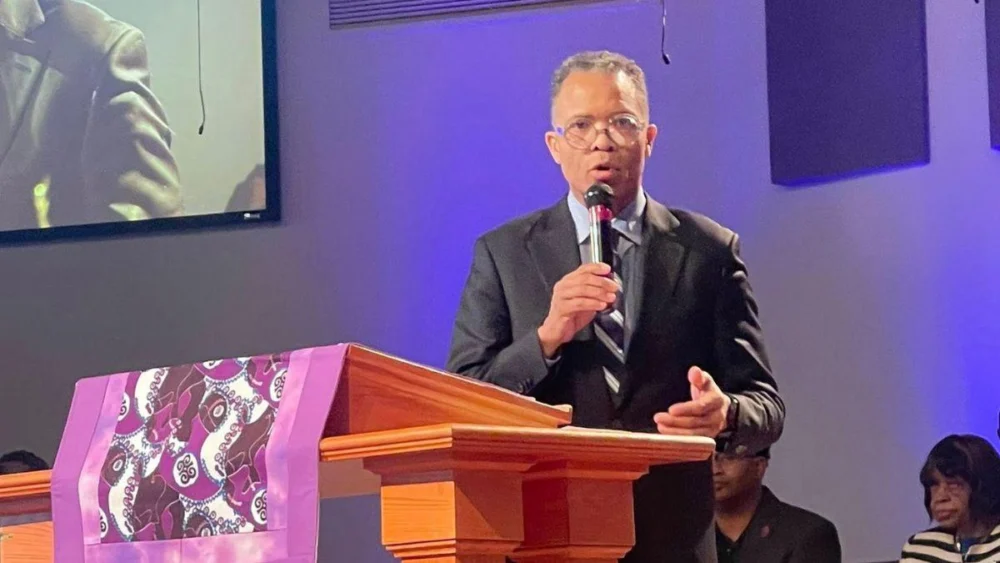
Jesse Jackson Jr., the son of the revered civil rights leader Rev. Jesse Jackson Sr., delivered a sharp rebuke to former Presidents Barack Obama and Joe Biden, along with former President Bill Clinton, accusing them of exploiting his father’s public funeral to launch veiled political attacks against Donald Trump. The extraordinary criticism unfolded during a private memorial service in Chicago, held a day after the prominent Democratic figures delivered eulogies at the public farewell to the elder Jackson, who passed away in February at age 84.
The Passing of a Civil Rights Icon
The nation mourned the loss of Rev. Jesse Jackson Sr., a towering figure in American civil rights, who died on February 17, 2026, at his Chicago home after a long battle with Parkinson’s disease. Jackson Sr.’s life was a testament to unwavering advocacy for justice and equality. A protégé of Dr. Martin Luther King Jr., he rose to prominence during the tumultuous Civil Rights Movement, later founding the influential Rainbow PUSH Coalition. His groundbreaking presidential campaigns in 1984 and 1988 shattered barriers, giving voice to marginalized communities and introducing the concept of a "Rainbow Coalition" that sought to unite diverse groups under a common banner of social and economic justice. His legacy extended beyond domestic politics, encompassing global diplomatic efforts and humanitarian initiatives.

A Public Farewell and Presidential Tributes
The public funeral service, held on Friday, March 6, at the House of Hope in Chicago, was a grand affair befitting a figure of Jackson Sr.’s stature. Dignitaries, civil rights leaders, and thousands of mourners gathered to pay their respects. Among the most anticipated speakers were three former Democratic presidents: Bill Clinton, Barack Obama, and Joe Biden. While eulogies at such events typically focus on celebrating the life and achievements of the deceased, the addresses by Obama and Biden quickly drew attention for their pronounced political undertones, which many interpreted as indirect criticisms aimed at the then-current administration of Donald Trump.
Political Undertones Emerge in Eulogies
During their addresses, both former Presidents Obama and Biden delivered what many observers characterized as stark warnings about the state of the nation, interwoven with their tributes to Rev. Jackson Sr. Their remarks, though not explicitly naming Donald Trump, contained language widely understood to be critical of his presidency and political style. Obama, in particular, spoke of a "new assault on our democratic institutions" and decried a climate where "we’re told by those in high office to fear each other and to turn on each other." He lamented that "some Americans count more than others, and that some don’t even count at all," adding that "everywhere we see greed and bigotry being celebrated, and bullying and mockery masquerading as strength." These statements echoed common critiques leveled against Trump’s rhetoric and policies.

Former President Joe Biden, in his turn, also contributed to the politically charged atmosphere, asserting that the current administration did not share "any of the values that we have." While former President Bill Clinton’s speech largely steered clear of overt political commentary, the remarks from Obama and Biden created a palpable tension, suggesting that even a solemn funeral could not escape the deep partisan divisions gripping the country.
Kamala Harris Joins the Fray
Adding to the chorus of implied criticism was Vice President Kamala Harris, who also delivered remarks during the public service. Harris alluded to current national challenges, stating that she had "predicted a lot about what’s happening right now." She continued, "I’m not into saying ‘I told you so,’ but we did see it coming." Harris then tied her remarks back to the late civil rights leader, expressing regret that "what I did not predict is that we would not have Jesse Jackson with us right now to help us get through this." Her comments further solidified the perception that the funeral platform was being used to express dissatisfaction with the political landscape dominated by the Trump administration.
A Son’s Scathing Rebuttal

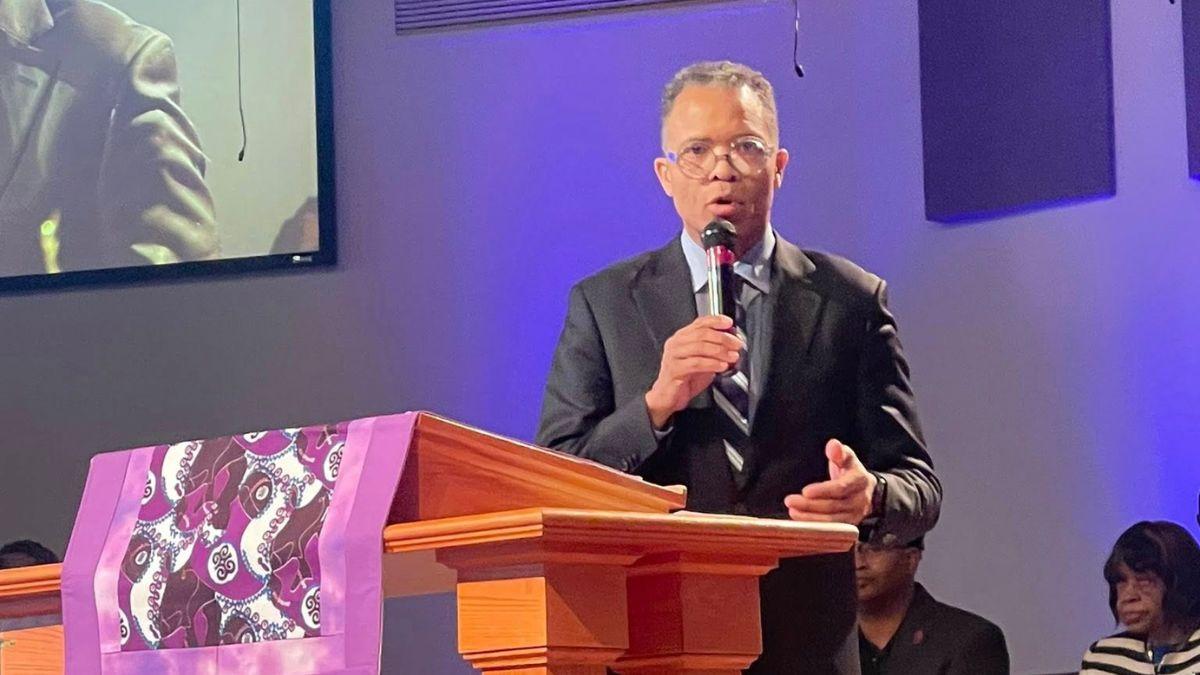
The following day, at a private memorial service held at the Rainbow PUSH Coalition headquarters in Chicago, Jesse Jackson Jr. delivered a powerful and emotional eulogy that directly confronted the preceding day’s presidential addresses. He expressed profound dissatisfaction with what he had heard, declaring, "Yesterday, I listened for several hours to three United States presidents who do not know Jesse Jackson." This cutting remark set the tone for his impassioned speech, in which he accused the presidents of failing to grasp the true essence of his father’s life and work. The sentiment suggested that their eulogies, rather than reflecting a deep understanding of Rev. Jackson Sr.’s enduring principles, were instead tailored to serve contemporary political agendas.
The Essence of Rev. Jackson’s Legacy
Jackson Jr. elaborated on his father’s unique position in American history, describing him as a figure who "maintained a tense relationship with the political order." He emphasized that this tension was not based on race or partisanship but on "the demands of our message, the demands of speaking for the least of these — those who are disinherited, the damned, the dispossessed, the disrespected." According to Jackson Jr., his father’s voice "demanded not Democratic or Republican solutions, but demanded a consistent, prophetic voice that at no point in time ever sold us out as people." This distinction was crucial to Jackson Jr.’s argument, implying that the former presidents had reduced his father’s universal, morally driven mission to a partisan political tool, particularly when using his funeral to shade Donald Trump. "And it speaks volumes about who the Rev. Jesse Jackson was," the grieving son concluded, highlighting the perceived mischaracterization of his father’s legacy.
A Plea for Decorum Ignored
Adding another layer to the controversy, Jesse Jackson Jr. had reportedly made an explicit request ahead of his father’s services for attendees to refrain from bringing politics into the proceedings. He had publicly stated, "Do not bring your politics out of respect to Rev. Jesse Jackson, and the life that he lived, to these ongoing services. Come respectful, and come to say thank you." He stressed that the services were "welcome to ALL—Democrat, Republican, liberal, and conservative. Right-wing, left-wing. Because his life is broad enough to cover the full spectrum of what it means to be an American." The subsequent remarks by Obama, Biden, and Harris were thus seen by the Jackson family as a direct disregard for this heartfelt plea, transforming a moment of national mourning into a partisan battleground.
The Uninvited Presence: Donald Trump
Notably absent from the public funeral service was then-President Donald Trump. While his attendance might have further complicated the political dynamics, his absence meant that the criticisms delivered by the Democratic leaders, though implicit, were effectively unchallenged from a Republican perspective within the context of the eulogies. The decision by Obama and Biden to use their platforms to deliver pointed, albeit indirect, criticisms of the Trump administration, despite the solemn occasion, underscored the intense political polarization prevalent in the country.
Broader Implications for Political Discourse
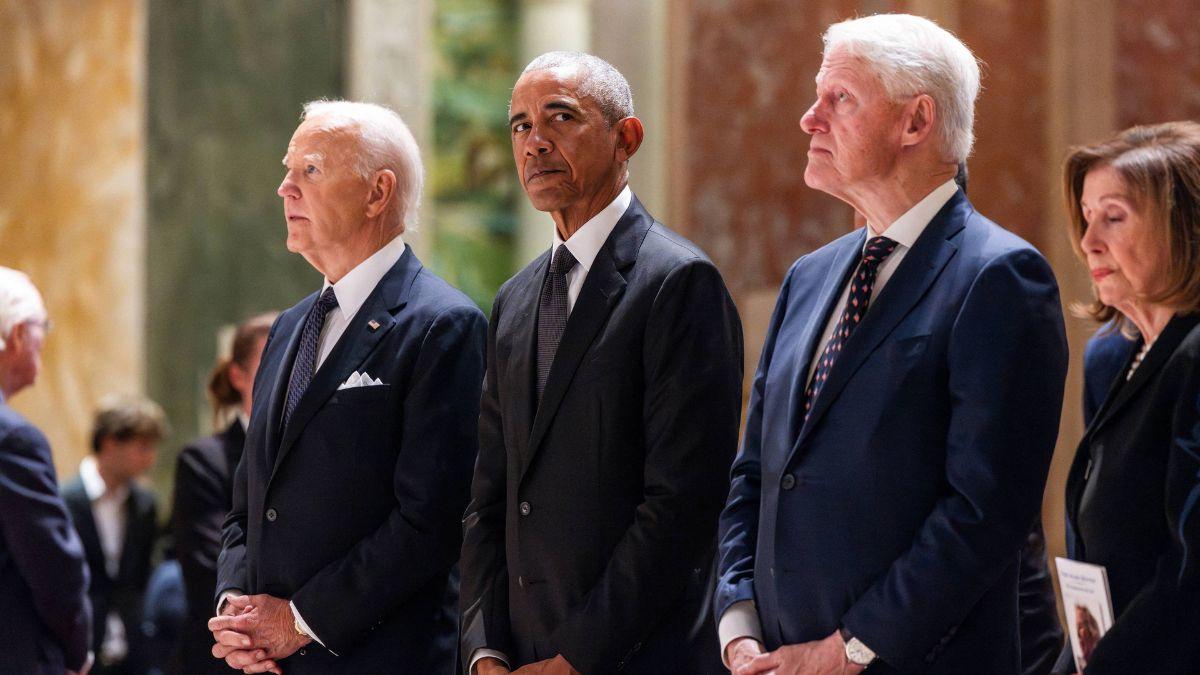
The incident at Rev. Jesse Jackson Sr.’s funeral ignited a broader discussion about the boundaries of political expression, particularly during events traditionally reserved for solemn remembrance. Critics argued that politicizing a funeral, especially one for a figure of national significance like Jackson Sr., was disrespectful to the deceased and his family, detracting from the true purpose of the memorial. Proponents, however, might argue that a civil rights leader’s life is inherently political, and thus, reflecting on the current state of the nation is a natural extension of honoring his legacy. This clash of perspectives highlighted the pervasive nature of political divisions in contemporary American society, where even moments of collective grief can become arenas for partisan conflict.
The Jackson Family’s Stance
The Jackson family’s public stance, articulated through Jesse Jackson Jr.’s powerful words, was a clear appeal to honor Rev. Jackson Sr.’s universal contributions to humanity rather than allowing his passing to be co-opted for narrow political gain. Their desire for a non-partisan tribute reflected a hope that the civil rights leader’s legacy could transcend the political fractures he spent his life trying to heal. The family’s public expression of dismay served as a poignant reminder of the personal impact when high-profile public events intersect with intensely personal moments of grief.
This extraordinary exchange at the funeral of a towering civil rights figure laid bare the deep political fault lines running through American society. It demonstrated how even in moments of collective mourning, the temptation to use public platforms for partisan messaging can override traditional expectations of decorum, leading to significant public and family reaction.