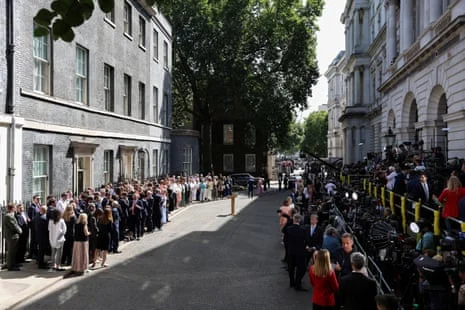
Keir Starmer delivered his final address as prime minister from the steps of 10 Downing Street on Monday, marking the end of a turbulent chapter in British governance and clearing the path for Andy Burnham to take the reins of the United Kingdom. The transition of power comes as the Labour Party seeks to reset its relationship with an increasingly disillusioned electorate, opting for a leadership change mid-term to stave off a projected collapse in public support. Starmer, who led the party to a historic victory in 2024, appeared composed as he thanked his staff and the British public before departing for Buckingham Palace to formally tender his resignation to King Charles III.
The handover marks the sixth time the United Kingdom has changed its head of government in just over a decade, a period defined by Brexit, a global pandemic, and a persistent cost-of-living crisis. While Starmer’s departure was once considered unlikely, internal party polling and a series of strategic missteps made his position untenable, leading to the rapid ascent of Burnham, the former Mayor of Greater Manchester. Burnham, often referred to as the "King of the North," is widely viewed as a more populist and relatable figure than the former Director of Public Prosecutions, Starmer.

The Final Moments of the Starmer Administration
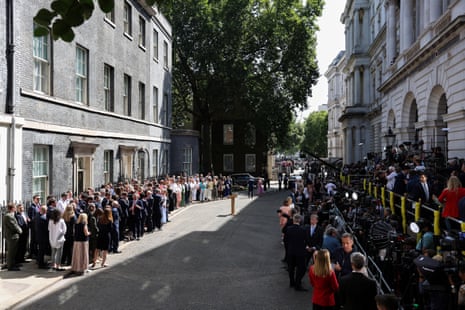
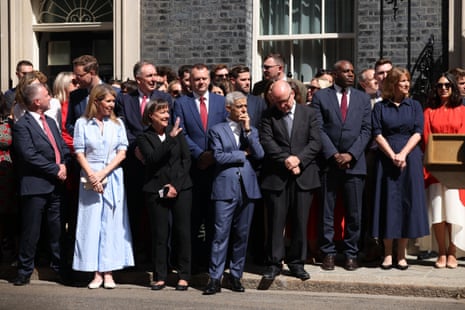
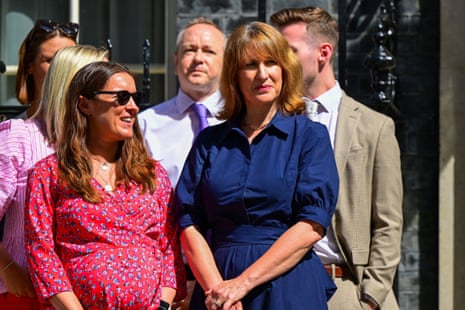
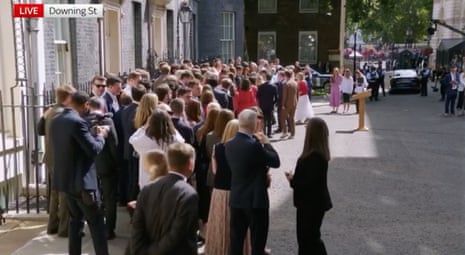
Outside the iconic black door of No. 10, a gathered crowd of ministers, civil servants, and international media watched as Starmer approached the lectern for the last time. His speech was brief and characterized by a sense of duty, emphasizing the importance of a smooth and respectful transfer of power. Starmer’s allies, including Foreign Secretary David Lammy and Chancellor Rachel Reeves, stood nearby, reflecting the somber mood of an administration that felt its work was unfinished but understood the political necessity of the change.
Internal reports suggest that Starmer had become "reconciled" to his departure in recent weeks. Loyalists within the cabinet noted that his background in law provided him with a unique perspective on the temporary nature of political office. Unlike some of his predecessors who fought to remain in power until the final moment, Starmer reportedly viewed this transition as a necessary step to ensure the Labour Party’s longevity. His departure clears the way for a major cabinet reshuffle, which is expected to begin immediately after Burnham is formally appointed.
Andy Burnham Set to Become New Prime Minister with a Focus on Reform
As Andy Burnham set to become new prime minister, he signaled a radical departure from the "conventional politics" of the last decade. In an extensive interview with the Times ahead of his appointment, Burnham outlined a vision for a government that prioritizes "early intervention" and "tangible results" over Westminster-centric policy-making. He emphasized that his administration would be judged on whether it could break the cycle of failure that has plagued British public services for years.
One of Burnham’s most significant early moves is the decision to scrap Starmer’s controversial digital ID scheme. The project, which was a cornerstone of Starmer’s modernization agenda, had faced criticism regarding privacy concerns and implementation costs. Burnham argued that the resources allocated to the scheme would be better used to address the immediate financial pressures facing British households. By distancing himself from Starmer’s policy, Burnham is attempting to demonstrate a "reset of priorities" that aligns more closely with the concerns of working-class voters.
A Ten-Year Plan for National Renewal
Central to the incoming administration is what Burnham calls a "10-year plan for the country." While the new prime minister acknowledged that his own tenure might not last a full decade, he insisted that the UK requires long-term structural changes rather than short-term fixes. Burnham’s approach suggests a shift toward a more interventionist economic policy, focusing on setting people up for success through early investment in education, housing, and regional infrastructure.
The "10-year plan" is also a strategic move to manage public expectations. By framing his goals within a decade-long window, Burnham is attempting to buy the political capital necessary to navigate the difficult fiscal environment he inherits. He has consistently argued that the country is not in the "right place structurally" and that the public can feel the disconnect between Westminster’s rhetoric and their daily reality. This long-term framing is intended to provide a sense of stability after years of rapid leadership turnover.
Addressing the Cost-of-Living Crisis and Taxation
As Andy Burnham set to become new prime minister, the immediate challenge remains the economic squeeze on the British public. Burnham has promised "early moves" to alleviate the cost-of-living crisis, though he has remained vague on the specifics of his upcoming Treasury announcements. He has frequently cited conversations with residents in his former constituency of Makerfield, noting that many families can no longer afford small luxuries like a Friday night pint or a family holiday.
On the issue of taxation, Burnham is navigating a delicate balance. While he previously suggested that higher earners might need to pay "a little more," he has recently dismissed claims that he is an "inherent tax raiser." He expressed specific frustration with the freeze on the personal allowance, which has functioned as a stealth tax on lower and middle-income earners as inflation pushes wages into higher brackets. While he stopped short of promising an immediate reversal of the freeze—a move that would cost the Treasury billions—he indicated that his administration would look for ways to make the tax system more equitable.
Cabinet Reshuffles and the Departure of James Timpson
The transition has already triggered significant shifts within the government’s ranks. James Timpson, the high-profile prison minister known for his liberal stance on penal reform, resigned on Monday morning. Timpson, a businessman who rose to prominence for hiring ex-offenders at his family shoe company, was a surprise appointment by Starmer. His departure is seen as an indicator that Burnham intends to bring in a new team more closely aligned with his specific brand of Labour politics.

Speculation in Westminster suggests that Sally Jameson, the MP for Doncaster Central and a former prison officer, may be tapped to replace Timpson. Burnham’s strategy appears to involve giving ministers the opportunity to resign gracefully rather than facing public dismissals. This approach is part of his broader effort to maintain party unity during the transition, ensuring that the "whole party" remains behind him as he takes office.
Personal Style and the "Everton" Approach to Leadership
Burnham’s personal brand is a significant asset as he enters No. 10. A lifelong Everton season ticket holder, he has reportedly negotiated with Downing Street security to continue attending matches in his regular seat in the stands, rather than the directors’ box. He argued that sitting with the fans allows him to hear "straws in the wind" and stay connected to the public mood. "Every game would be a mega focus group on me," Burnham noted, emphasizing his desire to avoid the "Westminster bubble."
His background as a Catholic and his family life also play a role in his public persona. Burnham has spoken candidly about his father, who suffers from dementia and is unaware of his son’s ascent to the premiership. He also revealed that he has come around to supporting proportional representation (PR), a long-held mission of his father’s. This openness about his personal life is a hallmark of his "different way" of doing politics, which he hopes will foster a deeper sense of trust with the electorate.
Navigating a Divided Political Landscape
As Andy Burnham set to become new prime minister, he faces a formidable opposition and a divided Parliament. Despite his Labour roots, Burnham has expressed a willingness to find "common ground" with rivals, including Conservative leadership contender Kemi Badenoch and Reform UK’s Nigel Farage. He has praised Badenoch’s capabilities and Farage’s communication skills, suggesting a more pragmatic and less tribal approach to legislative battles.
However, the honeymoon period for the new prime minister is expected to be short. The Conservative Party has already begun characterizing Burnham as a "big spender," while the Reform UK party continues to peel away voters from Labour’s traditional heartlands. Burnham’s success will depend on his ability to translate his personal popularity into effective governance that produces "tangible differences" in the lives of the British people within his first year in office.
The Road Ahead for the United Kingdom
The departure of Keir Starmer and the arrival of Andy Burnham represents more than just a change in leadership; it is a fundamental test of the Labour Party’s ability to govern in a post-Brexit, post-pandemic era. The UK remains a nation grappling with stagnant growth, a struggling National Health Service, and deep regional inequalities. Burnham’s "10-year plan" is an ambitious attempt to address these systemic issues, but the political and economic hurdles remain immense.
As the moving vans arrive at Downing Street and the new cabinet begins to take shape, the eyes of the world are on London. The transition from Starmer to Burnham is a high-stakes gamble for a country that has seen too many prime ministers come and go. Whether Burnham can deliver on his promise of a "different way" of governing will determine not only the fate of the Labour Party but the future stability of the United Kingdom.