The U.S. Treasury Department has issued a limited sanctions waiver authorizing the purchase of approximately 140 million barrels of Iranian oil currently at sea, a move designed to stabilize global energy markets as President Donald Trump suggests the military campaign against Tehran may be nearing its conclusion. The sanctions license, which applies to oil loaded onto vessels prior to early Friday morning, provides an exemption for buyers until April 19, effectively allowing a massive influx of crude to reach international refineries.
Treasury Secretary Scott Bessent confirmed the move, noting that the release represents roughly 10 to 14 days of supply that had previously been destined for China. By "un-sanctioning" this specific volume of oil, the administration intends to alleviate the sharp spike in petroleum prices triggered by the ongoing conflict. Bessent characterized the strategy as a tactical maneuver, stating that the U.S. is essentially using Iranian resources to lower prices while the military campaign continues to degrade the regime’s infrastructure.
This economic shift coincides with a significant claim from the White House regarding the trajectory of the war. President Trump stated on Friday that the United States is "getting very close to meeting our objectives" and is actively considering "winding down" military efforts against the Iranian government. Despite this rhetoric of de-escalation, the military reality on the ground remains volatile, with the Israel Defense Forces (IDF) launching fresh waves of airstrikes against "regime targets" in the heart of Tehran.

Israel Hits Tehran Again: The Air Campaign Intensifies
The Middle East crisis reached a new peak of intensity early Saturday as the IDF reported striking ballistic missile sites and other critical infrastructure in the Iranian capital. These attacks followed several rounds of Iranian missile fire directed at Israeli territory, which triggered air raid sirens across vast swaths of the country. While the IDF claimed to have intercepted the majority of incoming threats, the exchange underscores the persistent danger of a broader regional conflagration.
The Israeli military has maintained a near-daily bombardment of Tehran since the conflict began on February 28. In recent statements, Israeli Prime Minister Benjamin Netanyahu suggested that while the air campaign has "decimated" Iran’s senior leadership and its ability to enrich uranium, a permanent shift in the country’s political landscape may require a "ground component." Netanyahu’s comments have highlighted a potential rift between Washington and Jerusalem, as President Trump has publicly stated he has no immediate plans to deploy ground troops.
The humanitarian toll of the air campaign continues to mount, particularly in neighboring Lebanon. The Lebanese health ministry reported that over 1,000 people, including more than 100 children, have been killed since the Israeli offensive expanded on March 2. The strikes have targeted Hezbollah strongholds in Beirut’s southern suburbs, leading to the displacement of roughly one-fifth of Lebanon’s population.
US Eases Sanctions on Iranian Oil to Combat Energy Inflation
The decision to ease sanctions on Iranian oil at sea is a direct response to the economic shockwaves felt across the globe. Crude prices have consistently hovered above $100 a barrel since the outbreak of hostilities, causing severe disruptions in transport and manufacturing sectors. The 140 million barrels authorized by the Treasury represent a significant portion of the "ghost fleet" supply that Iran had been attempting to export despite previous restrictions.
The impact of high energy costs has been particularly acute in Southeast Asia. In Thailand, the government has ordered strict energy conservation measures, while the Philippines has moved government employees to a four-day workweek to reduce consumption. In Vietnam, petrol prices surged by 20% on Friday alone. By allowing this oil to enter the market, the Trump administration hopes to provide a temporary cushion for these struggling economies.
However, the relief may be short-lived. The International Energy Agency (IEA) recently warned that restoring regular oil and gas flows through the Persian Gulf could take up to six months. Fatih Birol, the IEA chief, described the current situation as potentially the most severe energy crisis in modern history, noting that the destruction of processing facilities like Iran’s South Pars gas field will have long-term consequences for global supply chains.
Tensions Over the Strait of Hormuz and International Navigation
As the US eases sanctions on Iranian oil, the security of the Strait of Hormuz remains a primary concern for the international community. Iran has effectively restricted the waterway, leading to a joint statement from a coalition of over 20 nations—including the UK, France, Germany, Japan, and Canada—pledging to ensure safe passage for commercial shipping. The coalition has called for an immediate moratorium on attacks against civilian energy infrastructure.
President Trump has been sharply critical of NATO allies during the Middle East crisis, labeling some members "cowards" for their perceived reluctance to participate in naval patrols. Trump has asserted that since the U.S. does not rely on the Strait for its own energy needs, other nations that use the waterway must take the lead in "guarding and policing" it. He suggested that once the Iranian threat is fully eradicated, reopening the Strait would be an "easy military operation" for the coalition.
In a rare diplomatic overture, Iranian Foreign Minister Abbas Araghchi indicated that Tehran is ready to facilitate the passage of Japanese vessels through the Strait, provided there is coordination. Japan relies on the Middle East for more than 90% of its crude imports, making it uniquely vulnerable to the de facto closure of the waterway. Araghchi emphasized that while the Strait is not officially closed, restrictions remain in place for countries involved in attacks against Iran.
Escalation Beyond the Middle East: The Diego Garcia Incident
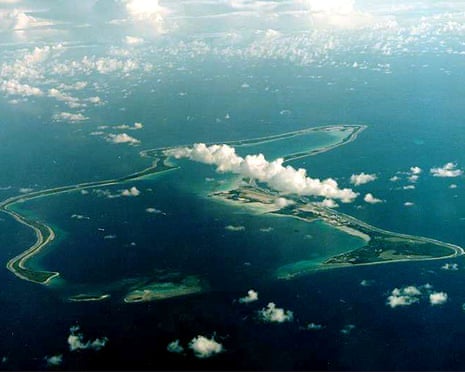
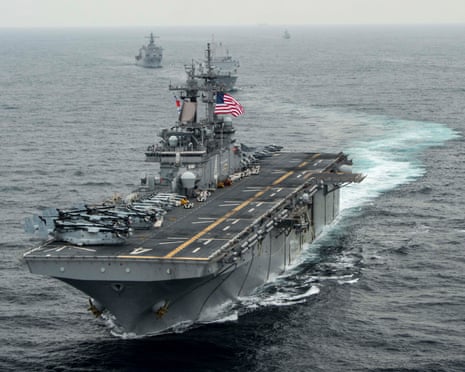
The geographical scope of the conflict expanded significantly this week following reports that Iran fired two intermediate-range ballistic missiles at the joint U.S.-U.K. military base on Diego Garcia. Located in the Indian Ocean, approximately 4,000 kilometers from Iran, the base serves as a vital staging post for U.S. heavy bombers. While neither missile hit the target—one failed in flight and the other was targeted by a U.S. warship’s interceptor—the attempt marks a major escalation.
Military analysts suggest that the targeting of Diego Garcia implies Iran possesses missile technology with a much greater range than previously acknowledged by Tehran. This development has raised concerns about the safety of other U.S. overseas interests. The incident also touched upon British political sensitivities; President Trump expressed disappointment in U.K. Prime Minister Keir Starmer regarding the sovereignty of the Chagos Islands, where Diego Garcia is located, further complicating the trans-Atlantic alliance during the crisis.
Domestic Dissent and the ‘Echo Chamber’ Allegations
Within the United States, the administration faces internal scrutiny over its handling of the war. Joe Kent, the former director of the U.S. National Counterterrorism Center, resigned this week in protest. In a televised interview, Kent alleged that a "bubble" or "echo chamber" had been created around President Trump, led by Israeli officials and pro-war advocates in the U.S. Senate.
Kent argued that the administration was pressured into the conflict without firm evidence of an imminent threat from Tehran. He compared the current rhetoric of "military victory" to the optimistic but misleading briefings provided during the Vietnam War, suggesting that the U.S. government is "detached from reality" regarding the true state of Iranian resistance. These allegations have fueled a growing debate in Washington over the long-term objectives of the military campaign and the potential for an exit strategy.
Broader Consequences: Airlines and War Crimes Investigations
The economic fallout of the Middle East crisis has reached the U.S. aviation industry. Scott Kirby, CEO of United Airlines, announced that the carrier will cancel approximately 5% of its planned flights this year due to the skyrocketing cost of jet fuel. Kirby noted that if fuel prices remain at current levels, the airline faces an additional $11 billion in annual expenses. Other major carriers are expected to follow suit, leading to higher ticket prices and reduced travel options for the public.
On the legal front, United Nations Secretary-General António Guterres stated there are "reasonable grounds" to believe that both sides in the conflict may have committed war crimes. Guterres specifically cited the targeting of civilian energy infrastructure and the resulting impact on non-combatant populations. The UN chief expressed concern that the strategic goal of total regime change is leading to a disregard for international humanitarian law.
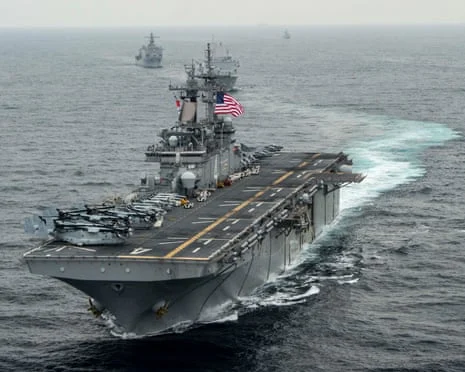
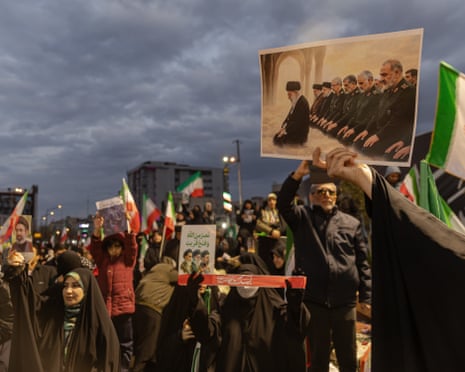
As Iranians mark Nowruz, the Persian New Year, the region remains at a crossroads. While the US eases sanctions on Iranian oil and President Trump speaks of winding down the war, the continued strikes on Tehran and the mobilization of additional U.S. Marines to the region suggest that the Middle East crisis is far from over. The coming weeks will determine whether the temporary sanctions waiver is a precursor to a ceasefire or merely a tactical pause in a much longer conflict.