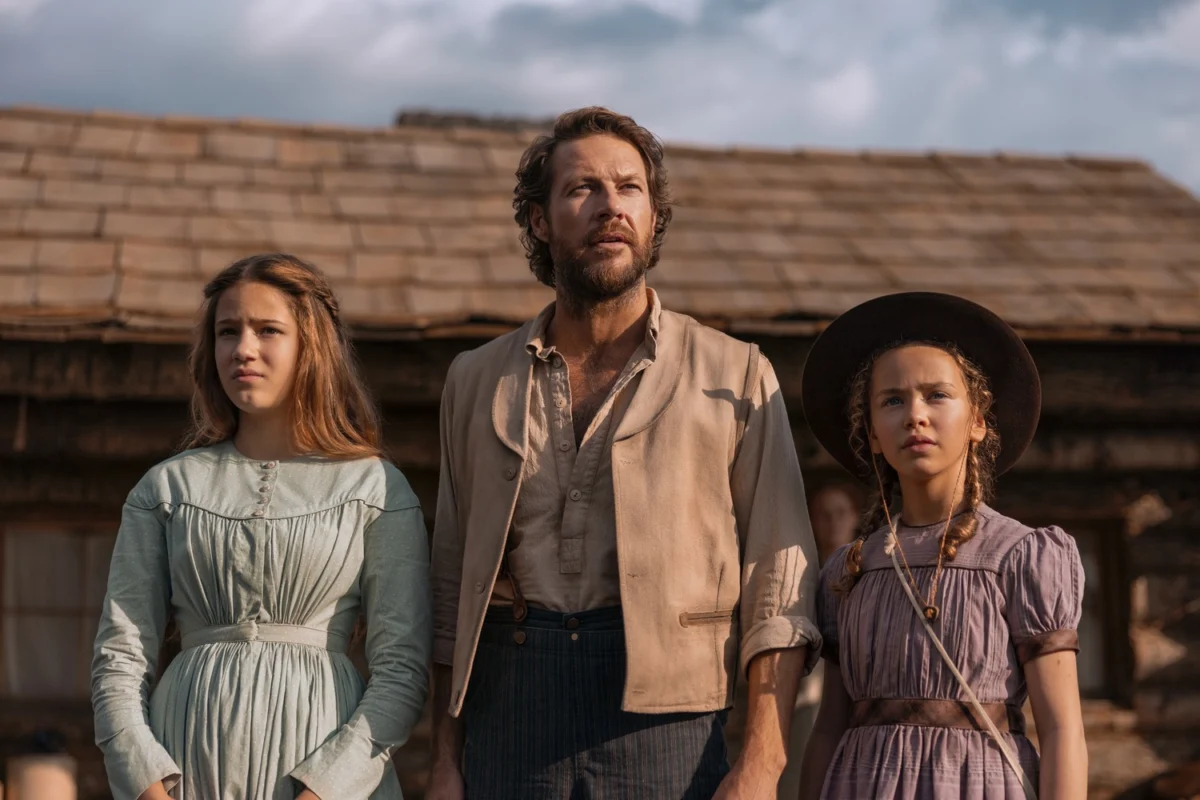
Australian actor Luke Bracey has revealed his deliberate approach to portraying Charles Ingalls in Netflix’s new adaptation of Little House on the Prairie, emphasizing a humanized, imperfect patriarch rather than the idealized figure often depicted in the original books and previous television series. Bracey, who admitted to minimal prior knowledge of Laura Ingalls Wilder’s beloved saga before auditioning, stated that the creative team’s vision was to present Charles as a good man who genuinely means well but is prone to mistakes and naiveté, a departure from a perfectly flawless character.
A Fresh Perspective on a Beloved Classic
Little House on the Prairie, based on Laura Ingalls Wilder’s semi-autobiographical novels, holds a significant place in American cultural history, chronicling the pioneering experiences of a family in the American West during the late 19th century. The stories, and the immensely popular 1970s and 80s television series starring Michael Landon as Charles Ingalls, have long been cherished for their portrayal of resilience, family values, and the challenges of frontier life. Netflix’s new adaptation, however, aims to bring a contemporary lens to this classic narrative, exploring the complexities and less romanticized aspects of the Ingalls’ journey.
Bracey’s casting as Charles Ingalls was unique given his initial unfamiliarity with the source material. This lack of preconceived notions, he explained to The Hollywood Reporter, proved to be an unexpected advantage, allowing him to approach the character with a fresh perspective. Showrunner Rebecca Sonnenshine’s directive was to evoke the feeling of reading the books as a child, rather than a rigid adherence to every detail. This guidance empowered Bracey to explore Charles’s character beyond the often-perfect depiction found in Laura’s childhood memories, allowing for a more nuanced and relatable portrayal.
Charles Ingalls’ Optimism Meets Frontier Reality
The first season of the Netflix series introduces viewers to Charles Ingalls, his wife Caroline (Crosby Fitzgerald), and daughters Mary (Skywalker Hughes) and Laura (Alice Halsey) as they embark on a journey from Wisconsin to Independence, Kansas. Their move is fueled by Charles’s boundless optimism and the promise of abundant, inexpensive land, a new beginning after an unspecified family rift. However, this hopeful start quickly collides with the harsh realities of frontier life.
Charles’s “cup overfloweth” optimism, as Bracey described it, is a defining trait that also leads to significant challenges. His belief in the inherent goodness of people and situations makes him susceptible to false promises and unforeseen hardships. Early interactions, such as with Dr. Tann (Jocko Sims), serve as a stark reminder that self-reliance alone is insufficient for survival on the prairie, underscoring the naiveté embedded in Charles’s optimistic worldview.
By the end of the inaugural season, the Ingalls family faces considerable setbacks. The anticipated land deal with the native Osage people falls through, revealing Charles was sold a false promise. A devastating fire then wipes out their nascent crops, compelling the family to pack up and seek another home. These trials expose the vulnerabilities of Charles’s unwavering hope, demonstrating that even a good man with the best intentions can be outmaneuvered by circumstances and the less scrupulous individuals of the untamed frontier.
The Nuance of a Good Man’s Flaws
Bracey’s portrayal intentionally highlights Charles Ingalls’s capacity for mistakes, distinguishing this adaptation from previous, more sanitized versions. While Charles undeniably possesses a good heart and unwavering dedication to his family, his character in the Netflix series grapples with significant misjudgments. This balance between inherent decency and human fallibility was a key appeal for Bracey. He articulated the rarity of roles depicting a man genuinely striving to be a good husband, father, and community member, particularly in a high-quality production centered on "nice people" who are not immune to error.

The series delves into the consequences of Charles’s excessive optimism, particularly how it can border on naiveté. He is depicted as someone who desperately wants the best outcome, making him vulnerable to the assurances of figures like Eli James (Michael Hough), who sells an enticing, albeit ultimately misleading, dream. This exploration of Charles’s character grounds the narrative in a more realistic depiction of pioneer struggles, where even the most well-intentioned decisions can lead to hardship. The underlying message, however, remains Charles’s profound resilience: his ability to rise again after every setback, maintaining his desire to be a good man and his core identity.
Broader Implications and Cultural Resonance
The Netflix adaptation of Little House on the Prairie contributes to a broader trend of re-examining classic American narratives through a more critical and realistic lens. By presenting Charles Ingalls with his faults laid bare, the series offers a nuanced commentary on the myths of westward expansion and the American dream. It acknowledges the often-unseen struggles, the broken promises, and the complex interactions with indigenous populations that were integral to the historical period. This approach allows contemporary audiences to engage with the story in a way that is both nostalgic and thought-provoking, prompting reflection on the past while resonating with modern sensibilities about character authenticity.
The show’s focus on flawed, relatable characters provides a refreshing contrast to some of today’s more cynical or morally ambiguous television content. It upholds the enduring appeal of stories about family bonds, perseverance, and the human spirit’s capacity to endure adversity. By exploring Charles’s journey from a sheltered environment to the "big, wide world" of the frontier, where not everyone shares his good intentions, the series also implicitly comments on the development of individual character and the hard-won wisdom gained through experience.
Looking Ahead: Evolution in Season Two
The dramatic conclusion of the first season, with the Ingalls family forced to leave Independence, sets the stage for significant character development for Charles in the upcoming second season. Bracey indicated that while Charles will never lose his fundamental resilience and ability to "keep getting up," his experiences will undoubtedly temper his outlook. He is expected to be "a little bit more switched on" to the people he encounters, less gullible, and more discerning about who he trusts. This doesn’t mean he will become cynical; rather, he will learn to measure people more carefully, recognizing that while goodness and honesty may exist deep down, not everyone acts with the best intentions. This evolution marks a pivotal growth point for Charles Ingalls as he transitions from Kansas to Walnut Grove.
Season two also promises to introduce iconic characters from the Little House universe, including the formidable Nellie Olesen, to be played by Willa Dunn. The move to Walnut Grove will bring a new sense of domesticity and community for the Ingalls family, with the girls attending school and navigating social interactions beyond their immediate family circle. This shift will allow the series to explore the "wonderful relationships of the girls growing up and learning what it’s like to be a human," moving beyond their initial isolation as sisters on the untamed prairie.
Bracey also spoke highly of his young co-stars, Alice Halsey and Skywalker Hughes, who portray Laura and Mary, respectively. He lauded their kindness, humor, intelligence, and impressive acting talents, particularly Alice’s technical proficiency and emotional availability, and Skywalker’s spontaneity and vibrant energy. Playing a "pretend dad" to such gifted young actresses, Bracey confessed, was initially intimidating, but he expressed a genuine bond with them, believing they reciprocated his affection. Their strong performances are integral to grounding the family dynamics and providing the emotional core of the series.
Ultimately, Netflix’s Little House on the Prairie offers a compelling re-imagination of a beloved American story. By embracing the imperfections of Charles Ingalls and the harsh realities of pioneer life, the series delivers a richer, more complex narrative. It remains a testament to family, resilience, and the enduring human quest for a better life, while providing a fresh, authentic perspective on what it means to be a "good man" striving to navigate an often-unforgiving world.