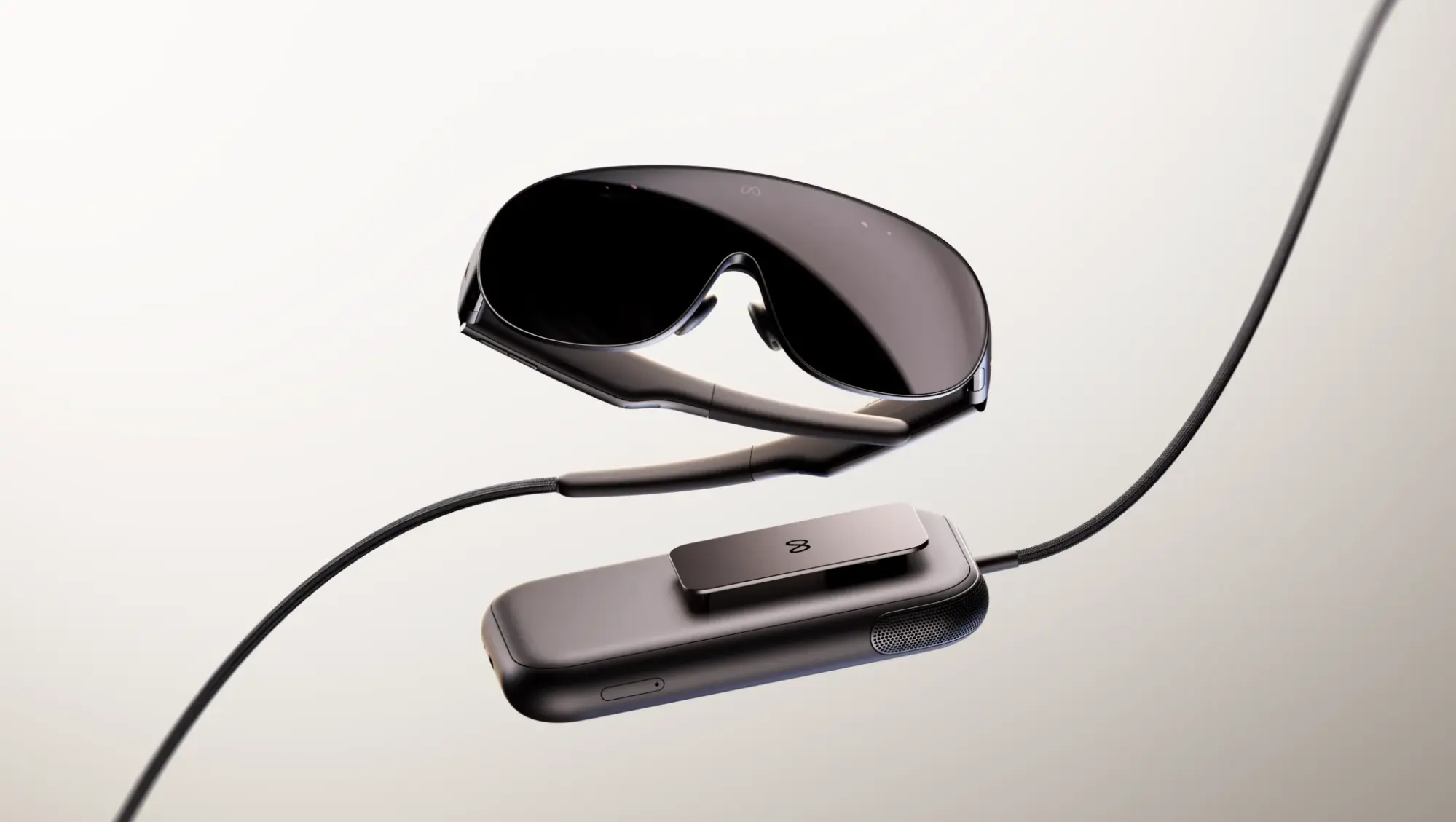
Meta CEO Mark Zuckerberg unveiled the Meta VR glasses at the Meta Connect 2026 conference, signaling a strategic shift toward lightweight wearable hardware that directly challenges the established dominance of the Meta Quest 3. This new device represents the company’s most ambitious attempt to merge the aesthetics of traditional eyewear with the high-performance capabilities of a dedicated virtual reality headset. While the Meta Quest 3 remains the flagship for consumer-grade immersive gaming, the upcoming VR glasses introduce a new tier of "prosumer" hardware designed for all-day wear and advanced social presence.
The announcement marks a pivotal moment for the social media giant as it continues to pivot toward "spatial computing," a term popularized by competitors but now central to Meta’s hardware roadmap. The Meta VR glasses are scheduled for a commercial release in 2027, positioning them as a long-term successor to the current generation of bulky head-mounted displays. By comparing the Meta VR glasses vs Meta Quest 3, it becomes clear that Meta is pursuing two distinct paths: one focused on accessible, self-contained gaming and another on high-end, fashionable utility.
Price Disparity and Market Positioning: Meta VR Glasses vs Meta Quest 3
The most immediate distinction between the two devices is the financial barrier to entry, which dictates the target demographic for each product. The Meta VR glasses are slated to launch at a premium price point of $1,299, reflecting the high cost of miniaturizing complex optical and computing components. This pricing strategy places the glasses in a category closer to high-end laptops or professional-grade tablets, targeting early adopters and enterprise users who prioritize portability.
In contrast, the Meta Quest 3 is currently positioned as the "everyman" VR headset, retailing for approximately $599. This $700 price gap is significant, as the Quest 3 provides a complete out-of-the-box experience including motion controllers and a robust library of existing software. For the price of a single pair of Meta VR glasses, a consumer could theoretically purchase two Quest 3 units and still have funds remaining for software, highlighting the different economic tiers these devices occupy.
Industry analysts suggest that the $1,299 price tag for the glasses is a result of the specialized silicon and custom lenses required to achieve a slim form factor. While the Quest 3 benefits from economies of scale and more traditional manufacturing processes, the VR glasses represent the "bleeding edge" of Meta’s Research and Development (R&D) efforts. This price difference will likely define the market split for years to come, with the Quest line serving the mass market and the VR glasses serving the luxury and professional segments.
Hardware Architecture and the External Computing Puck
A fundamental shift in design philosophy differentiates the Meta VR glasses from the Meta Quest 3. The Quest 3 is a "standalone" device, meaning all the necessary processors, batteries, and cooling systems are housed within the headset itself. While this makes the Quest 3 a convenient all-in-one package, it also contributes to its weight of 515 grams, which can lead to user fatigue during extended sessions.
The Meta VR glasses achieve a significantly lighter profile, weighing in at approximately 100 grams, by offloading the primary computing hardware to an external "puck." This puck is connected to the glasses via a thin, high-bandwidth cable, a design choice similar to the one employed by the Apple Vision Pro. By removing the battery and processor from the user’s face, Meta has managed to create a device that looks and feels more like traditional sunglasses than a computer.

This architectural difference has major implications for comfort and thermal management. The Quest 3 requires internal fans to keep its Snapdragon XR2 Gen 2 chip cool, whereas the VR glasses can dissipate heat through the external puck. However, the requirement of a wired connection to a pocketed or clipped device may be a detractor for users who have grown accustomed to the total wireless freedom of the Quest 3.
Technical Specifications: Meta VR Glasses vs Meta Quest 3 Performance
On a technical level, the Meta VR glasses vs Meta Quest 3 comparison reveals a trade-off between visual immersion and processing power. The upcoming glasses are equipped with a newer, more efficient processor and an increased amount of RAM compared to the Quest 3. This allows the glasses to handle more complex multitasking and higher-fidelity avatars, which are essential for Meta’s vision of the "metaverse."
The glasses also boast a higher display resolution, providing sharper text and clearer images for productivity tasks. However, the Quest 3 maintains a significant advantage in its field of view (FOV). Because the Quest 3 uses a facial interface that blocks out all external light, it provides a much wider and more immersive visual canopy. The VR glasses, by nature of their open-sided design, offer a narrower FOV, which may make virtual objects appear as if they are floating in a smaller "window" in front of the user’s eyes.
Storage is another area of divergence. The Meta Quest 3 comes with generous internal storage options, whereas the VR glasses ship with a lower base storage capacity. To compensate, Meta has included a microSD card slot in the glasses, allowing users to expand their storage as needed. This modular approach to storage is a departure from the Quest series, which has historically lacked expandable memory options.
Advanced Tracking and Social Presence Features
Where the Meta VR glasses truly pull ahead is in the realm of sensory input and social interaction. The glasses are equipped with integrated eye-tracking and face-tracking sensors, features that are notably absent from the standard Meta Quest 3. These sensors allow the device to mirror the user’s real-life expressions onto their digital avatar in real-time, facilitating more natural communication in virtual environments.
Eye-tracking also enables a technology known as foveated rendering, which optimizes processing power by only rendering the area where the user is looking in high detail. This allows the glasses to achieve higher perceived visual quality without overtaxing the battery or processor. While the Quest 3 supports hand tracking, it lacks the hardware necessary for these advanced biometric features, making it less effective for high-fidelity social presence.
Meta also announced that the VR glasses are the first wearable device to receive IMAX certification. This designation suggests that the lenses and displays meet a specific standard of color accuracy and brightness, aimed at users who want a "cinema-like" experience for watching 3D movies. While the Quest 3 is a capable media player, the IMAX certification of the glasses positions them as a premium entertainment device for streaming services like Disney+.
Software Innovations and the "Hologram" Experience
The software ecosystem for the Meta VR glasses vs Meta Quest 3 will share a common foundation, as both run on the Meta Horizon OS. However, Meta is introducing exclusive features for the glasses to take advantage of their unique hardware. One such feature is "Hologram," a new video calling method that utilizes the device’s face-tracking capabilities.

During a "Hologram" call, a user can appear as a life-sized, 3D avatar to other participants, even if those participants are viewing the call on a standard smartphone or tablet. Meta claims this will revolutionize remote work and personal communication by providing a sense of "co-presence" that 2D video calls cannot match. This feature is intended to launch first on the VR glasses, with a phased rollout to other devices in the Meta ecosystem later.
Furthermore, the VR glasses are designed with productivity in mind. They can connect wirelessly or via USB-C to Mac and PC hardware, allowing users to project multiple virtual monitors into their physical workspace. While the Quest 3 also supports desktop virtualization through third-party apps and Meta’s own "Remote Display," the lightweight nature of the glasses makes them a much more practical solution for a full eight-hour workday.
Industry Impact and the Competitive Landscape
The introduction of the Meta VR glasses is widely seen as a response to the growing competition in the spatial computing market. With Apple’s entry into the space and the continued refinement of AR glasses from companies like Xreal and Vuzix, Meta is under pressure to prove that its hardware can remain relevant outside of the gaming niche. The glasses represent a transition from "VR as a toy" to "VR as a tool."
For the broader industry, the move toward a puck-based computing model suggests a consensus among hardware engineers that the current limits of battery and heat dissipation technology prevent a truly "all-in-one" glasses experience. By choosing a 2027 release date, Meta is giving developers three years to build experiences that utilize eye and face tracking, ensuring that a robust library of software is ready for the launch.
The Quest 3 will likely continue to serve as the entry point for most consumers, particularly those interested in fitness and gaming. However, the VR glasses will serve as the "North Star" for Meta’s engineering teams, pushing the boundaries of what is possible in a wearable form factor. The success of the glasses will depend on whether consumers are willing to trade the immersion of a headset for the convenience and social features of high-tech eyewear.
Conclusion and Future Outlook
The comparison of the Meta VR glasses vs Meta Quest 3 highlights a clear fork in the road for wearable technology. The Quest 3 remains a powerhouse for immersive gaming, offering a wide field of view and a lower price point that makes it accessible to a broad audience. It is the culmination of years of refinement in the traditional headset design, prioritizing a "total immersion" experience.
The Meta VR glasses, conversely, are a bet on the future of social interaction and mobile productivity. By prioritizing a lightweight design, eye tracking, and specialized communication features like "Hologram," Meta is attempting to integrate digital experiences into the physical world more seamlessly. While the $1,299 price tag and the 2027 release date are significant hurdles, the glasses represent the most significant evolution of Meta’s hardware philosophy since the original Oculus Rift.
As the industry moves closer to the 2027 launch, the distinction between these two product lines will likely become even more pronounced. The Quest series will continue to evolve as a gaming-first platform, while the VR glasses line will likely focus on replacing the smartphone or laptop for daily tasks. For now, the Meta Quest 3 remains the most practical choice for most users, but the Meta VR glasses offer a compelling glimpse into a future where the line between reality and digital space becomes increasingly thin.