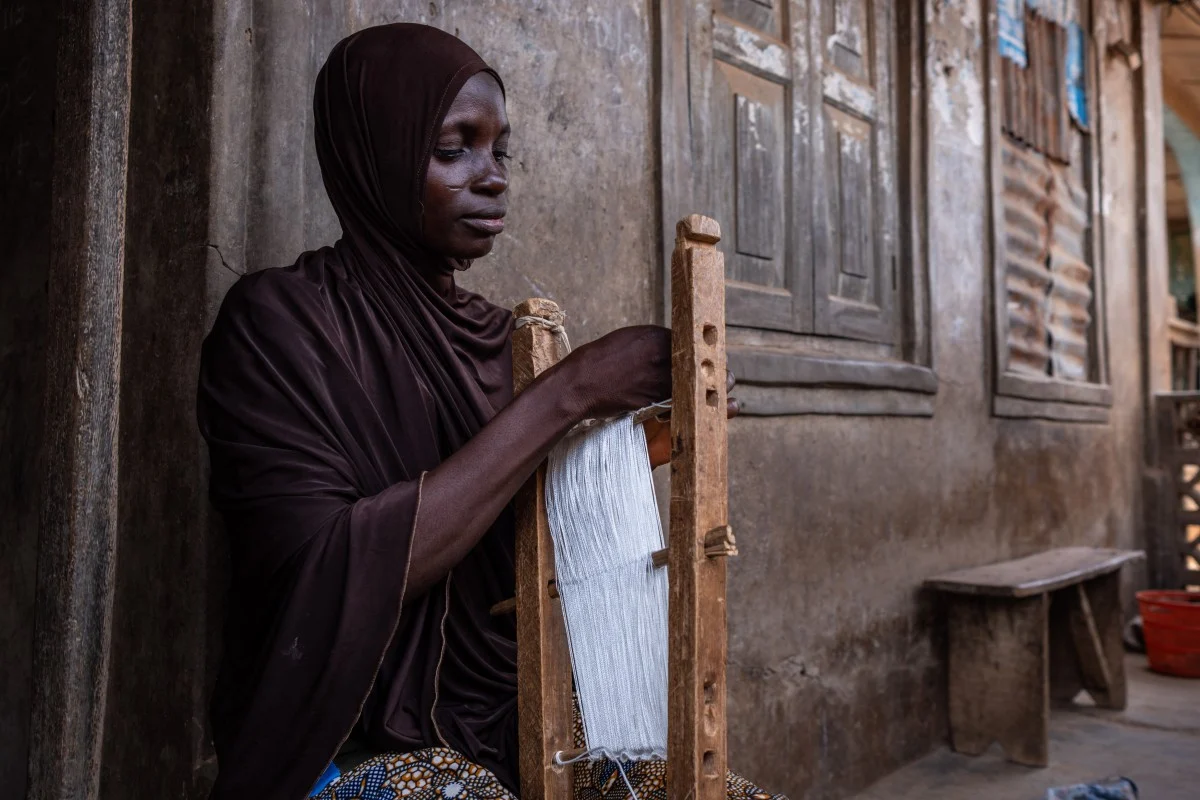
In the quiet, sun-drenched enclaves of Iseyin, a town nestled in southwestern Nigeria, the intricate art of weaving aso-oke thrives, defying the encroaching tide of mass production. Shaded alcoves beneath ancient trees, rudimentary shelters cobbled together from corrugated iron, and narrow, dusty alleyways serve as the vibrant workshops where this indigenous Yoruba fabric is brought to life. Demand for aso-oke has surged dramatically, both within Nigeria and across international borders, propelled by a growing appreciation for Nigerian culture and a diasporic community eager to connect with their heritage. Despite this burgeoning popularity, the artisans of Iseyin remain resolute in their commitment to traditional handweaving methods, viewing mechanization as a threat to the very soul of their craft.
Iseyin, situated approximately 200 kilometers (108 miles) from Lagos, Nigeria’s bustling cultural and fashion epicenter, is widely recognized as the ancestral home of aso-oke. Under the relentless glare of the morning sun, bolts of vividly dyed yarn and freshly woven cloths are stretched across the parched earth, a stark contrast to the weathered sheds where dedicated weavers meticulously work their wooden looms. The craft has evolved into a vital economic engine, drawing in a new generation of artisans, including university graduates, who are eager to learn and perpetuate this time-honored tradition.
Waliu Fransisco, a 34-year-old weaver whose bare chest and tattooed biceps glisten under the heat, exemplifies this migration. His wooden loom hums with a rhythmic click-clack as he transforms cream and blue threads into a striking fabric. Ten years ago, Fransisco traded his microphone as a Lagos nightclub singer for the intricate dance of the loom. While he acknowledges the initial physical demands of the craft, he expresses no regret, stating, "Now I earn a decent living from weaving aso-oke and I’m satisfied."
Aso-oke, a term that loosely translates to "cloth from up country," is a robust, often spectacularly multicolored textile that has become a cornerstone of Nigerian fashion, a continent often dubbed Africa’s fashion capital. Its versatility is evident, appearing in the most formal of traditional ceremonial attire, as eye-catching statement pieces in high fashion, and even in more relaxed, everyday wear. The fabric’s distinctive strips are frequently incorporated into other textiles, bestowing them with a unique flair of color and sophistication. This aesthetic appeal gained international notice when Meghan Markle, accompanied by Britain’s Prince Harry, wore an aso-oke wrapper and shoulder shawl during their visit to Nigeria two years ago.
The steady, percussive rhythm of the ancient wooden looms in Iseyin forms the perpetual soundtrack to a tradition meticulously passed down through generations. Aso-oke transcends its function as mere cloth; it stands as a potent cultural emblem and a profound marker of identity for the Yoruba people. Historically, the creation of aso-oke was a labor-intensive process, beginning with the careful preparation of threads from cotton or silk. This involved meticulous cleaning, spinning, and dyeing of fibers using time-honored methods before they were carefully set onto the looms, with a more limited palette of colors available.
Today’s weavers, while still employing traditional techniques, increasingly utilize pre-prepared threads in an expansive spectrum of colors. These threads are predominantly sourced from China, according to 42-year-old weaver Abdulhammed Ajasa. The artisans dedicate countless hours to the painstaking arrangement of these threads on their looms, meticulously crafting narrow, intricately patterned strips. These individual strips are then expertly sewn together to form wider cloths, destined for an array of garments and accessories.
"This is what Iseyin is known for," declares 35-year-old Kareem Adeola, his voice steady from behind his own loom. "We inherited it from our forefathers." His sentiment echoes the deep-rooted pride and sense of stewardship that permeates the weaving community.
The Enduring Allure of Handwoven Aso-Oke
The resurgence in demand for aso-oke is not merely a fleeting trend but a testament to its enduring cultural significance and aesthetic appeal. As global fashion circles increasingly embrace artisanal crafts and culturally rich textiles, aso-oke has emerged as a highly sought-after commodity. This heightened interest presents both opportunities and challenges for the weavers of Iseyin.
Economic Windfall and Emerging Opportunities
The surge in international demand has translated into tangible economic benefits for the artisans. Orders from overseas, often facilitated through online platforms and intermediaries, have become a significant source of income. This influx of revenue allows weavers to invest in better tools, improve their working conditions, and provide a more stable livelihood for their families. The economic lifeline offered by aso-oke weaving is particularly impactful in a region where alternative employment opportunities may be scarce.
The appeal of aso-oke extends beyond its visual beauty; it embodies a narrative of heritage, skill, and authenticity. In an era saturated with mass-produced goods, consumers are increasingly seeking out products with a story, items that carry the weight of tradition and human craftsmanship. Aso-oke perfectly fits this niche, offering a tangible connection to Nigerian culture and the meticulous dedication of its creators.
The Fight Against Mechanization
Despite the economic incentives to increase production speed, the weavers of Iseyin remain steadfast in their commitment to handweaving. This resistance to mechanization is rooted in a profound understanding that the unique texture, intricate patterns, and subtle variations that define aso-oke are inextricably linked to the human touch. Machine-woven fabrics, while uniform and efficient, often lack the soul and character that distinguish traditional aso-oke.
The artisans argue that the rhythmic motion of the handloom, the tactile experience of manipulating the threads, and the inherent imperfections that arise from human labor are what imbue the fabric with its inimitable quality. Introducing machinery would not only alter the aesthetic but also devalue the centuries-old skills and knowledge that have been passed down through generations. This commitment to authenticity is a cornerstone of their cultural preservation efforts.
Preserving Heritage for Future Generations
The success of aso-oke is also attracting a younger demographic to the craft, a crucial development for its long-term survival. University graduates, like Waliu Fransisco, are choosing to apprentice with master weavers, seeking to acquire skills that offer both economic independence and a connection to their cultural roots. This infusion of new talent ensures that the tradition is not only preserved but also evolves, incorporating contemporary design sensibilities while remaining true to its heritage.
The mentorship provided by experienced weavers is vital in this process. They impart not only the technical skills of threading, weaving, and pattern creation but also the cultural context and historical significance of aso-oke. This holistic approach to training ensures that the next generation of artisans are not just weavers but also custodians of a rich cultural legacy.
The Global Stage and Cultural Diplomacy
The growing international recognition of aso-oke has positioned it as a powerful tool for cultural diplomacy. When prominent figures like Meghan Markle wear the fabric, it sparks global interest and promotes a positive image of Nigerian artistry. This exposure can lead to increased tourism, further investment in the craft, and a deeper appreciation for African textiles worldwide.
However, this global attention also brings the risk of cultural appropriation and the potential for exploitation. Artisans are increasingly aware of the need to protect their intellectual property and ensure that they benefit equitably from the global demand for their creations. Organizations and government initiatives are emerging to support artisans in navigating these complexities, helping them to trademark their designs and establish fair trade practices.
Challenges and the Path Forward
While the future of aso-oke appears bright, challenges persist. The reliance on imported threads, for instance, exposes the industry to fluctuations in global trade and currency exchange rates. Furthermore, ensuring consistent quality and timely delivery for international orders requires improved infrastructure and logistical support.
The artisans are actively seeking solutions, exploring opportunities to source threads locally where possible and investing in training to enhance their efficiency and organizational capacity. Collaborations with fashion designers and international brands are also being pursued, not just for economic gain but also to ensure that the integrity of the handwoven process is maintained.
The story of aso-oke in Iseyin is a compelling narrative of cultural resilience, artistic dedication, and the profound connection between tradition and contemporary relevance. As global demand continues to climb, the artisans remain committed to their ancestral craft, weaving a future where the intricate patterns of handwoven fabric tell a story of heritage, innovation, and enduring beauty. The rhythmic click-clack of the looms in Iseyin is more than just the sound of production; it is the heartbeat of a culture being preserved and celebrated on the world stage.