The DataOne AI facility in Vineland, New Jersey, is facing intense legal and regulatory scrutiny after an investigation revealed the site is operating dozens of industrial-sized gas generators without the required environmental permits. Thermal drone footage captured by an independent newsroom last week showed at least 45 of the site’s 62 generators in active operation, prompting experts to allege that the facility is in direct breach of the Clean Air Act and state environmental regulations.
The facility, which is slated to become one of the most powerful artificial intelligence hubs on the Eastern Seaboard, has been a flashpoint for controversy since construction began in 2025. Located approximately 40 miles outside of Philadelphia, the site is designed to provide massive computing power for Microsoft as part of a landmark $17 billion infrastructure agreement with Nebius, a Dutch-based AI giant. However, the project’s rapid development has outpaced its legal compliance, leading to a series of stop-work orders and growing public outcry.
Former Environmental Protection Agency (EPA) air enforcement chief Bruce Buckheit, who served under multiple presidential administrations, stated that the current operations at the site represent a clear departure from standard legal protocols. According to Buckheit, federal and state statutes mandate that companies obtain final air quality permits before bringing such heavy machinery onto a site, and certainly before activating them for power generation.
Evidence of Unpermitted Operations at the DataOne Facility
The visual investigation that sparked the recent allegations utilized high-resolution thermal imaging to detect heat signatures emanating from the facility’s power island. The footage confirmed that a significant majority of the tractor-trailer-sized generators were running simultaneously. This level of activity suggests that the facility is already consuming vast quantities of natural gas to power its server racks, despite having no authorized permit to do so.

A spokesperson for the New Jersey Department of Environmental Protection (NJDEP) has since confirmed that the agency has not issued any permits for power generators at the DataOne facility. Furthermore, the agency stated that there are currently no permit applications under review for the equipment currently in use. While the NJDEP noted that inspectors observed the generators during a site visit on July 29, the department has yet to finalize a "full compliance determination," leaving the facility’s operational status in a state of legal limbo.
The lack of oversight is particularly concerning to legal experts because of the scale of the emissions involved. These industrial generators are known to emit substantial levels of nitrogen dioxide and other particulate matter. Without a permit, there is no official monitoring of how much pollution is being released into the atmosphere or whether the facility is employing the Best Available Control Technology (BACT) required by federal law.
Environmental Concerns and Health Risks Near Vineland Schools
The location of the DataOne facility has exacerbated fears regarding the public health impact of its unpermitted emissions. The site is situated roughly one mile from two local schools, placing a vulnerable population of children in the potential path of concentrated air pollutants. Public health data from the EPA links the type of emissions produced by gas-powered generators to a variety of severe health conditions, including aggravated asthma, respiratory infections, heart attacks, and premature death.
Local residents have reported that the impact of the facility is not just invisible but audible. A persistent, low-frequency hum has plagued the surrounding neighborhoods for months, leading to a class-action lawsuit filed in New Jersey federal court. Residents allege that the noise pollution, which they attribute to the unpermitted generators, has disrupted their sleep, affected their quality of life, and lowered property values.
Andrew and Stevi Groetsch, who live less than a mile from the site, described the noise as a constant presence that interferes with daily family life. The couple has been filing complaints with local and state authorities since November, but they claim that little has been done to mitigate the disturbance. Their legal challenge seeks not only to address the noise but to force a broader investigation into how the project was allowed to reach this stage of operation without basic environmental safeguards.

The ‘Bring Your Own Power’ Trend in the AI Infrastructure Boom
The situation in Vineland is emblematic of a broader, more aggressive strategy within the tech industry known as "bring your own power." As the race for AI dominance intensifies, the massive energy requirements of new datacenters are outstripping the capacity of the aging U.S. electrical grid. To bypass the years-long wait times for grid connections, companies are increasingly building their own "behind-the-meter" power plants.
This trend was popularized by Elon Musk’s recent datacenter projects in the South and has since spread across the country. Research from energy analytics firm Cleanview indicates that nearly 60 datacenters nationwide are currently planning to build on-site gas-fired power plants. This shift has created a global shortage of gas turbines, forcing some developers to turn to less conventional and often dirtier energy sources, such as portable generators and modified jet engines.
In Vineland, DataOne’s original power plan involved more than 30 Bergen gas-burning engines—hardware typically used to power massive cruise ships. However, the NJDEP flagged numerous deficiencies in the air permit application for those engines, leading the company to withdraw the request in May. The company subsequently pivoted to a plan involving Bloom fuel cells, which use an electrochemical process to generate electricity with fewer local pollutants. However, until those fuel cells are fully operational, the facility appears to be relying on the unpermitted portable generators to meet its immediate power needs.
Regulatory Oversight and Previous Compliance Failures
The current allegations of violating federal law are not the first time DataOne has run afoul of regulators. In March, the Cumberland County Department of Public Health cited the facility for violating local noise ordinances after nighttime sound levels were found to exceed legal limits. More recently, the City of Vineland issued two separate stop-work orders. One of these orders was specifically related to the company moving fuel cell equipment onto the site without the necessary municipal permissions.
Despite these repeated citations, construction and operation have largely continued. Bruce Buckheit suggested that the company’s behavior reflects a "speed to market" culture that prioritizes rapid deployment over regulatory compliance. He noted that in the high-stakes world of AI infrastructure, the potential fines for illegal emissions are often viewed as a mere cost of doing business compared to the massive revenue generated by operational servers.
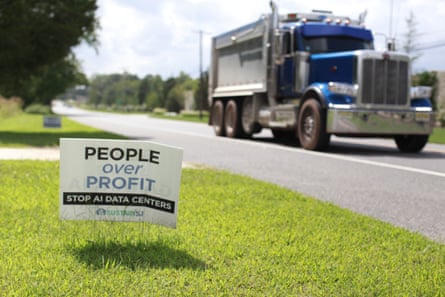
DataOne has not directly addressed the specific questions regarding the unpermitted generators but issued a brief statement claiming it remains committed to meeting all environmental and permitting requirements. Microsoft, the primary tenant of the facility, has declined to comment on the ongoing legal and regulatory disputes. Nebius, the infrastructure partner, has also remained silent on the matter.
Industry Implications and the Path Forward
The outcome of the investigation into the DataOne facility could set a significant precedent for the future of AI datacenter development in the United States. If regulators allow the facility to continue operating without permits, it may signal to other developers that the "ask for forgiveness rather than permission" model is a viable path to rapid expansion. Conversely, a heavy-handed enforcement action, including a full shutdown and substantial fines, could force the industry to reconsider its approach to independent power generation.
The EPA has clarified that while it maintains federal oversight, the primary responsibility for air permitting in this case lies with New Jersey state regulators. This puts the NJDEP in a difficult position as it balances the state’s desire to attract high-tech investment with its mandate to protect public health and the environment. The agency’s next steps will be closely watched by environmental advocates and tech industry executives alike.
For the residents of Vineland, the issue remains one of basic fairness and safety. The question posed by local residents—why a multi-billion-dollar corporation is allowed to ignore rules that apply to everyone else—remains at the heart of the controversy. As the legal battle moves forward in federal court, the facility continues to hum, serving as a reminder of the growing tension between the digital future and the physical environment.