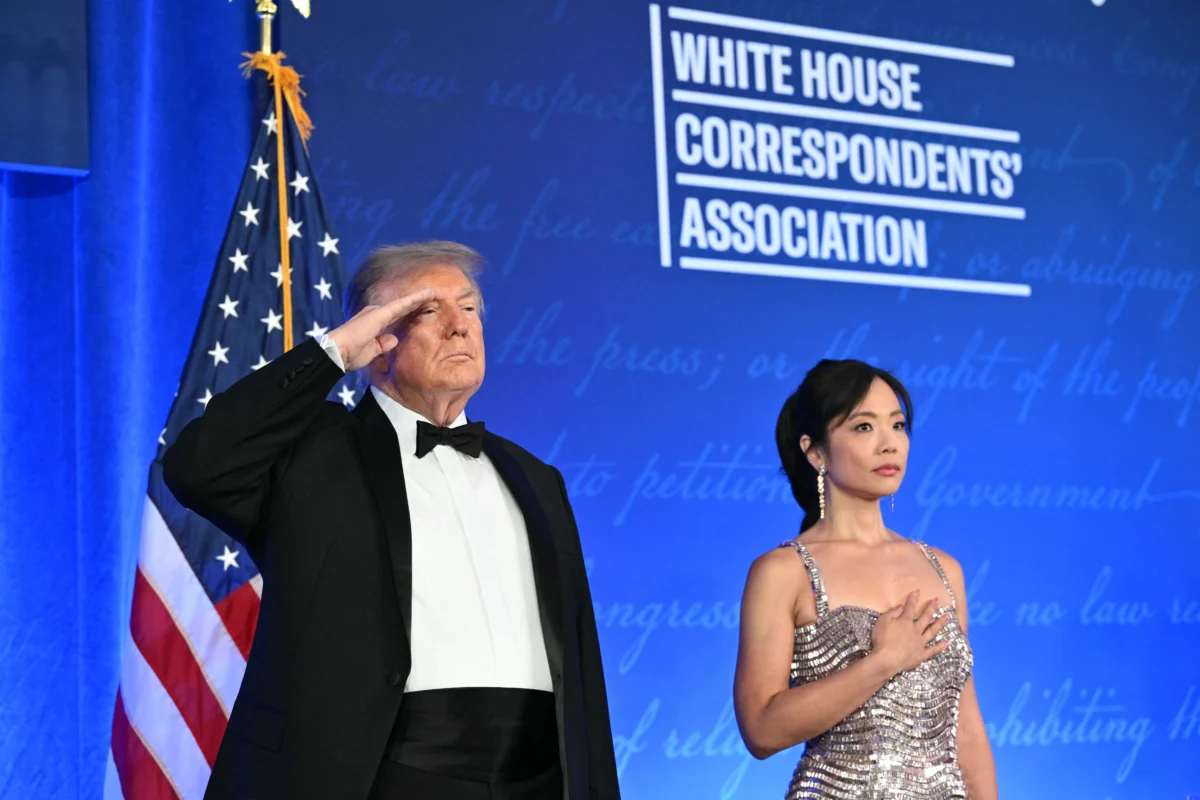
President Donald Trump appeared at a significantly altered White House Correspondents’ Association (WHCA) Dinner in Washington, D.C., on Friday, an event that was rescheduled and scaled back after an attempted mass shooting disrupted its original April date. The annual gathering, a traditional forum for presidents to engage with the press corps through humor, saw Trump deliver a speech that blended acknowledgments of the harrowing prior incident with his characteristic attacks on media figures and political opponents, frequently drawing a mixed reception from the audience.
A Dinner Rescheduled and Reimagined
The decision to hold a "make-up" dinner in July underscored the unusual circumstances surrounding the WHCA’s flagship event. Originally slated for April at the Washington Hilton, the dinner was abruptly canceled mid-event when a lone gunman, later identified as 31-year-old Cole Tomas Allen, opened fire near the banquet hall’s screening area. Allen, who allegedly intended to target multiple Trump administration officials, was apprehended after breaching a security checkpoint, but the incident prompted immediate evacuation and a profound reevaluation of the event’s security and format.
The rescheduled dinner relocated to the Waldorf Astoria in the nation’s capital, a move that symbolized a departure from tradition. Furthermore, the guest list was drastically reduced, plummeting from an estimated 2,600 attendees to around 680. This reduction significantly diminished the event’s usual star-studded allure, where celebrities, politicians, and journalists famously mingled. Critics of the traditional dinner had long argued that these optics created an uncomfortable blurring of lines between those who report on power and those who wield it. The pared-down format, while a direct response to security concerns, inadvertently addressed some of these long-standing criticisms regarding the perceived coziness between the press and political elite.
Honoring Bravery Amidst Renewed Scrutiny
The WHCA dinner served as a moment to acknowledge the bravery demonstrated during the April attack. A Secret Service member, who survived the shooting, was specially recognized, alongside the Washington Hilton staff who remained on site to assist rattled guests. This recognition underscored the gravity of the incident and the ongoing commitment to security for such high-profile gatherings.
Despite the altered format, several core elements of the dinner remained. Annual awards for journalistic excellence were presented, celebrating the critical work of the press. Mentalist Oz Pearlman, whose performance at the original dinner was cut short by the gunfire, returned to provide levity, a stark contrast to the preceding chaos. However, the atmosphere leading up to the event was far from lighthearted. A coalition of hundreds of former journalists and press freedom advocacy groups had collectively sent a letter to the WHCA, urging the association to seize the opportunity of President Trump’s attendance. Their demand was clear: use the platform to directly challenge the administration’s perceived assaults on First Amendment rights, citing recent subpoenas of New York Times reporters and threats to revoke broadcasters’ licenses as prime examples of escalating tensions.
The President’s Unconventional Roast
President Trump took to the stage at approximately 9:30 p.m. ET, his speech being one of the most anticipated aspects of both the original and rescheduled dinners. Traditionally, the presidential address at the WHCA dinner is a good-natured roast, targeting attendees, the media, and even the president himself. Trump, however, quickly established a different tone. He began by addressing the April shooting, framing it as a direct assault on American democracy.
"The attempted mass murder at the Washington Hilton – that’s what it could have been – was an assault on our democracy itself," Trump stated, underscoring the severity of the incident. He then pivoted to a moment that elicited the night’s first notable laughs, singling out Fox News personalities Pete Hegseth, Steve Miller, and Tom Holman for their alleged bravery, contrasting them with a broader group he claimed were "under the table." This initial foray into humor, while acknowledging a serious event, hinted at the often-divisive nature of his subsequent remarks.
A Meandering Performance and Mixed Reactions
Following a begrudging acknowledgment of the press’s constitutional role, Trump’s early jokes touched on a range of topics, including the notion of a third Trump term, an ongoing White House ballroom renovation project, and a peculiar reference to Robert Kennedy Jr. mowing down a cow with his car. While these attempts at humor garnered some initial chuckles, the president’s comedic timing quickly faltered. His first truly flat joke involved rapper Nicki Minaj, whom he had recently hosted at a White House event as a "MAGA convert."
"After hearing the gunshots, many people yelled, ‘Get down! Get down!’ which caused Nicki Minaj to start twerking," Trump quipped. "Do you believe it? Get down. She’s the only one that really understood what that meant." The joke landed with an audible thud, failing to elicit the intended laughter and setting a precedent for a speech that frequently struggled to connect with its audience.
As the address continued, it began to meander, drifting from nostalgic recollections of the Waldorf Astoria in the 1980s to a series of personal grievances against celebrities not present in the room. Long-standing feuds resurfaced, with Rosie O’Donnell, Bette Midler, and Bruce Springsteen all receiving mentions. Trump particularly focused on Springsteen, comparing the aging musician’s appearance to his own and facetiously renaming Springsteen’s live show "Bored in the U.S.A." These detours, often laden with personal animosity rather than political satire, further distanced the speech from the traditional comedic expectations of the event.
Footage streamed live by the Associated Press captured attendees looking visibly bored and irritated as Trump’s speech stretched past the 20-minute mark. It became clear that this was not the anticipated biting satire, but rather another platform for the president to air his grievances, punctuated by jokes that consistently missed their mark. Even Trump himself appeared to acknowledge the lack of humor at one point, following a joke about the "governor of Chicago" (presumably Illinois Governor J.B. Pritzker) and Jerry Nadler fighting over cheesecake. "Who the hell wrote that line?" he interjected, a rare moment of self-awareness regarding his material’s reception.
Direct Confrontation and a Surprising Conclusion
The "airing of grievances" segment of the speech, as expected, constituted a significant portion of the evening. On a night intended to celebrate journalists, Trump instead launched into sharp criticism of reporters for perceived unfair treatment. He specifically named CNN anchors Kaitlan Collins, an award recipient honored earlier in the night, and Jake Tapper, a multiple winner of the White House Correspondents’ Association Merriman Smith Award, accusing them of bias. Late-night hosts Jimmy Kimmel and Stephen Colbert were also targeted, dismissed as "talentless."
The president’s rhetoric escalated to a more personal and vitriolic level when he turned his attention to political adversaries. "They thought about going with a professional clown for entertainment, but Adam ‘Shifty’ Schiff was not available," Trump joked, before launching into a highly personal attack. "You know he’s known – I hate some people. You know, I shouldn’t say the surprise. I’m not supposed to hate him. I’m supposed to love everybody, but he’s a terrible person. He’s a liar, and I called him watermelon head because he has the largest head I’ve ever seen with the smallest neck, pencil neck. How does that big fat ugly head stand on a on a little pencil, pencil, pencil neck?" This segment, characteristic of Trump’s rallies, starkly contrasted with the formal setting and the spirit of the WHCA dinner.
After nearly an hour of a speech that veered between meandering anecdotes, personal attacks, and largely unfunny jokes, Trump concluded on an unexpectedly conciliatory note. He praised the journalists in the room and their profession, a stark departure from the preceding attacks. "We have the hottest country anywhere in the world, and we’re going to keep it going," he declared. "And I just want to say, this is a room I have tremendous respect for the people in this room. Sometimes I don’t feel you treat me fair. Maybe you do. I don’t know. I don’t feel that. But sometimes you treat me very fairly, and I have a lot of respect for your profession. Your profession is amazing. And I just want to thank you for having me. And it’s been fun." This abrupt shift left many attendees and observers contemplating the sincerity of his final remarks, particularly after a performance that largely defied the traditional spirit of the White House Correspondents’ Dinner.
Implications for Press-Presidential Relations
The rescheduled, pared-down White House Correspondents’ Dinner, and President Trump’s controversial address, underscored the evolving and often contentious relationship between the presidency and the press. The event, once a symbol of a functional, if sometimes awkward, dialogue, has increasingly become a battleground for political and ideological clashes. The security incident served as a chilling reminder of the dangers public figures and the media face, while Trump’s speech further solidified his unique approach to media engagement – one marked by direct confrontation and a rejection of traditional comedic diplomacy. The evening left many questioning the future format and purpose of such gatherings in an era of heightened political polarization and unprecedented attacks on journalistic institutions.