The United States and Iran are engaged in a perilous cycle of escalating strikes, each framing their actions as necessary to counter the other’s bid for military dominance over the strategically vital Strait of Hormuz. As U.S. forces intensify their bombardment of southern Iran and have recently expanded strikes to other regions, Tehran has retaliated, targeting American military installations in neighboring Gulf states and Jordan. These exchanges, however, have not been confined to military objectives; projectiles from both sides have impacted civilian infrastructure, igniting serious questions about potential violations of international humanitarian law. This escalation comes as a fragile memorandum of understanding aimed at de-escalating tensions, signed by the two nations in June, has demonstrably collapsed.
President Donald Trump has publicly declared an intention to target Iran’s power plants and bridges unless Tehran agrees to negotiations, echoing earlier threats made in April regarding civilian infrastructure. Iranian authorities report that at least 50 people have died and 500 have been wounded within Iran since hostilities resumed on July 15. In the past week alone, dozens of locations across southern and northwestern Iran have been struck, with reported damage to military command centers, railway lines, and airports. In response, Iran’s Islamic Revolutionary Guard Corps (IRGC) has targeted U.S. military assets in neighboring countries, resulting in the deaths of at least two American service members.
International humanitarian law, codified in the 1949 Geneva Conventions and their 1977 Additional Protocols, unequivocally prohibits the deliberate targeting of civilian infrastructure and objects during armed conflict. The definition of civilian infrastructure encompasses "all objects which are not military objectives" and are "normally dedicated to civilian purposes," such as places of worship, homes, dwellings, and schools. This category extends to facilities essential for the daily functioning of a society, including roads, bridges, railways, airports, power plants, sewage systems, hospitals, and telecommunications networks. Crucially, the law also protects drinking water installations, irrigation works, foodstuffs, crops, livestock, dams, dikes, and nuclear power generation facilities from attack. In cases of doubt regarding an object’s designation, parties to a conflict are legally obligated to presume it is civilian and therefore protected.
The recent intensification of conflict has brought the grim reality of civilian casualties and damaged infrastructure to the forefront of international concern. A spokesperson for United Nations Secretary-General António Guterres expressed deep disquiet over attacks on civilian infrastructure within Iran and across the region, labeling such actions as "unacceptable." The stark contrast between stated military objectives and the documented impact on civilian life underscores the complexities and inherent dangers of modern warfare.

Defining Civilian Infrastructure in Times of Conflict
The legal framework surrounding armed conflict provides a clear, albeit sometimes nuanced, definition of what constitutes civilian infrastructure. Under international law, civilian objects are those that are not military objectives. This broadly includes any property or facility not being used for military purposes at the time of an attack, and which is normally dedicated to civilian use. Examples are numerous and vital to the functioning of any society:
- Essential Utilities: Power plants, water treatment facilities, and sewage systems are critical for public health and daily life. Their destruction can have cascading effects, leading to widespread suffering and disease.
- Transportation Networks: Roads, bridges, railways, and airports are vital for the movement of people, goods, and humanitarian aid. Disrupting these networks can cripple a nation’s economy and hinder relief efforts.
- Communication Systems: Telephone lines, internet infrastructure, and broadcast towers are essential for disseminating information, coordinating emergency responses, and maintaining social order.
- Residential and Cultural Sites: Homes, schools, places of worship, and historical sites are explicitly protected under international law and hold deep cultural and social significance.
- Agricultural and Food Resources: Farmland, irrigation systems, and food storage facilities are crucial for sustaining populations and preventing famine.
- Healthcare Facilities: Hospitals, clinics, and medical supply depots are protected to ensure the care of the sick and wounded.
The principle of distinction, a cornerstone of international humanitarian law, mandates that parties to a conflict must at all times distinguish between combatants and civilians, and between military objectives and civilian objects. This requires combatants to direct their attacks solely against military objectives.
The Narrow Path to Targeting Civilian Infrastructure
While the prohibition against targeting civilian infrastructure is stringent, international law does permit such attacks under very specific and limited circumstances. Civilian infrastructure can become a legitimate military objective if it can be definitively proven that it is being used for military purposes at the time of the attack, and that its destruction offers a clear and definite military advantage.
Even when these stringent criteria are met, the principle of proportionality must be rigorously applied. Any attack on a dual-use object – one that serves both civilian and military purposes – must ensure that the anticipated military advantage is not outweighed by the incidental loss of civilian life, injury to civilians, or damage to civilian objects. The presumption under law is that infrastructure is civilian and protected unless it has been demonstrably converted into a military objective through its use or intended use by an adversary.
Luke Moffett, a law professor and expert on civilian harm at Queen’s University Belfast, emphasizes this crucial distinction. "The basic presumption is that infrastructure is civilian and protected until such time it has become a military objective through the enemy’s use or future use," Moffett stated. He notes that historical precedents, such as U.S. and NATO strikes on electrical or water plants in Iraq or Libya, were often justified by claims of preventing enemy use, even when significant civilian harm resulted. The "thin line" between preventing enemy use and impacting civilians necessitates constant verification by militaries to ensure targets provide a military advantage and that civilian harm is not excessive. Failure to adhere to these strictures can result in indiscriminate attacks, which are prosecutable as war crimes.

Documented Strikes on Civilian Sites
Iranian media and officials have reported numerous U.S. strikes impacting civilian infrastructure, particularly in the southern coastal regions near the Strait of Hormuz. These reports contrast with Washington’s assertions that strikes have exclusively targeted "military logistics infrastructure." Analysts suggest that U.S. military legal advisors may be classifying some targets as "dual-use," meaning they could potentially be leveraged for military operations, thereby circumventing the strict prohibitions on attacking purely civilian sites.
Reported U.S. strikes on or near civilian infrastructure in Iran have included:
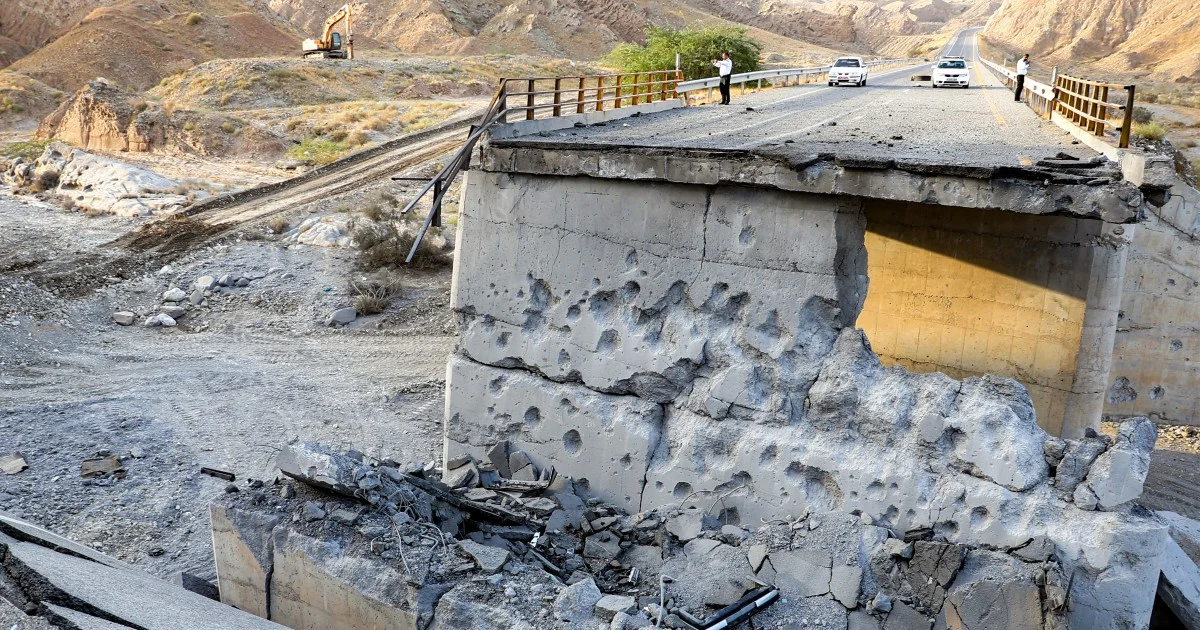
- Road and Bridge Networks: Damage to vital transportation arteries that connect key areas, impacting civilian movement and commerce. For instance, officials were observed inspecting a bridge damaged by a U.S. strike along the road connecting Roudan and Bandar Abbas.
- Water and Food Facilities: Attacks on infrastructure critical for sustaining the population, raising concerns about food security and public health.
- Airports and Seaports: While often having military significance, these facilities are also crucial for civilian travel, trade, and humanitarian access.
- Communication Towers: Disruption of communication networks can isolate communities and hinder emergency response.
- Residential Areas, Sewage Systems, and Administrative Buildings: These are unequivocally civilian and their targeting raises serious questions about adherence to international law.
- Nuclear Power Plants: While having immense strategic importance, nuclear facilities are also complex industrial sites with significant civilian implications and stringent international protections.
Iran’s Strikes on Civilian Infrastructure
Iran, through its IRGC, has also been accused of targeting civilian infrastructure in neighboring countries that host U.S. military assets, including Kuwait, Oman, Jordan, and Qatar. While the IRGC maintains its focus on U.S. military installations, reports and accusations suggest that some Iranian strikes have extended beyond purely military targets.
Examples of areas reportedly hit by Iran include:
- Kuwait: In July, Kuwait accused Iran of targeting civilian sites and vital infrastructure in the country, with images showing plumes of smoke over the town of Mangaf, south of Kuwait City, following alleged Iranian actions.
- Jordan: Reports indicate Iranian strikes have impacted areas in Jordan, a nation that hosts U.S. military bases and plays a key role in regional security cooperation.
- Other Gulf Nations: Military bases and associated infrastructure in Qatar and Oman have also reportedly been targeted, with the potential for collateral damage to civilian areas.
The ongoing tit-for-tat attacks, with each side accusing the other of violating international norms and the laws of war, creates a volatile environment where the risk of miscalculation and unintended escalation is exceptionally high. The international community watches with apprehension as the conflict threatens to draw in regional powers and further destabilize an already precarious geopolitical landscape. The long-term consequences of such actions, beyond immediate casualties and destruction, include the erosion of international legal norms and the deepening of mistrust between nations.