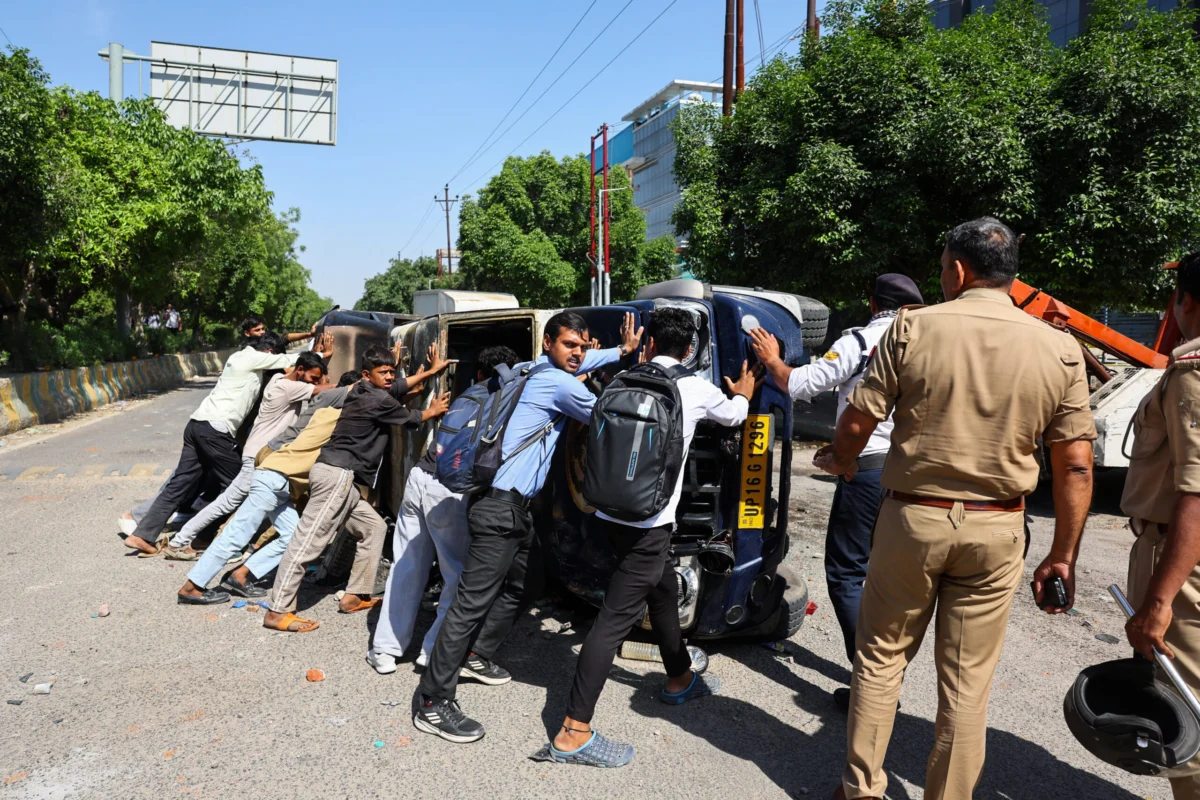
Police deployed tear gas and riot control measures on the fourth day of escalating protests by factory workers in Noida, a major industrial hub on the outskirts of India’s capital, as demonstrators clashed with authorities amid a backdrop of soaring global living costs. The unrest, which began as a peaceful demand for better pay and working conditions, turned violent with reports of vehicles being torched and stones being hurled at law enforcement.
Escalating Tensions in Noida’s Industrial Heartbeat
The situation in Noida, a sprawling planned industrial township in the northern state of Uttar Pradesh, reached a critical point Monday as police engaged with protesting workers. Officials stated that "minimum force" was employed to restore order in the satellite city, which houses thousands of industrial units and is a vital manufacturing center for India.
Narendra Kashyap, a local lawmaker, appealed for dialogue, urging protesters to engage with the government to resolve their grievances. A statement from the Gautam Budh Nagar police emphasized that senior officials were actively involved in "persistent efforts to counsel the workers and urge them to maintain peace and restraint."
The Unseen Hand of Global Economic Pressures
The labor unrest in Noida is deeply intertwined with a broader global economic challenge: rising living costs. Analysts point to a confluence of factors, including disruptions in fuel supplies exacerbated by international conflicts, as driving up prices worldwide. The US-Israel war on Iran has been cited as a significant contributor to the tightening of global energy markets, indirectly impacting the cost of goods and services in India and beyond.
This surge in inflation has placed immense pressure on the earnings of ordinary workers, intensifying their demands for wage increases that can keep pace with the rapidly escalating cost of daily necessities. The situation in Noida is not isolated, with similar sentiments brewing in other industrial regions across the country.
Demands Echo Across Manufacturing Sectors
At the heart of the Noida protests lie a series of specific demands from the factory workforce. Vinay Mahoti, a 30-year-old worker from the eastern state of Bihar who works in a hosiery company, articulated the core grievances. He initially participated in protests within his factory before joining the larger street demonstrations.
Mahoti’s demands, representative of many in the workforce, include the implementation of fixed duty hours, fair compensation for overtime work, and strict adherence by companies to guidelines set by the federal government. These calls highlight a desire for greater labor protections and a more equitable distribution of the economic gains generated by industrial output.
A Precedent Set in Neighboring Haryana
The situation in Noida is drawing parallels with recent labor actions in the neighboring state of Haryana, another significant industrial corridor. Last week, protests by workers in Haryana, where numerous major car manufacturers have production facilities, led to a decisive government intervention.
In response to the sustained pressure, the Haryana government mandated a substantial 35 percent increase in minimum wages. This development has undoubtedly emboldened workers in Noida and other regions, signaling that collective action can yield tangible results and setting a precedent for future negotiations and government responses to labor disputes.
The Scale of Industrial Activity in Noida
Noida’s significance as an industrial hub cannot be overstated. It stands as one of Asia’s largest meticulously planned industrial townships, a testament to India’s manufacturing prowess and its role in global supply chains. The sheer density of industrial units means that any labor disruption here has the potential for widespread economic repercussions.

The presence of thousands of factories, employing a vast workforce, makes Noida a critical barometer of the nation’s industrial health and the economic well-being of its laboring class. The current protests underscore the vulnerabilities inherent in this massive industrial ecosystem when faced with economic headwinds.
Visuals of Discontent and Disruption
Images emerging from Noida painted a stark picture of the unfolding crisis. Dozens of protesters were seen marching through streets, their chants and slogans echoing the deep-seated frustrations. Security personnel, clad in anti-riot gear, stood in formation, a visible manifestation of the tension.
Other visuals captured the more destructive elements of the unrest: an overturned vehicle engulfed in flames, a potent symbol of the anger and desperation felt by some. Protesters were also seen attempting to breach barricades, demonstrating a clear determination to make their voices heard, even at the risk of confrontation.
The Broader Economic Context: Fueling the Fire
The current labor unrest is happening against a backdrop of a global economic environment characterized by inflationary pressures. The increase in the cost of living, a phenomenon affecting nations worldwide, is a direct consequence of a complex interplay of global events.
The US-Israel war on Iran has been a significant factor, leading to the curbing of fuel supplies. This disruption in the energy market has a ripple effect across all sectors of the economy, driving up transportation costs, manufacturing expenses, and ultimately, the prices of everyday goods. For workers in India, whose wages have not kept pace with these rising costs, the pinch is particularly acute.
A Call for Dialogue and Resolution
As the situation remains volatile, the focus shifts to finding a path toward resolution. The appeals for dialogue from lawmakers and administrative officials highlight the recognized need for a peaceful and constructive approach. The government’s role in mediating between labor and industry is paramount in de-escalating the current crisis and preventing its recurrence.
The success of such mediation will depend on a genuine commitment from all parties to address the underlying issues. For workers, this means fair wages, safe working conditions, and respect for their rights. For industry, it involves recognizing the contributions of the workforce and adapting to evolving economic realities.
Implications for India’s Industrial Future
The protests in Noida carry significant implications for India’s industrial future. The country has been striving to position itself as a global manufacturing powerhouse, attracting foreign investment and boosting exports. However, persistent labor disputes and a failure to address the cost-of-living crisis could tarnish this image and deter investors.
The government faces the delicate task of balancing economic growth with social equity. Ensuring that the benefits of industrial development are shared equitably among the workforce is crucial for long-term stability and sustainable economic progress. The outcomes of the current negotiations and the government’s response will set a tone for labor relations across the country.
The Unfolding Narrative of Worker Demands
The narrative of worker demands is becoming increasingly clear and unified. The desire for a living wage, coupled with fair labor practices, is resonating across different sectors and regions. The comparison with Haryana’s wage hike serves as a powerful reminder that government intervention can be a catalyst for change.
As the situation in Noida continues to develop, the nation watches closely. The ability of India’s authorities and industrial leaders to navigate this complex economic and social challenge will be a defining test of their commitment to inclusive growth and the well-being of their citizens. The events in this industrial heartland are a microcosm of a larger global struggle for economic fairness in an increasingly unpredictable world.