President Donald Trump issued a blunt ultimatum on Friday, declaring that the United States will accept nothing less than the "unconditional surrender" of the Iranian government as joint U.S. and Israeli forces unleashed their most devastating aerial campaign since the conflict began seven days ago. The escalating warfare has seen strategic bombers strike deep within Iranian territory while intensive Israeli bombardments in Lebanon have forced more than one million people to flee their homes, marking a catastrophic shift in the regional security landscape.
The president articulated his position through a series of high-profile statements, including a post on his Truth Social platform that signaled a refusal to engage in traditional diplomacy. "There will be no deal with Iran except UNCONDITIONAL SURRENDER," Trump wrote, as U.S. B-2 stealth bombers were confirmed to be in action over the Islamic Republic. The rhetoric coincides with a massive surge in military operations designed to dismantle the clerical regime’s command structure and its regional proxies.
The Escalation of Air Operations and the Demand for Unconditional Surrender
As the conflict enters its second week, the scale of the military engagement has reached unprecedented levels. U.S. Defense Secretary Pete Hegseth warned on Friday that American firepower is "about to surge dramatically," suggesting that the previous seven days of strikes were merely the opening phase of a much larger campaign. This sentiment was echoed by Eyal Zamir, the chief of staff for the Israel Defense Forces (IDF), who stated that the military is transitioning to a new phase of the offensive aimed at the total dismantlement of the Iranian regime and its military infrastructure.
General Zamir’s briefing to the press was marked by a chilling promise of further escalation. "We have additional surprises ahead which I do not intend to disclose," he said, indicating that the joint forces are prepared to utilize advanced weaponry and tactics that have yet to be deployed. The objective, according to administration officials, is no longer containment but the absolute removal of the current Iranian leadership.
In Tehran, the impact of the strikes has been felt in every corner of the capital. Witnesses described the latest round of bombings as the most intense to date, with explosions shaking residential buildings and lighting up the night sky. Beyond the capital, strikes have been reported near Kermanshah, an area known to house significant ballistic missile bases. Information coming out of the country remains scarce, however, as the monitor group NetBlocks reported that internet connectivity in Iran has plummeted to just 1% of normal levels, effectively severing the nation from the outside world.
A Regional Conflagration and the Push for Unconditional Surrender
The conflict has rapidly expanded beyond the borders of Iran and Israel, drawing in neighboring Gulf states and threatening global energy security. In a major retaliatory move, the Iranian Revolutionary Guard Corps (IRGC) launched waves of missiles and drones targeting U.S. military installations and civilian infrastructure across Kuwait, Qatar, Saudi Arabia, and Bahrain. These strikes reportedly targeted oil pipelines and logistics hubs, leading to immediate fluctuations in international stock markets and a spike in crude oil prices.
In Kuwait, where six U.S. soldiers were killed in an earlier attack on Sunday, air defense systems were activated to intercept incoming projectiles. Officials in Qatar and Saudi Arabia also confirmed the interception of Iranian drones. Meanwhile, in Bahrain, Iranian strikes reportedly hit residential buildings and hotels, prompting the British government to announce that Royal Air Force Typhoon fighters would be deployed to help defend the kingdom’s airspace.
The IRGC has maintained a defiant stance, claiming responsibility for a series of missile launches directed at Tel Aviv. While Israeli missile defenses intercepted the majority of these threats, one wave of explosions resulted in a significant fire at a residential complex in the city. The Revolutionary Guard warned that "new initiatives and weapons" would soon be introduced to the battlefield to counter what they termed "U.S. and Israeli aggression."
Humanitarian Crisis in Lebanon and the Demand for Unconditional Surrender
The northern front of the war has seen Lebanon fall into a state of total chaos. The IDF issued its most sweeping displacement orders to date, instructing residents of the Dahiyeh district in southern Beirut to "save your lives and evacuate immediately." Dahiyeh, a densely populated stronghold for the Iranian-backed militant group Hezbollah, is home to more than 600,000 people. By Friday afternoon, the area had been transformed into a "ghost town," with the streets empty of civilians but filled with the smoke and rubble of persistent airstrikes.

Hashem Osseiran, a spokesperson for the Red Cross in the Middle East, described the scenes as desperate. "Many people have fled on foot with nothing but the clothes on their backs," he said. "There is a profound sense of panic and confusion as people have no clear sense of where to go to find safety." The Lebanese health ministry has reported at least 217 deaths and nearly 800 injuries since the resurgence of hostilities, though these figures are expected to rise as search and rescue operations continue in the ruins of Beirut.
The fighting has also endangered international peacekeeping efforts. On Friday, the headquarters of Ghana’s UN peacekeeping battalion in southern Lebanon was struck by Israeli missiles, leaving two soldiers in critical condition. The incident drew sharp condemnation from international leaders, including French President Emmanuel Macron, who labeled the attack "unacceptable." Irish soldiers stationed nearby assisted in the evacuation of the wounded, while the Irish Taoiseach, Micheál Martin, described the strike as "reckless."
The Strategy of Regime Change and Unconditional Surrender
President Trump’s demand for "unconditional surrender" is rooted in a broader strategy of forced regime change. This objective was set in motion on the first day of the conflict with the assassination of Ayatollah Ali Khamenei, Iran’s Supreme Leader, in a surprise operation. Speaking from the White House, Trump urged the Iranian populace to "take back your country," offering a vague promise of "immunity" for those who defect from the current government.
"You’ll be perfectly safe with total immunity," Trump told the Iranian people, though he did not provide specifics on how such safety would be guaranteed in a war zone. "Or you’ll face absolutely guaranteed death." Despite these calls for internal revolt, intelligence analysts note that there has been no significant evidence of high-level defections within the Iranian military or the Revolutionary Guard.
In an interview with Axios, the president went further, suggesting that the United States should have a direct role in selecting Iran’s next leader. He dismissed Mojtaba Khamenei, the son of the late Supreme Leader and a top contender for the position, as a "lightweight." Trump emphasized that the U.S. is looking for a leader who will bring "harmony and peace," effectively indicating that any future Iranian government must be sanctioned by Washington.
Military Precision and the Cost of Unconditional Surrender
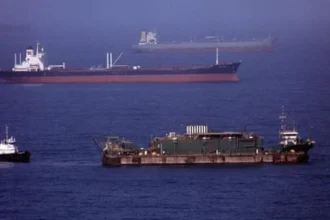
The technical aspects of the U.S. involvement were highlighted by Admiral Brad Cooper, head of U.S. Central Command. He confirmed that B-2 stealth bombers had utilized 2,000-pound "penetrator" bombs to destroy ballistic missile launchers buried deep underground. Additionally, a large Iranian naval vessel, which the U.S. claims was being used as a mobile platform for drone launches, was hit and is believed to have sunk in the Persian Gulf.
However, the precision of the campaign has been called into question following reports of a devastating strike on an Iranian girls’ school on Saturday. Initial reports indicate that more than 100 students were killed in the blast. While the U.S. military is still investigating the incident, Reuters reported that military investigators believe it is "likely" that U.S. forces were responsible for the strike. This event has sparked international outrage and fueled the "bellicose rhetoric" that UN High Commissioner for Human Rights Volker Türk warned is making a ceasefire nearly impossible.
The Path Forward Toward Unconditional Surrender
The White House has clarified its definition of what an "unconditional surrender" would look like in practice. Press Secretary Karoline Leavitt stated on Friday night that the U.S. would consider Iran to have surrendered once President Trump determines that the country no longer "poses a threat" to American interests. "Then Iran will essentially be in a place of unconditional surrender, whether they say it themselves or not," Leavitt explained.
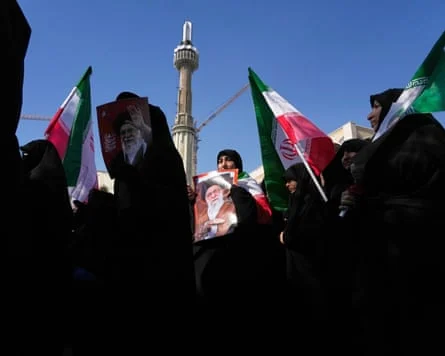
Inside Iran, the political vacuum left by Khamenei’s death is being addressed with urgency. State television reported that the Assembly of Experts is preparing to convene to select a new Supreme Leader, even as the country remains under heavy bombardment. Friday prayers in Tehran saw thousands of mourners gather at the Imam Khomeini Mosalla mosque, where many wept openly for the fallen leader while government supporters protested the ongoing war.
As the death toll surpasses 1,230 in Iran and the humanitarian situation in Lebanon worsens, the international community remains divided on how to proceed. While the U.S. and Israel remain committed to their "new phase" of dismantling the regime, the risk of a total regional collapse looms. The coming days will determine whether the demand for "unconditional surrender" leads to a swift conclusion of hostilities or a protracted war that reshapes the Middle East for generations to come.